
51st State: Meaning, Candidates, and Political Context
The term '51st state' denotes a territory or region proposed for admission to the United States. It appears in serious legal debates and popular jokes about territories, state splits, or foreign lands joining the Union.
The phrase "51st state" refers to any place or political entity that is not one of the fifty states of the United States but is discussed as a potential new state. Usage ranges from lighthearted political banter in American politics to formal proposals and referendums. It can also be a tongue-in-cheek label applied to another country seen as closely aligned with U.S. policy—commonly Canada in jokes—or to governments perceived as strongly influenced by Washington.
Image gallery
6 Images



Origins and historical context
The idea dates back to the earliest years of the republic, when the nation grew by admitting new states rather than by annexing fully sovereign countries. Proposals involving other polities even appear in early records such as the Articles of Confederation era, though formal accession has always required a legal process. The two most recent admissions, Alaska and Hawaii, became states in 1959, and before then the expression "the 49th state" was current for the next prospective addition. The term has adapted to different eras: sometimes speculative, sometimes tied to organized campaigns for statehood.
Likely candidates and common proposals
Contemporary discussions tend to focus on populated U.S. possessions and federal districts as plausible candidates. Typical examples cited in public debate include:
- Puerto Rico — a U.S. commonwealth whose residents are U.S. citizens and which has held multiple referendums on status.
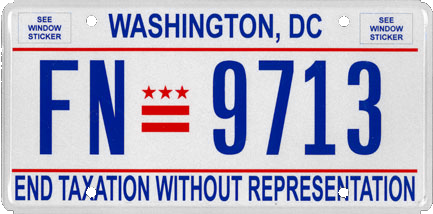
- The District of Columbia — home to many U.S. residents without full voting representation in Congress.
- Guam, American Samoa, and the Northern Mariana Islands — organized or unincorporated territories with distinct legal relationships to the federal government.
Beyond admitting a territory, advocates sometimes propose creating a new state by dividing an existing one. Popular ideas include splitting California — often noted because it is the most-populous state — into multiple states, or reconfiguring parts of other large states such as Texas. There are also regional movements like the "State of Jefferson" (parts of northern California plus southern counties of Oregon) and the "State of Lincoln" (eastern Washington together with Idaho's panhandle).
Legal and political requirements
Admission of a new state requires action by the U.S. Congress and normally the consent of the legislature of any state that would be divided. The Constitution's framework means proposals must clear federal and, where relevant, state hurdles. Practical considerations include population, governance structures, federal representation and fiscal arrangements. Some local proposals call for transferring territory from one state to another — for example, proposals to shift parts of western Nebraska into Wyoming because the area is geographically closer to the city of Cheyenne than to the state capital of Lincoln.
Recent referendums and international mentions
Puerto Rico has held multiple plebiscites in the 21st century; votes in favor of statehood appeared in the 2012 and 2017 referendums, although turnout and ballot design affected interpretation and congressional approval remains necessary. Any shift to statehood must ultimately be enacted by the United States Congress. Outside the U.S., occasionally discussed possibilities have included nations or regions seeking closer association with the U.S.; for example, some political movements in Guyana and in parts of northern North America have at times advanced proposals or parties favoring closer ties or even eventual U.S. statehood. Historically, certain political parties and advocacy groups in Canadian provinces have raised the idea of union with the United States, but Canada has never acted to join as a state.
As a political label, "51st state" functions in several ways: as shorthand in constitutional and policy debates, as a rallying cry for local activists, and as a rhetorical device in satire and international commentary. While the phrase is familiar in public discourse, it denotes no automatic legal status; the creation of any new state remains a complex political and legal process involving local assent, state cooperation when boundaries change, and congressional legislation before admission to the Union.
United States • American politics • Puerto Rico • Canada • Articles of Confederation • Alaska • Hawaii • statehood • Guam • American Samoa • Northern Mariana Islands • most-populous state • California • southern counties • Oregon • Idaho • Nebraska • Wyoming • Cheyenne • Lincoln • United States Congress • Guyana • political parties
Questions and answers
Q: What is the 51st state?
A: The 51st state refers to a place or territory that is not one of the 50 states of the United States, but people think about making it the 51st state. It is usually said about the possibility of Puerto Rico or other U.S. territories becoming part of the United States.
Q: Are there any proposals to form a new state by dividing an existing one?
A: Yes, some regions of the U.S. have proposed forming a new state by dividing an existing one, such as California into two or even three states, or Texas into four or five states. There has also been a proposal to separate the westmost one-fourth of Nebraska from that state and add it to Wyoming instead of creating an entirely new state.
Q: Does Canada ever get mentioned in relation to being a potential 51st State?
A: Yes, when used to refer to other countries, it is often used as a joke about Canada joining the United States (like in the Articles of Confederation). However, Canada has never accepted these offers and remains its own country.
Q: What are some places in America that could become potential 51st states?
A: Places in America that could potentially become 51st states include District of Columbia, Puerto Rico, Guam, US Virgin Islands, American Samoa and Northern Mariana Islands.
Q: Has Puerto Rico voted on becoming a US State?
A: Yes, in 2012 and more recently 2017 people in Puerto Rico voted strongly in favor for becoming part of the United States as its 51st State; however approval from Congress is also needed for this to happen.
Q: Is Guyana interested in becoming part of America?
A: Yes there have been political movements favoring and advocating for Guyana's eventual status as an American associated territory with eventual statehood as its goal.
Q: Have any Canadian Provinces expressed interest in joining America?
A:Yes several Canadian Provinces have had political parties and movements advocating American statehood making their North American location a natural candidate and ideal prospect for joining America as its 51st State
Related articles
Author
AlegsaOnline.com 51st State: Meaning, Candidates, and Political Context Leandro Alegsa
URL: https://en.alegsaonline.com/art/112958
Sources
- canada.com : "Will Canada become the 51st state?"
- content.time.com : "Canada: EXTERNAL AFFAIRS: Sailing, Sailing..."
- content.time.com : "Canada: EXTERNAL AFFAIRS: 49th State?"
- economist.com : "Could Puerto Rico become America's 51st state?"
- nytimes.com : "23% of Puerto Ricans Vote in Referendum, 97% of Them for Statehood"