
2 (number)
The natural number two: its mathematical properties, notation, historical origins, role in computing and culture, and notable distinctions such as being the only even prime.

Overview
The number 2 is the integer that follows 1 and precedes 3. As a basic counting unit it marks the smallest possible pair, forming the foundation of concepts like duality and binary opposition. The spoken English name is "two" and its symbol may be represented as an Arabic numeral (2) or as II in Roman numerals. For the terms "number" and "glyph" see related entries: number and glyph.
Image gallery
2 Images
Mathematical characteristics
Two is the first even number and the first prime number; it is unique as the only even prime. In arithmetic it satisfies 2 = 1 + 1, 2! = 2, and 2 is a base for powers that produce the sequence 1, 2, 4, 8, 16,... known as powers of two. In number theory many distinctions—parity, primality, and factorization—use 2 as a fundamental case.
Key properties
- Parity: even (divisible by 2).
- Primality: smallest prime, unique even prime.
- Binary role: base of the binary numeral system used in computing.
- Algebraic identity: multiplicative identity for halving and exponentiation patterns.
History and notation
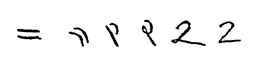
Symbols for two have evolved across writing systems. The modern glyph "2" developed from ancient numerals through medieval Western scripts; Roman numerals use "II". Names for the number are present in all known languages and often trace to common Indo-European roots. Mathematical study of two predates formal number theory and appears in early counting, geometry and measurement.
Uses and examples
Two appears ubiquitously: in computing as the base of binary (bits are 0 or 1), in everyday life as pairs or couples, in music as duple meter, and in logic as binary truth values. In science, atomic number 2 corresponds to helium, and in geometry many simplest shapes or relations involve pairs of points or a segment with two endpoints.
Notable facts and distinctions
Because 2 is the only even prime it is central to proofs that separate parity and primality cases. Powers of two underlie memory sizes and digital storage. Philosophically and culturally, two often symbolizes contrast or complementarity (for example, binary oppositions). For more formal contexts see entries on related numerals and symbols linked above.
Questions and answers
Q: What is 2?
A: 2 is a number, numeral, and glyph.
Q: How is 2 pronounced?
A: 2 is pronounced as "Two; /ˈtuː/ (listen)".
Q: What is the position of 2 in the number series?
A: 2 is the number after 1 (one) and the number before 3 (three).
Q: How is 2 represented in Roman numerals?
A: In Roman numerals, 2 is represented as II.
Q: What comes after 2?
A: The number that comes after 2 is 3.
Q: What comes before 2?
A: The number that comes before 2 is 1.
Q: What kind of character is 2?
A: 2 is a glyph, which means it is a symbol or character that is used to represent a specific meaning or idea.
Tags
Related articles
Author
AlegsaOnline.com 2 (number) Leandro Alegsa
URL: https://en.alegsaonline.com/art/112784
Sources
- commons.wikimedia.org2.html : 2