
24-hour clock
A method of expressing time by numbering hours 00–24 without a.m./p.m.; widely used in transport, computing, military, and many countries for unambiguous timekeeping and data exchange.
Overview
The 24-hour clock is a system for expressing the time of day by numbering hours consecutively from the start of the calendar day at midnight (00:00) to the end of the day at 24:00. Because each hour has a unique number between 0 and 24, the system does not require the qualifiers a.m. or p.m. and avoids the ambiguity that can occur with the 12-hour clock. The format is widely used where clarity and precise scheduling are important, for example in transport timetables, computing, public safety and military operations. It is also the basis for the international numeric time representation recommended by the ISO standard (ISO 8601), and it is commonly taught and used in many countries for both written and spoken times.
Image gallery
10 Images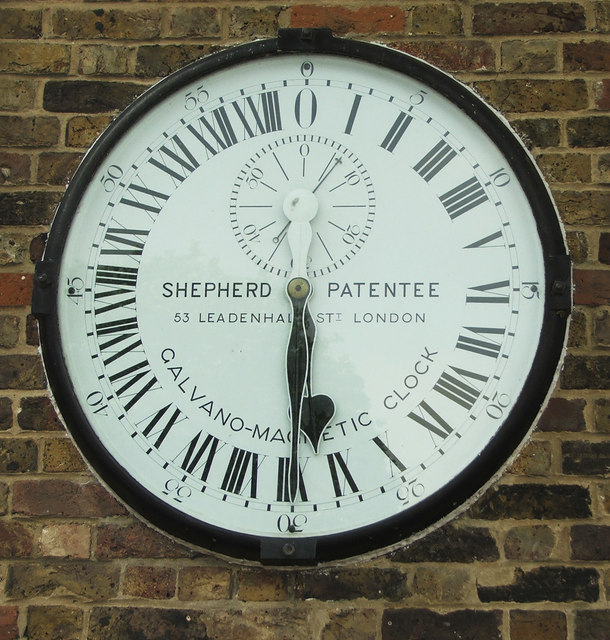


Notation and conventions
Times are normally written as hours and minutes separated by a colon, for example 01:23 or 14:30. When greater precision is required, seconds are added as a third component, for example 08:15:45. Single-digit hours and minutes are commonly prefixed with a leading zero (09:07) to produce fixed-width fields that are convenient for digital displays and computer processing. Some contexts omit the colon and use four-digit forms such as 0923 or 1430, particularly in transport or military shorthand.
By convention the day starts at 00:00 (the beginning of the day) and the final minute of a calendar day begins at 23:59 and ends at 24:00, which corresponds to 00:00 of the following day. The notation 24:00 is used in schedules to indicate the end of a day in a way that ties an event to a specific calendar date; conversely, 00:00 indicates the start of a day. Different organizations adopt consistent rules to avoid confusion: some prefer always to use 00:00 for midnight and never 24:00, while others accept 24:00 when specifying the end of a service on a particular date.
History and regional names
The continuous count of 24 hours has roots in scientific, navigational and railway practice; formal adoption for timetables and public services grew during the 19th and early 20th centuries when standardised scheduling became important. In English-speaking regions the system carries a number of informal names: in the United States it is often referred to as "military time" (military time), while in parts of Canada and in some British usage it has also been called "railway time" or "continental time" in historical contexts (English Canada, Canada, United Kingdom used terms).
Uses and practical importance
The 24-hour clock is preferred in domains where precise, unambiguous communication of times is required. Typical uses include:
- Transport: airlines, railways, and bus operators publish timetables in 24-hour form to reduce mistakes when journeys cross midnight and to make daily schedules straightforward for passengers and staff.
- Computing and telecommunications: timestamps in logs, file metadata and data interchange formats commonly adopt 24-hour notation so that ordering and arithmetic on times are consistent across systems, often following ISO recommendations (ISO 8601).
- Emergency services and the military: organizations that coordinate operations use 24-hour time to avoid misinterpretation and to simplify reporting of incidents and events.
- Everyday life in many countries: numerous European, Asian and Latin American countries use the 24-hour form in writing and increasingly in speech for clarity.
Common practical examples include indicating business hours (for example "07:00–24:00" to mean open from seven in the morning until midnight), printing departures and arrivals on public timetables, setting alarms on digital devices, and configuring computer systems to display timestamps in a non-ambiguous format.
Advantages and limitations
Advantages often cited for the 24-hour clock are elimination of ambiguity between morning and evening, simpler arithmetic for calculating intervals across the day, and greater suitability for international and technical contexts. Because every hour has a unique numeric label, it reduces the need to specify additional qualifiers and lowers the risk of human error in written schedules and data. For automated systems the consistent numeric range is convenient when performing time arithmetic and comparisons.
Limitations are largely cultural and stylistic: in regions accustomed to the 12-hour clock, spoken conversation often uses the 12-hour form and its familiar phrases. Some people find expressions such as "fifteen hundred hours" or "seventeen thirty" less conversational than "three o'clock in the afternoon". Many devices therefore offer a user-selectable preference to display time in either 12- or 24-hour format so that both practical needs and local habits are served. For comparative discussion see a brief comparison with the 12-hour clock.
Style, speech and special cases
Spoken forms vary by community and profession. In civilian speech in parts of Europe it is common to say the hour and minutes directly, for example "thirteen forty-five" for 13:45. Military and some emergency services may use a three- or four-digit spoken form without the colon ("one five hundred" for 1500 or more formal phrases like "fifteen hundred hours"). Style guides and national standards bodies provide rules for writing times in official documents and timetables; these rules typically address whether to use colons, leading zeros, and how to handle midnight so that legal and operational definitions remain clear (day, hours).
Timetables and midnight handling
Transport operators often use 24:00 in timetables to show that a service arrives at the end of a given calendar day. For example, a service listed as arriving at 24:00 on a Tuesday is tied to Tuesday's schedule rather than to Wednesday. Conversely, departures that occur in the first minute of a calendar day will be shown as 00:00. To prevent ambiguity many operators explain their notation in a legend or use 23:59 / 00:00 conventions in operational documentation.
Standards and further reading
International and national standards give recommendations for numeric time notation to support interchange of data and to reduce misinterpretation. For technical and regulatory guidance consult the relevant standards and style guides used by transport authorities, computing standards bodies and national agencies that publish official timekeeping rules (> see ISO 8601 and related national documents). For regional usage and terminology see policy notes or language references in English-speaking areas (English Canada, Canada, United Kingdom, US military usage).
Questions and answers
Q: What is the 24-hour clock?
A: The 24-hour clock is a way of telling time in which the day runs from midnight to midnight and is divided into 24 hours, numbered from 0 to 24. It does not use a.m. or p.m.
Q: How do you write time in the 24-hour clock system?
A: Time in the 24-hour clock system is written in the form hours:minutes (for example, 01:23), or hours:minutes:seconds (01:23:45). Numbers under 10 have a zero in front (called a leading zero); e.g. 09:07.
Q: What are some other names for this system?
A: This system is also referred to as military time or continental time (only in the US and English speaking parts of Canada and UK respectively). In some parts of the world, it is called railway time.
Q: When does each day start and end under this system?
A: Under the 24-hour clock system, each day begins at midnight (00 :00) and ends at 23 :59 before transitioning into 00 :00 of the following day.
Q; What are some advantages of using this system over 12-hours clocks?
A; Advantages over 12 hour clocks include being able to more easily distinguish between morning and afternoon times as well as being used by computers, military, public safety, transport systems etc., making it easier for people all around the world to communicate times accurately without confusion due to different local conventions regarding AM/PM notation..
Related articles
Author
AlegsaOnline.com 24-hour clock Leandro Alegsa
URL: https://en.alegsaonline.com/art/112735