
2018 United States elections
Midterm elections held Nov 6, 2018 during Donald Trump's presidency; Democrats won the House, Republicans kept the Senate, and Democrats made gains in state governments amid high turnout.
On November 6, 2018, the United States held its regular midterm elections. Midterms occur halfway through a president's four‑year term and determine control of the bicameral Congress as well as many state and local offices. These contests took place during the presidency of Donald Trump and were widely viewed through the lens of reactions to his administration and the 2016 election cycle. The vote included all 435 seats in the United States House of Representatives and 35 of the 100 seats in the United States Senate, along with 39 gubernatorial contests and thousands of state and municipal offices.
Image gallery
5 Images
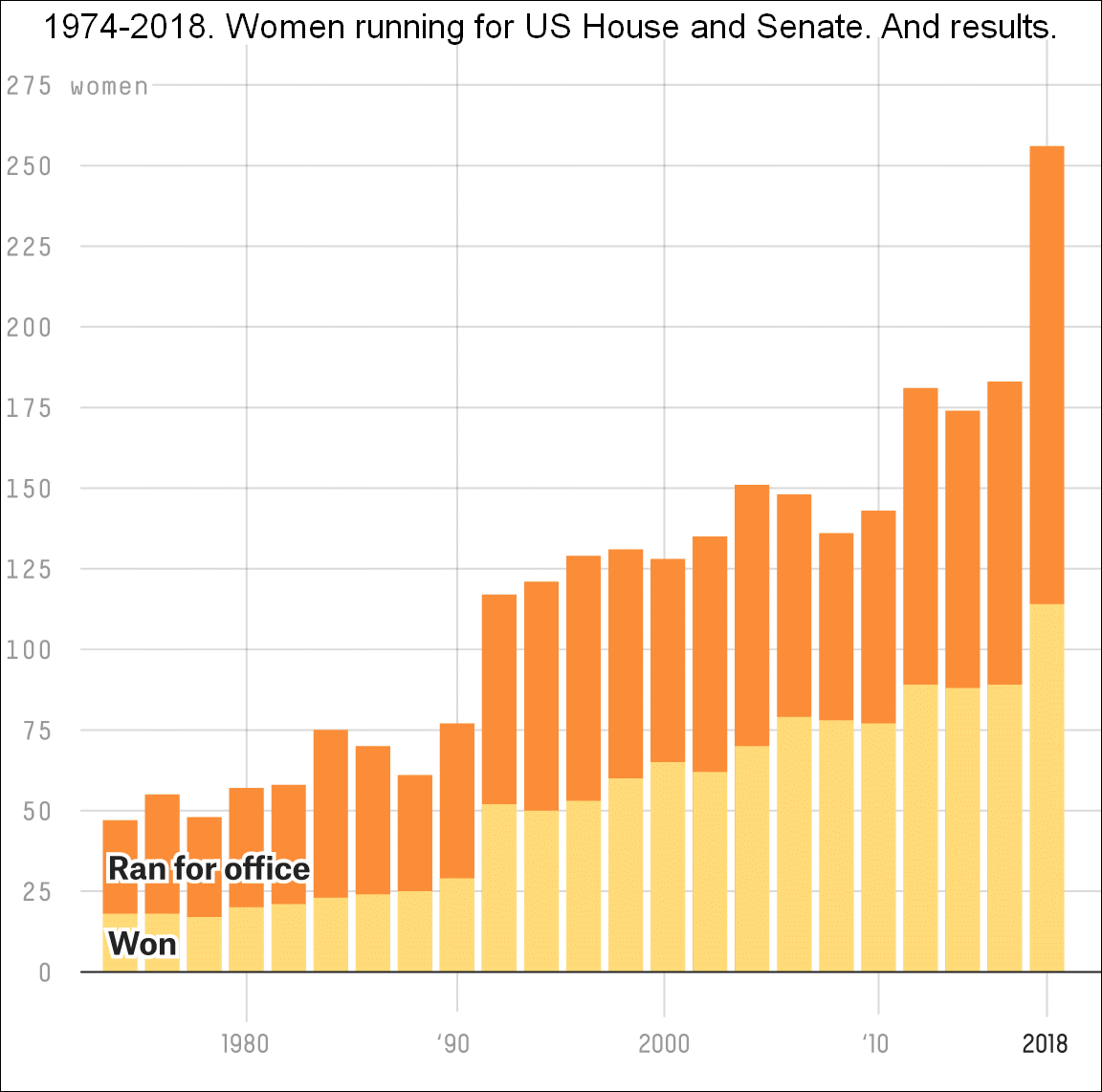



National results and congressional balance
The outcome produced a divided federal legislature. In the House of Representatives, the Democratic Party won a clear majority by achieving a net gain of 41 seats, reversing the Republican majority that had controlled the chamber. In the Senate, however, the Republican Party held and modestly expanded its majority, recording a net gain of two seats. Observers noted that the contrasting results reflected the different electoral dynamics of House and Senate contests: the House is highly sensitive to nationwide swings and suburban trends, while the Senate depends on the specific map of seats up for election.
State and local outcomes
State-level races also favored Democrats in several notable ways. Democrats picked up seven governorships and made substantial gains in state legislatures, winning at least 350 additional state legislative seats and flipping control of six legislative chambers. These shifts affected redistricting power, local policy priorities, and the political backdrop for the 2020 cycle.
Turnout, trends and explanations
Voter participation in 2018 was unusually high for a midterm, the largest such turnout since 1914. Analysts attributed the surge to heightened political engagement, mobilization by both parties, and strong reactions to national issues. The pattern of results was often described as a "blue wave" because Democrats made sweeping gains in the House and many state contests, but that label was qualified by Republican success in the Senate where the geographic distribution of contested seats favored the GOP.
Consequences and significance
The change in House control altered congressional oversight and legislative priorities for the remainder of the presidential term: committee chairmanships shifted, oversight activity and investigations increased, and the policy agenda reflected the priorities of the new majority. At the state level, gains strengthened Democratic influence over budgeting, education, and voting rules in multiple jurisdictions. The 2018 elections are often studied as an example of how turnout, candidate recruitment, and the interplay between national sentiment and local maps can produce differing outcomes across branches and levels of government.
Further reading and resources
- Overview of the presidency and context: Trump presidency
- Structure and role of the United States Senate
- Structure and role of the United States House of Representatives
- Biographical and electoral information on the president: Donald Trump
Questions and answers
Q: When were the 2018 United States elections held?
A: The 2018 United States elections were held on Tuesday, November 6, 2018.
Q: What type of elections were held in 2018?
A: The 2018 United States elections were midterm elections.
Q: Which political party held the presidency during the 2018 United States elections?
A: Republican Party held the presidency during the 2018 United States elections.
Q: How many seats were up for election in the United States Senate in 2018?
A: In 2018, there were 35 of the 100 seats in the United States Senate up for election.
Q: Which political party gained control of the United States House of Representatives in the 2018 elections?
A: Democrats gained control of the United States House of Representatives in the 2018 elections.
Q: Did the Republican Party gain or lose control of the United States Senate in the 2018 elections?
A: The Republican Party kept control of the United States Senate in the 2018 elections.
Q: Was the 2018 United States election considered a "blue wave" election?
A: Yes, the 2018 United States elections were considered a "blue wave" election for the House and the states, but not the Senate.
Related articles
Author
AlegsaOnline.com 2018 United States elections Leandro Alegsa
URL: https://en.alegsaonline.com/art/112634