
2018 Brazilian general election
The 2018 Brazilian general election elected the president, vice president, governors and national legislators. It featured a first-round vote on 7 October and a runoff on 28 October won by Jair Bolsonaro.
Overview
The 2018 Brazilian general election was held in two rounds: a nationwide first round on 7 October 2018 and a presidential runoff on 28 October 2018. Voters selected the President and Vice President, as well as governors, members of the National Congress (both the Chamber of Deputies and the Federal Senate) and state legislatures. The contest drew intense domestic and international attention because it followed years of political turmoil, high-profile corruption investigations, and significant economic and security concerns.
Image gallery
10 Images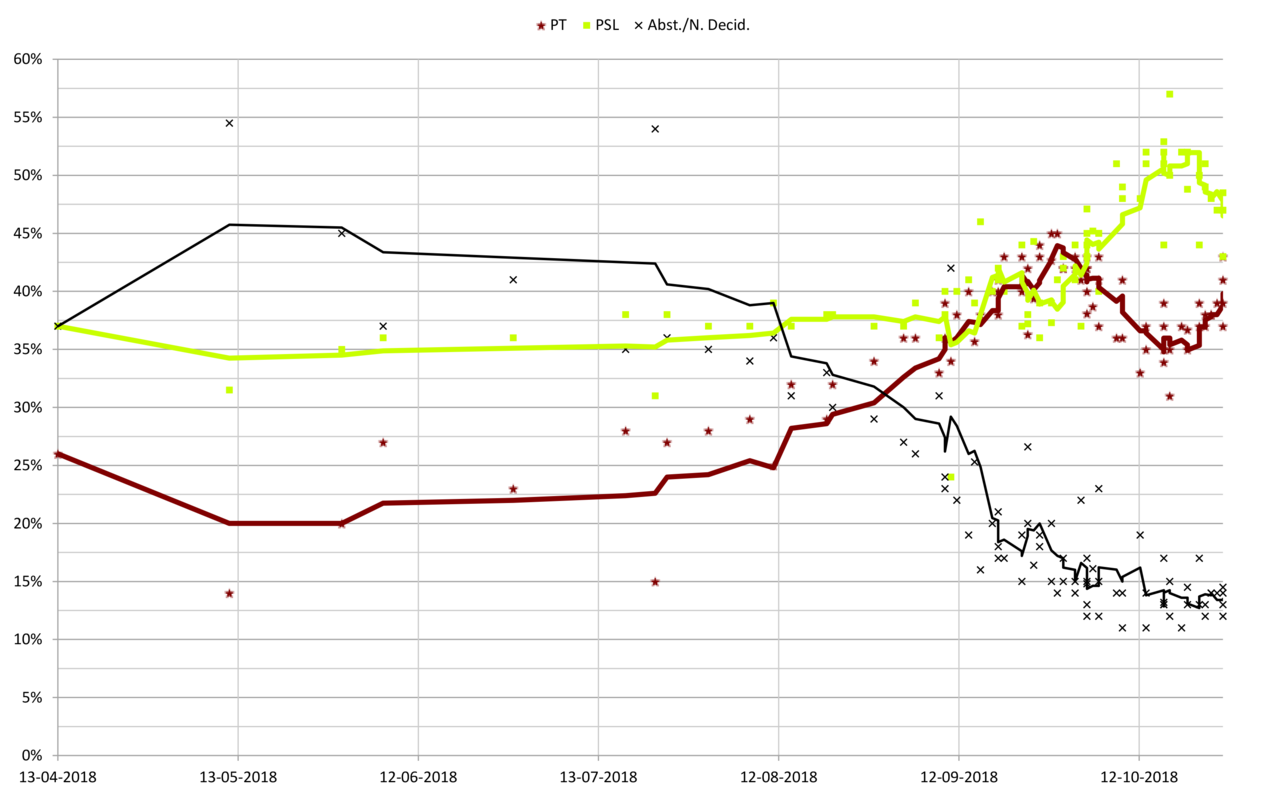


Key results
No presidential candidate secured an absolute majority in the first round. In that vote Jair Bolsonaro, the candidate of the Social Liberal Party, received the largest single share while Fernando Haddad of the Workers’ Party placed second. Because Brazilian law requires a majority for election, the two top candidates proceeded to the runoff, where Bolsonaro emerged victorious and was elected president.
Context and campaign
The election took place in the shadow of the Operation Car Wash corruption probes and the political fallout that followed. Former president Luiz Inácio Lula da Silva, a leading figure of the Workers’ Party, was unable to run after legal convictions and incarceration; his party nominated Fernando Haddad as its replacement. Security, the economy, corruption, and social policy were dominant themes. The campaign season was marked by intense debate on social networks, concerns about misinformation, and the violent stabbing of a leading candidate during a campaign event in September 2018.
Significance and aftermath
The result represented a major realignment in Brazilian politics, with a candidate from the political right winning the presidency after more than a decade of Workers’ Party rule. The new administration took office at the beginning of 2019. Legislative elections held at the same time reshaped the composition of Congress and influenced the incoming government’s ability to pursue its agenda.
Components of the general election
- Presidential and vice-presidential ballot: two-round system when no candidate wins over 50% in the first round.
- Legislative contests: all members of the Chamber of Deputies and a portion of the Federal Senate were elected.
- State level: governors and state legislatures were chosen in the same electoral cycle.
Notable facts and further reading
The campaign featured prominent figures and unusual circumstances: the candidacies of Jair Bolsonaro and Fernando Haddad, the sidelining of former president Luiz Inácio Lula da Silva from the ballot, and broad use of online platforms that affected messaging and turnout. For background on Brazil as the national context and on specific institutions involved in administering the vote, see the general country and office information: Brazil overview and resources on the presidency and vice presidency: office of the Vice President.
Questions and answers
Q: When were the 2018 Brazilian general elections held?
A: The 2018 Brazilian general elections were held on October 7th.
Q: Which political figures were elected in the 2018 Brazilian general elections?
A: The President, Vice President and other political figures were elected.
Q: Who won the first round of the Brazilian presidential election in 2018?
A: Jair Bolsonaro won the first round of the Brazilian presidential election in 2018.
Q: What percentage of the vote did Jair Bolsonaro win in the first round of the Brazilian presidential election in 2018?
A: Jair Bolsonaro won 46% of the vote in the first round of the Brazilian presidential election in 2018.
Q: Who was Jair Bolsonaro's closest rival in the first round of the Brazilian presidential election in 2018?
A: Fernando Haddad was Jair Bolsonaro's closest rival in the first round of the Brazilian presidential election in 2018.
Q: Was a second round of voting required in the 2018 Brazilian presidential election?
A: Yes, a second round of voting was required in the 2018 Brazilian presidential election.
Q: Who was elected President in the 2018 Brazilian general elections?
A: Jair Bolsonaro was elected President in the 2018 Brazilian general elections.
Related articles
Author
AlegsaOnline.com 2018 Brazilian general election Leandro Alegsa
URL: https://en.alegsaonline.com/art/112618
Sources
- next.ft.com : Brazil keen to open trade talks with UK
- theguardian.com : "Brazil opens impeachment proceedings against president Dilma Rousseff"
- nbcnews.com : "Brazil's Senate Votes to Impeach President Dilma Rousseff"
- congressoemfoco.uol.com.br : "Afastada, Dilma mantém salário, Alvorada, avião e assessores"
- cnn.com : "Brazil's Senate ousts Rousseff in impeachment vote"
- bbc.com : "Brazil President Dilma Rousseff removed from office by Senate"
- theintercept.com : "Credibility of Brazil's Interim President Collapses as He Receives 8-Year Ban on Running for Office"
- g1.globo.com : "Ministro Luiz Fux afirma em decisão que Lula é inelegível"