
2013 Boston Marathon bombings
Two bombs exploded near the 2013 Boston Marathon finish line on April 15, 2013, killing three and injuring hundreds; the attack prompted a large criminal investigation, a citywide manhunt, trials and a lasting civic response.
Overview
The Boston Marathon bombings occurred on April 15, 2013 during the annual Boston Marathon, an event held each year on Patriots' Day. At 2:49 p.m. Eastern, two improvised explosive devices detonated near the race finish line, thirteen seconds apart. The explosions killed three people and injured many others, causing both physical and psychological trauma and widespread property damage in the nearby commercial district.
Image gallery
10 Images


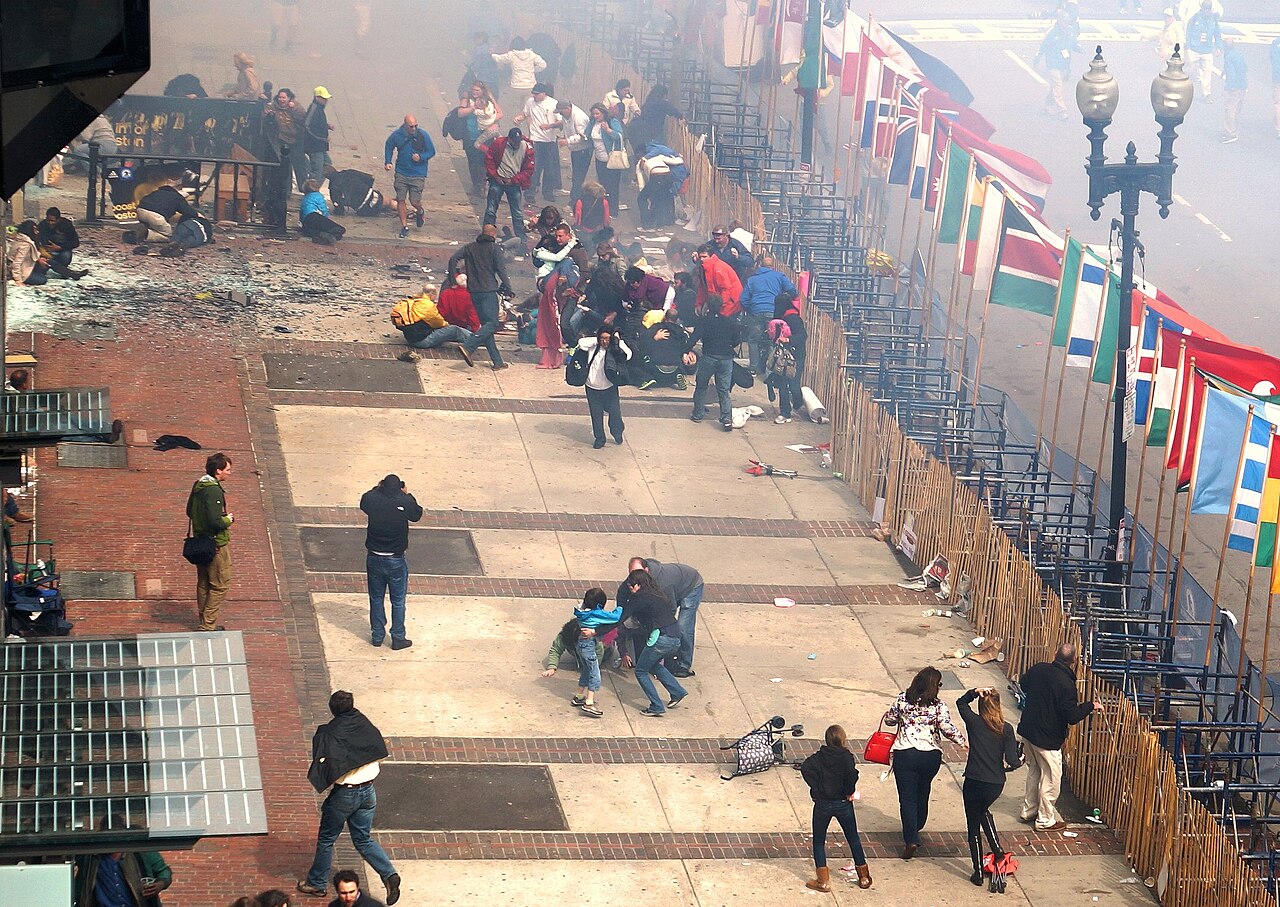


Attack details and devices
Investigators determined the explosives were packed into pressure cookers and concealed in backpacks; they were laden with nails and other metal to increase shrapnel injuries. The blasts broke storefront windows, damaged a public library nearby, and scattered debris across the finish area. Bystanders, runners and emergency personnel were immediately involved in rescue and treatment of the wounded.
Response, search and arrest
Local, state and federal agencies conducted a rapid investigation using surveillance footage, witness photos and public tips. Two brothers were soon identified as suspects. A days-long manhunt included a large police presence, a shelter-in-place advisory in parts of the Boston suburbs, and a violent confrontation during which a campus police officer was killed. The older suspect was killed in the confrontation; the younger was captured wounded, charged, and later tried in federal court.
Casualties and medical impact
Three civilians died as a result of the attack, and hundreds were injured. Many victims suffered severe limb and soft-tissue injuries; some required amputations and long-term rehabilitation. Hospitals and trauma teams in the region mobilized to treat mass casualties, and a concerted effort by volunteers and medical staff played a central role in the immediate response.
Investigation, prosecution and public discourse
The bombing prompted extensive forensic and legal proceedings. The surviving suspect was prosecuted in federal court and convicted; sentences and appeals attracted sustained public attention. Authorities reviewed how the devices were constructed and how similar large public events could be protected, leading to changes in security planning and emergency communications.
Aftermath and legacy
The city and nation responded with memorials, benefit efforts for victims and a civic slogan that emphasized resilience. Annual commemorations near the finish line honor those killed and injured and recognize first responders. The incident has been studied in law enforcement, emergency medicine and public-safety fields as an example of coordinated response, community solidarity and the long-term challenges of recovery from an act of terrorism. For more background on the nature of the incident as an act of violent extremism, see terrorist attack.
Questions and answers
Q: When did the Boston Marathon bombings occur?
A: The Boston Marathon bombings occurred on April 15, 2013.
Q: Where did the Boston Marathon bombings occur?
A: The Boston Marathon bombings occurred in Boston, Massachusetts.
Q: What time did the bombs explode during the Boston Marathon?
A: The bombs exploded at 2:49 PM EDT during the Boston Marathon.
Q: How far apart were the two bombs that exploded during the Boston Marathon?
A: The two bombs that exploded during the Boston Marathon were thirteen seconds apart.
Q: How many people were killed during the Boston Marathon bombings?
A: Three people were killed during the Boston Marathon bombings.
Q: How many people were estimated to be injured during the Boston Marathon bombings?
A: An estimated 264 people were injured during the Boston Marathon bombings.
Q: What kinds of damage were caused by the Boston Marathon bombings?
A: The explosions caused broken windows of stores near the site and a damaged window on the third floor of the Boston Public Library, which was across the street from the site of one of the explosions.
Related articles
Author
AlegsaOnline.com 2013 Boston Marathon bombings Leandro Alegsa
URL: https://en.alegsaonline.com/art/112507
Sources
- boston.com : "AP Glance: Pressure Cooker Bombs"
- cnn.com : "Explosions rock Boston Marathon, several injured"
- bigstory.ap.org : "Two explosions at Boston marathon finish line"
- foxnews.com : "FBI releases video, photos of Boston Marathon bombing suspects"
- bostonglobe.com : "Injury toll from Marathon bombs reduced to 264"
- nytimes.com : "Boston Marathon Blasts Kill 3 and Maim Dozens"
- news.nationalpost.com : ""Explosions at Boston Marathon Injure Dozens""
- usnews.nbcnews.com : "Explosions rock finish of Boston Marathon; 2 killed and at least 23 hurt, police say"
- huffingtonpost.com : "Boston Marathon Explosion Video Footage (GRAPHIC VIDEO, LIVE UPDATES)"
- edition.cnn.com : "Deadly bombs strike Boston Marathon; authorities discover more bombs"
- bbc.com : "As it happened: Boston Marathon explosions"
- cbc.ca : "Boston Marathon bomb blasts kill 2, injure dozens"
- nydailynews.com : "President Obama calls the Boston Marathon bombings 'an act of terror'"