
2010 Pichilemu earthquakes
A M6.9 earthquake struck near Pichilemu on 11 March 2010. The event was distinct from the Feb 27 Maule quake, produced intraplate normal faulting, generated aftershocks and a PTWC local tsunami advisory, and caused local damage.
Overview
On 11 March 2010 a magnitude 6.9 earthquake occurred about 40 kilometres southwest of Pichilemu, in the coastal province of the O'Higgins Region of Chile. The shock was widely felt in central Chile and prompted a tsunami advisory issued by the Pacific Tsunami Warning Center (PTWC). That advisory included region-specific guidance and cautioned that local tsunamis could occur along a limited stretch of coast; the PTWC specifically highlighted the possibility of sea level disturbances within roughly 100 kilometres of the epicentre (between San Antonio and Concepción).
Image gallery
10 Images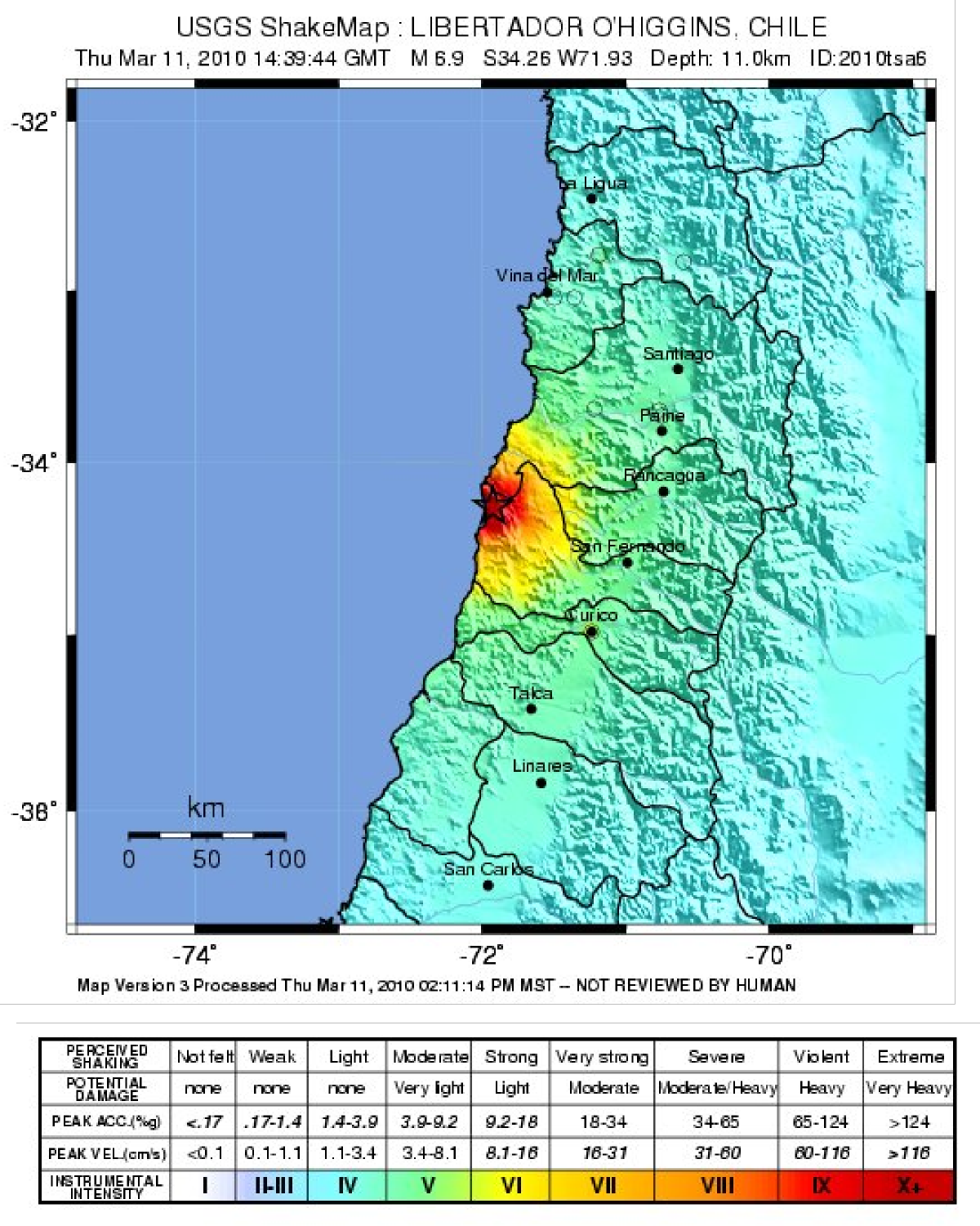


Tectonic context
Chile is located along the convergent margin where the Nazca Plate subducts beneath the South American Plate. Earlier the same year, on 27 February 2010, a very large megathrust earthquake (the Maule earthquake) ruptured part of that plate interface. The March 11 event was initially compared to aftershocks of the February rupture, but agency summaries such as those from the United States Geological Survey described the March shock as a separate event with a different focal mechanism. Early seismological analyses interpreted the March 11 shock as predominantly normal faulting within a crustal block rather than pure thrust faulting on the plate interface. Scientists noted uncertainty about whether the normal faulting occurred in the overriding plate or within the subducting slab, and the question remained part of subsequent research into the sequence.
Sequence and felt reports
The main shock was followed within hours by a sequence of aftershocks; within six hours observers recorded a number of moderate events, including two of magnitude about 6 or greater and several between magnitudes 5 and 6. Ground shaking was reported across coastal and inland communities. The quake occurred at around midday local time and was felt strongly in Valparaíso during the presidential inauguration ceremony of Sebastián Piñera. Visiting dignitaries from neighbouring countries, including the presidents of Bolivia, Paraguay and Ecuador, were present at the ceremony but official accounts note that the proceedings were not interrupted.
Local tsunami advisory
The PTWC issued a tsunami advisory and bulletins through its channel, warning that while a large ocean-wide tsunami was not expected, local and near-shore sea level disturbances were possible. The advisory emphasized coastal areas within approximately 100 kilometres of the epicentre, nominally extending between San Antonio and Concepción, should be alert to wave action, unusual currents and to follow local authorities' instructions. The PTWC information was intended to support Chilean civil defence agencies in assessing immediate coastal risk and issuing local guidance concerning the advisory.
Damage and impacts
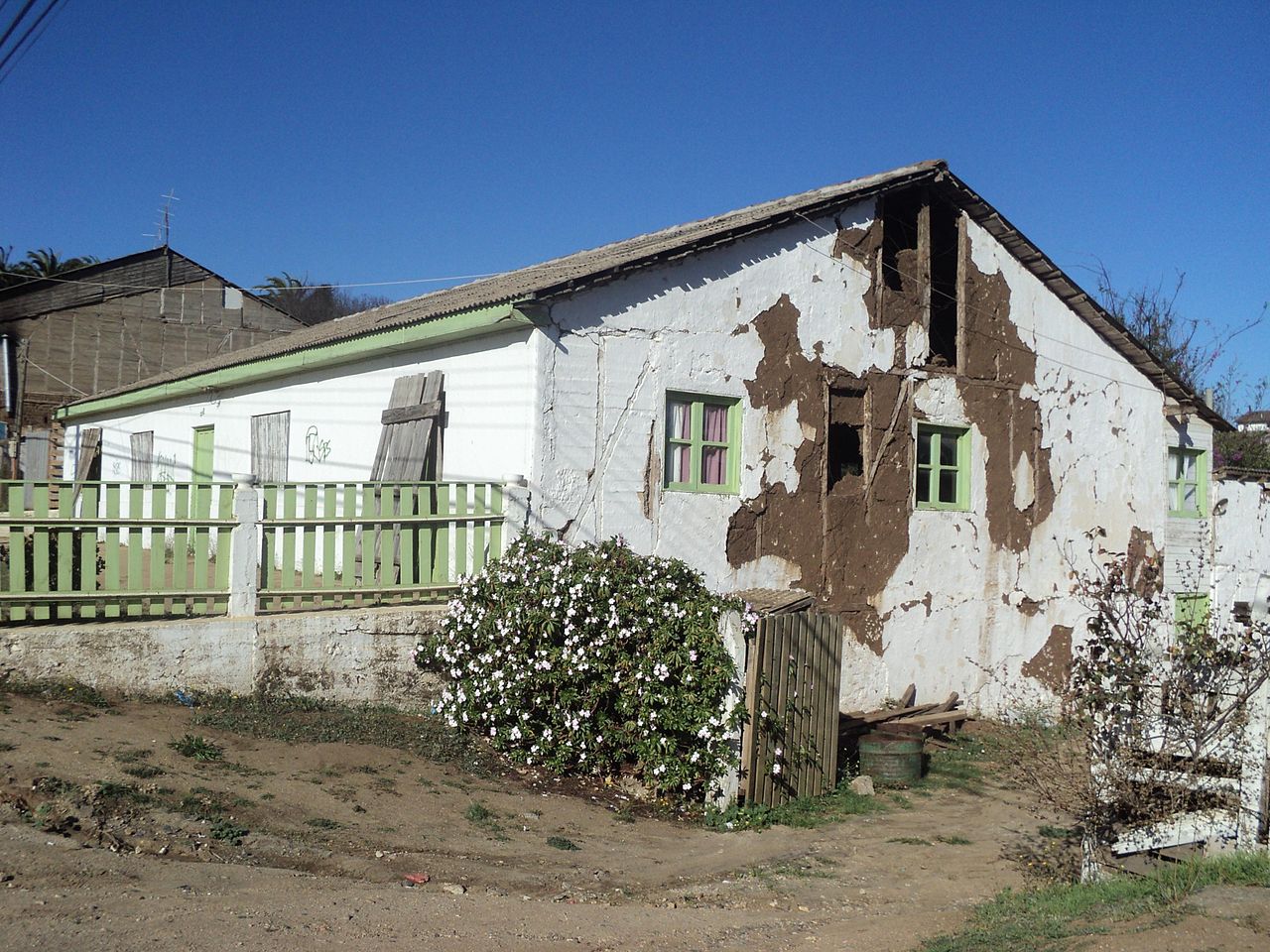
The locality nearest the epicentre suffered the most direct effects. In and around Pichilemu reports described damage to public parks and to historic coastal structures; Ross Park and much of the Agustín Ross Cultural Centre were reported to have sustained significant damage, and a number of houses in the nearby settlements of Espinillo and Rodeillo were affected. Further inland, media accounts described the collapse of a pedestrian crossing over Chile Highway 5 north of Rancagua, illustrating that both coastal and inland infrastructure experienced impacts. Local authorities carried out inspections of vulnerable buildings and heritage sites to determine immediate safety risks and priorities for repairs.
Response and aftermath
Emergency services and municipal authorities implemented precautionary measures typical after a felt quake: rapid assessments of buildings, temporary closures of damaged public spaces, and communication with coastal communities about the limited tsunami threat. The event served as a reminder of the complex seismic hazard in central Chile: even after a major megathrust rupture, the crust and the subducting plate can host separate earthquakes with different mechanisms. Researchers and engineers studied the March 11 sequence to refine hazard models, reassess lifelines and guide restoration of historic structures in Pichilemu and nearby towns.
Scientific and hazard significance
Seismologists considered the March 11 earthquake important for understanding stress redistribution after the large February rupture. The distinction between a direct aftershock on the plate interface and intraplate normal faulting bears on both shaking intensity patterns and tsunami generation potential. Because normal-fault intraplate events can produce different ground-motion characteristics and do not always displace the seafloor in the same way as megathrust events, their identification affects short-term warnings and longer-term seismic hazard assessments.
- Epicentre: near Pichilemu
- Region: O'Higgins Region, Chile
- Magnitude: 6.9 (reported)
- Primary scientific sources: USGS summary, PTWC bulletins
- Local advisory area cited: between San Antonio and Concepción (~100 km of coast)
- Notable local impacts: damage to Ross Park and the Agustín Ross Cultural Centre, houses in Espinillo and Rodeillo, and a collapsed pedestrian crossing near Rancagua
- Context: occurred soon after the 27 February Maule earthquake and was felt during the inauguration in Valparaíso attended by President Sebastián Piñera and visiting leaders from Bolivia, Paraguay and Ecuador
Questions and answers
Q: What type of earthquake occurred on March 11, 2010?
A: On March 11, 2010 a 6.9 magnitude earthquake occurred 40 kilometers southwest of Pichilemu, O'Higgins Region, Chile.
Q: Was there a tsunami warning issued after the earthquake?
A: Yes, a tsunami warning was made by the Pacific Tsunami Warning Center Pacific-wide and they warned of the possibility of local tsunamis within 100 kilometers of the epicenter (between San Antonio and Concepción).
Q: How many aftershocks were reported within 6 hours?
A: Within 6 hours 10 aftershocks took place, 2 were of magnitude 6 or greater and 7 between magnitude 5 and 6.
Q: When did the earthquake occur in relation to the new president's inauguration?
A: The earthquake took place shortly before the new president Sebastián Piñera was sworn in at about 12:15 PM local time (15:15 UTC).
Q: Were any other presidents present during the inauguration when it happened?
A: Yes, the presidents of Bolivia, Paraguay, and Ecuador were present when the earthquake occurred. However, television footage showed that it did not interrupt the inauguration.
Q: What kind of damages were reported by Chilean news media?
A: Damages reported by Chilean news media included a collapsed pedestrian crossing over Chile Highway 5 north of Rancagua. The most affected place by the earthquake was Pichilemu where it destroyed Ross Park and much of Agustín Ross Cultural Centre as well as many houses in Espinillo and Rodeillo.
Q: In which plate did this particular quake occur ?
A: It has not been positively decided in which plate this particular quake occurred though it is believed to have been caused by normal faulting inside one of those plates unchained by regional stress caused by February 27th's thrust fault rupture between Nazca & South American plates
Related articles
Author
AlegsaOnline.com 2010 Pichilemu earthquakes Leandro Alegsa
URL: https://en.alegsaonline.com/art/112441
Sources
- 2010 Pichilemu earthquake
- earthquake.usgs.gov : "Station Lists" · webcitation.org
- earthquake.usgs.gov : Magnitude 6.9 - LIBERTADOR O'HIGGINS, CHILE
- el-carabobeno.com : Doce réplicas con epicentro en Pichilemu
- chile.com : El Mayor Fue de 7,2° Richter
- news.bbc.co.uk : "New Chile quake as Pinera sworn in as president"
- 24horas.cl : "Archived copy"
- prh.noaa.gov : Tsunami Information Bulletin
- aljazeera.com : "Chile president vows to rebuild"
- earthquake.usgs.gov : "Geological summary by the USGS"
- earthquake.usgs.gov : USGS list of earthquakes