
2003 invasion of Iraq
The 2003 invasion of Iraq was a U.S.-led military operation that ousted Saddam Hussein’s government; it began March 20, 2003 and led to prolonged occupation, controversy, and disputed casualty and intelligence assessments.
Overview
The 2003 invasion of Iraq was a military campaign launched on March 20, 2003 by a coalition led by the United States and the United Kingdom. Forces entered from multiple directions with the stated goal of toppling the regime of Saddam Hussein and eliminating perceived threats. Large-scale combat operations continued into April, and on May 1, 2003 senior leaders declared major combat operations finished, though significant fighting and insurgency followed.
Image gallery
10 Images




Causes and prewar claims
Principal justifications offered by coalition governments included allegations that Iraq possessed weapons of mass destruction and had failed to comply with United Nations resolutions. The invasion occurred after a period of international inspection, diplomacy and debate. Coalition officials also cited suspected links between elements of Iraq and transnational militant groups, including claims about figures such as Abu Musab al-Zarqawi and associations with al-Qaeda, though those links and the existence of WMD were later shown to be incorrect or unproven in the forms presented before the war. The decision to invade was politically contentious at home and abroad, drawing criticism of leaders including George W. Bush and Tony Blair.
Coalition, forces and campaign
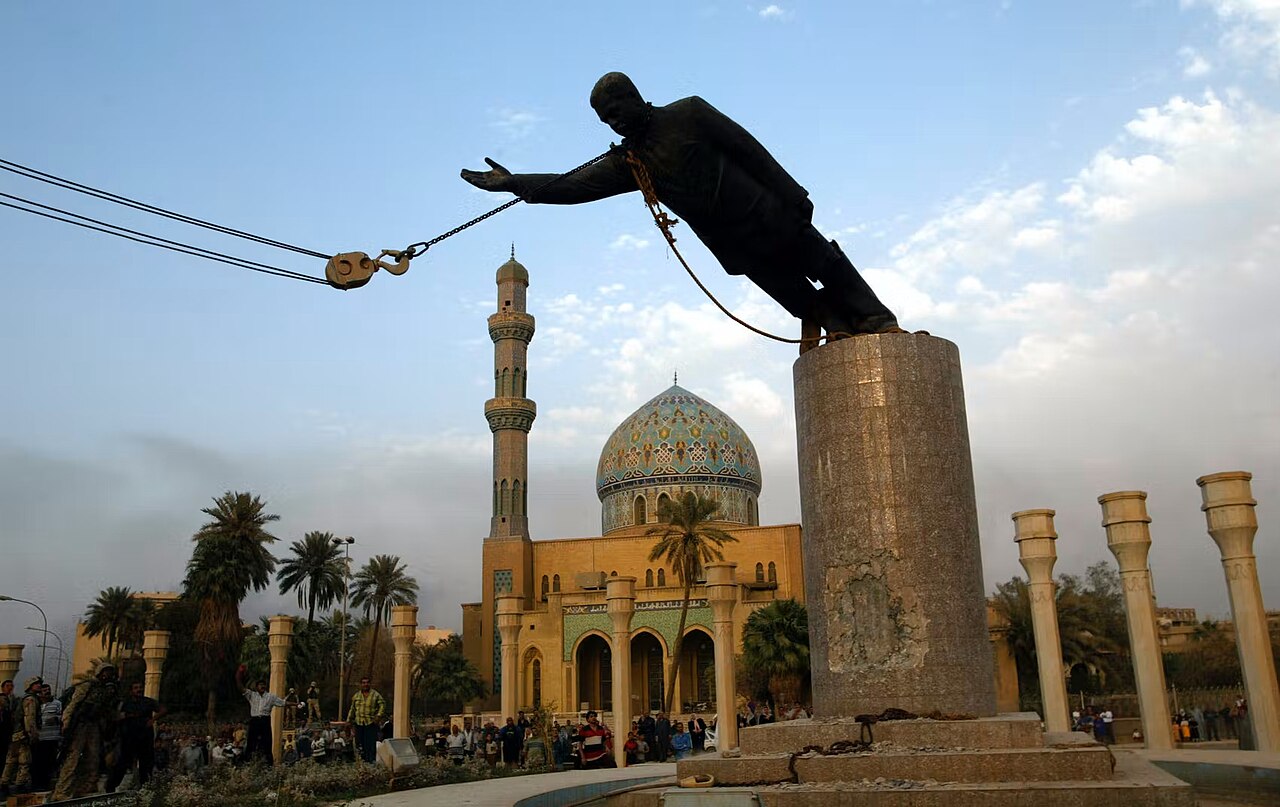
Major participants included the United States, United Kingdom, Australia and Poland, among others. The invasion employed combined arms operations: armored columns moved north from staging areas in Kuwait, special forces conducted targeted raids, and airborne troops—symbolized by paratroopers—seized key positions. Baghdad fell to coalition forces in early April 2003, followed by the collapse of formal Iraqi government control, but the operational phase gave way to an extended occupation and an escalating insurgency.
Human cost and aftermath
Estimating casualties from the invasion and its aftermath is complex. Coalition military deaths numbered in the low thousands with roughly 4,000–4,500 U.S. service members killed during the larger conflict of the decade; other coalition countries also suffered fatalities. Civilian death tolls vary widely between studies and sources, with estimates ranging from tens of thousands to well over 100,000 when counting direct and indirect deaths attributable to the war and its consequences. Beyond fatalities, hundreds of thousands of Iraqis were injured or displaced, and the conflict produced long-term social, political and economic disruption.
Controversy, legal questions and legacy
The invasion prompted sustained controversy over the legality, intelligence basis and strategic consequences of toppling Saddam Hussein’s government. Debates focused on whether the invasion was authorized under international law, the adequacy of postwar planning, and the accuracy of prewar intelligence on WMD and terrorist ties. The campaign reshaped regional politics, influenced global counterterrorism efforts, and sparked wide public protest and academic analysis; its legacy continues to inform discussions of intervention, reconstruction and accountability.
Notable facts and distinctions
- The operation is sometimes called the beginning of the Iraq War (2003–2011) and initiated a prolonged occupation phase.
- Inspections and intelligence after the invasion failed to find active WMD programs as described prior to the conflict.
- Military actions combined conventional advances from Kuwait with special operations and targeted air strikes.
- Assessments of political and security outcomes differ among governments, scholars and international bodies.
Further reading and official documents are available from government and international archival sources; for broader context see reports and analyses linked by national and international institutions (Iraq-related materials and public inquiries are notable starting points).
Related resources: coalition records, U.S. Department reports, UK government statements, Australian contributions, Polish role, Iraqi perspectives, Saddam-era documents, WMD inspections, al-Zarqawi background, terrorism links, British leadership, U.S. presidential decisions, special operations, logistics through Kuwait.
Questions and answers
Q: What countries were involved in the 2003 invasion of Iraq?
A: The United States, the United Kingdom, Australia, Poland and some other countries were involved in the 2003 invasion of Iraq.
Q: What was the main reason for starting the war?
A: The main reason that the war started was said to be because the British and American Governments believed that Iraq had dangerous weapons of mass destruction (such as chemical or nuclear weapons) that could be used against other countries.
Q: Was Saddam Hussein involved in planning 9/11 attacks?
A: No, Saddam Hussein was not involved in planning 9/11 attacks.
Q: How did soldiers invade Iraq?
A: Paratroopers landed in the far north of Iraq and a few soldiers attacked from the sea, but most invaded from Kuwait in the south.
Q: How many NATO soldiers were killed during this war?
A: 4,734 NATO soldiers were killed during this war including 4,600 U.S. servicemen, 179 UK servicemen and 139 Other NATO soldiers with a total of 4900 casualties.
Q: How many people were wounded during this war?
A: 31,882 U.S. servicemen and over 3,600 UK servicemen were wounded during this war.
Q: How many Iraqi civilians died during this conflict?
A: More than 100,000 Iraqi civilians who were not soldiers died during this conflict
Related articles
Author
AlegsaOnline.com 2003 invasion of Iraq Leandro Alegsa
URL: https://en.alegsaonline.com/art/112346
Sources
- washingtonpost.com : "U.S. Airlifts Iraqi Exile Force For Duties Near Nasiriyah" · web.archive.org
- globalsecurity.org : "Free Iraqi Forces Committed to Democracy, Rule of Law – DefenseLink" · web.archive.org
- usnews.com : "Deploying the Free Iraqi Forces – U.S. News & World Report" · web.archive.org
- news.bbc.co.uk : "Syrians join Iraq 'jihad'"
- lebanonwire.com : "Arab volunteers to Iraq: 'token' act or the makings of another Afghan jihad?" · web.archive.org
- un.org : "Security Council endorses formation of sovereign interim government in Iraq; welcomes end of occupation by 30 June, democratic elections by January 2005"
- fas.org : "Archived copy"
- fpc.state.gov : "Iraq: Post-Saddam Governance and Security"