
2003–04 NHL season
Season summary of the 2003–04 National Hockey League: schedule changes, regular-season trends, playoff outcome, broadcasting notes, and the season's place before the 2004–05 lockout.
The 2003–04 season was the 87th regular campaign of the National Hockey League. Thirty teams each played an 82-game schedule under a revised game distribution that emphasized more divisional and conference matchups. The season is remembered for marked defensive play, record numbers of goaltender shutouts, a scarcity of high individual scoring totals, and for concluding with the Tampa Bay Lightning winning the franchise's first Stanley Cup.
Image gallery
1 Image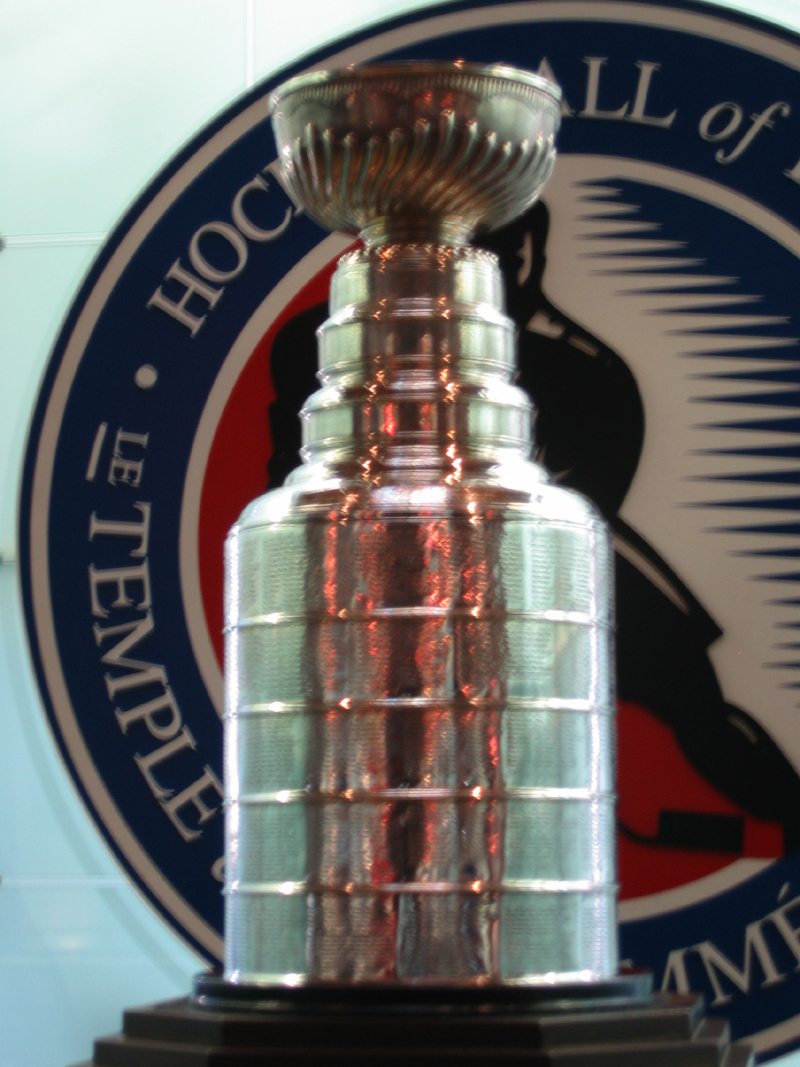
Schedule and format changes
One of the notable administrative tweaks introduced that year altered how the 82 games were allocated: teams played more games against divisional opponents and more conference rivals, while inter-conference meetings were reduced. The league also returned to a long-standing uniform convention by allowing clubs to wear dark (home) jerseys on home ice, a practice not used league-wide since the 1969–70 season. The basic playoff structure — the top eight teams from each conference qualifying for a seeded knockout — remained in place.
Regular-season trends and statistics
The campaign occurred during what fans and analysts often call the "dead-puck" era: lower scoring, tighter defensive systems and dominant goaltending. For the fourth time in eight years, the league's previous mark for total shutouts in a single season was eclipsed; 192 shutouts were recorded, a reflection of goaltender performance and team tactics. Notably, no player reached the milestone of 50 goals or 100 points in the regular season (excluding the shortened 1994–95 season), a rarity not seen since the late 1960s. Teams and coaches adjusted strategies to the prevailing environment, emphasizing structure and special teams.
Playoffs and the Stanley Cup
The postseason culminated in a seven-game Stanley Cup Final between the Tampa Bay Lightning and the Calgary Flames. The Lightning emerged victorious, winning the series 4–3 and claiming the first championship in franchise history. The final was tightly contested, with momentum swings and a decisive Game 7 that highlighted the parity and intensity of the playoff bracket. Coverage of the Cup run and the final series remains a defining memory for both organizations' fan bases.
Broadcasting, aftermath and significance
The 2003–04 season was the NHL's last full season broadcast by ABC and ESPN under their existing agreements. It also proved to be the final season before the labor stoppage that produced the cancelled 2004–05 season; that lockout led to major structural changes in the sport, including the introduction of a salary cap and the adoption of post-lockout rule changes that eliminated tie games in favor of shootouts beginning in the 2005–06 season. The 2003–04 campaign therefore stands as the closing chapter of the league's pre-cap, pre-shootout era (2004–05 NHL lockout).
- Champion: Tampa Bay Lightning — first Stanley Cup.
- Finalists: Calgary Flames.
- Historic notes: unusually high number of shutouts; no 50-goal or 100-point scorers in the regular season.
- Broadcast: last season of the league under the ABC/ESPN broadcast arrangement in that era (ABC, ESPN).
The 2003–04 NHL season occupies an important place in modern hockey history. It represents both the end of several long-running trends and the immediate precursor to significant rule and business changes after the lockout, marking a transition from one era of play and management into another.
For further details, including full standings, individual statistics and game results, consult season summaries and archival resources provided by the league and contemporary sports media outlets. Additional background on the lockout and post-2004 changes can be found in specialized analyses and retrospective coverage.
Stanley Cup records and team pages provide expanded narratives of the playoff runs and individual games.
Questions and answers
Q: How many games did each team play in the 2003-04 NHL season?
A: Each team played 82 games during the 2003-04 NHL season.
Q: How many divisional games were there per team?
A: There were 6 divisional games per team, for a total of 30 divisional games across all teams.
Q: What was different about this season compared to previous ones?
A: This was the first season since 1969-70 that teams wore their dark jerseys at home, and it was also the first one (excluding the lockout-shortened regular season of 1994–95) since 1967–68 in which there was neither a 50-goal scorer, nor a 100-point scorer.
Q: Who won the Stanley Cup in 2003-04?
A: The Tampa Bay Lightning won the Stanley Cup in 2003-04 after winning the best of seven series 4–3 against the Calgary Flames.
Q: How many shutouts were recorded during this season?
A: A total of 192 shutouts were recorded during this season, breaking an all time record for total shutouts in a single season.
Q: What networks televised NHL games during this season?
A: ABC and ESPN televised NHL games during this season.
Q: Was there any change to how regular seasons ended before 2004-05 lockout?
A: Yes, prior to 2004-05 lockout regular seasons could end with ties.
Related articles
Author
AlegsaOnline.com 2003–04 NHL season Leandro Alegsa
URL: https://en.alegsaonline.com/art/112338
Sources
- hockeydb.com : Hockey Database
- nhl.com : NHL Official Website