
2002 French presidential election
A two-round presidential contest in France held on 21 April and 5 May 2002, notable for the shock elimination of the Socialist candidate and a landslide second-round victory for incumbent Jacques Chirac.
The 2002 French presidential election was held in two rounds on 21 April and 5 May 2002 in France. The contest, which saw the incumbent president stand for re-election, is remembered both for its unexpected first-round outcome and for the extraordinary margin in the run-off. It crystallized debates about party fragmentation, immigration, security and the place of the far right in French politics.
Image gallery
8 Images


Candidates and results
The first round produced a surprising configuration of the front-runners. The main figures were:
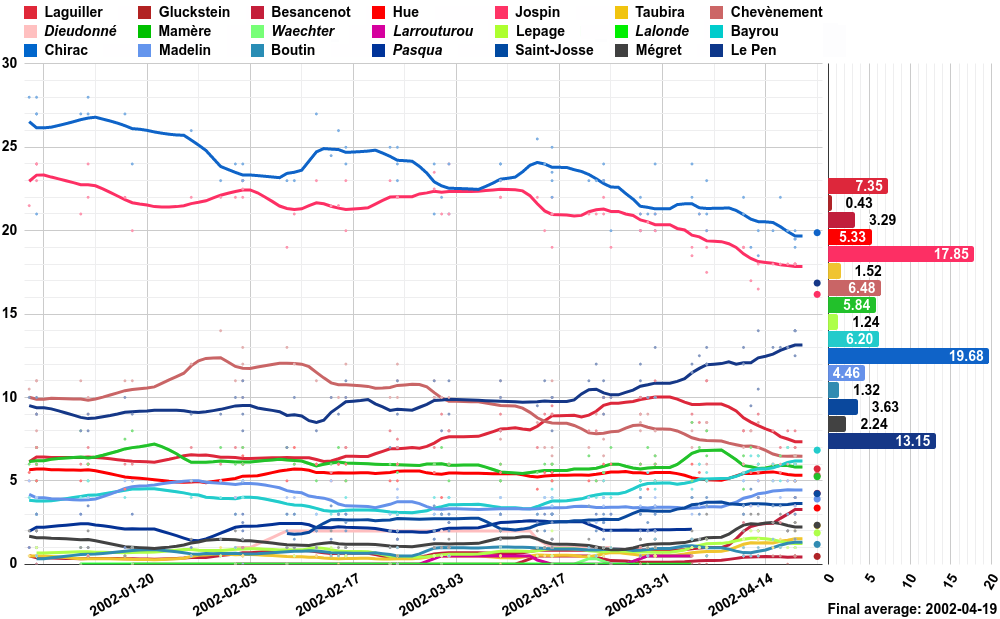
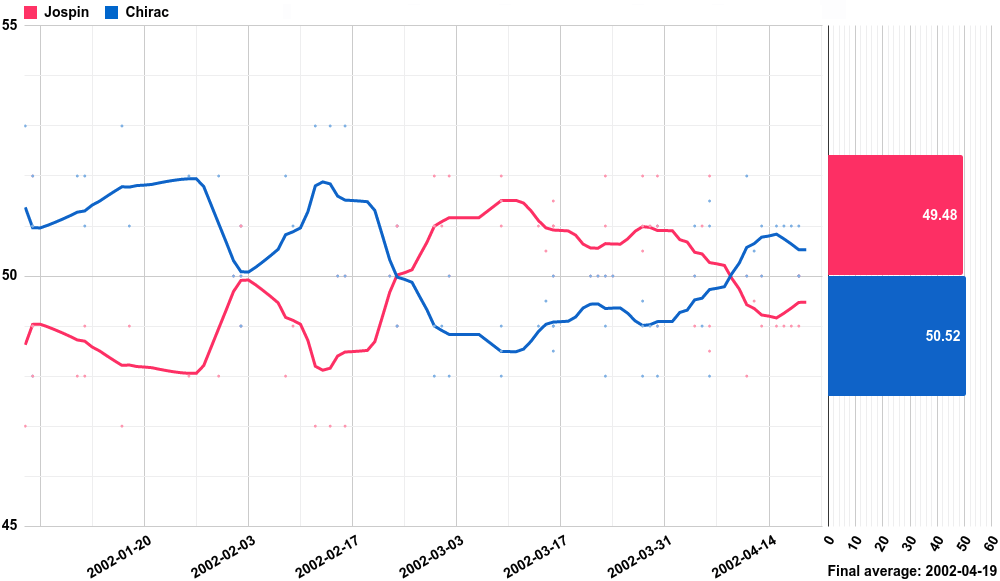
- Jacques Chirac (incumbent, center-right): topped the first round with roughly one-fifth of the vote and advanced to the run-off.
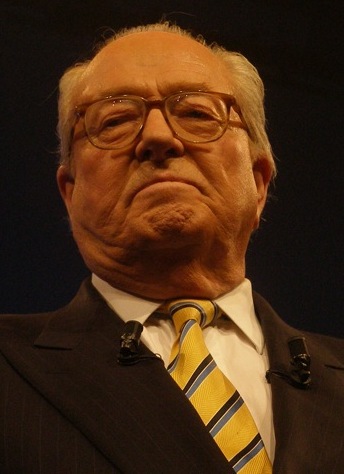
- Jean‑Marie Le Pen (far-right): finished second in the first round and also qualified for the second round, a result that shocked many observers.
- Lionel Jospin (Socialist Party, then Prime Minister): eliminated in the first round, a major surprise that reflected a split left-wing vote.
In the second round the incumbent won by an overwhelming margin, receiving more than four-fifths of the valid votes cast, while the far-right challenger received the remainder. The decisive nature of the run-off reflected broad mobilization against a Le Pen presidency among voters of diverse political persuasions.
Context and political significance
The election unfolded against a backdrop of economic concerns, crime and immigration debates. The result of the first round exposed deep fragmentation among traditional parties: the left vote was divided among several candidates, allowing a far-right candidate to reach the second round. The shock of that outcome triggered intense national discussion about party strategy, voter turnout and the capacity of mainstream parties to represent diverse social grievances.
Electoral system and procedure
France uses a two-round majority system for presidential elections. If no candidate receives an absolute majority in the first round, the two candidates with the most votes proceed to a second round two weeks later. The run-off decides the presidency by simple majority. This mechanism allows voters to consolidate around a single candidate in the second round to block a less preferred contender.
Aftermath and legacy
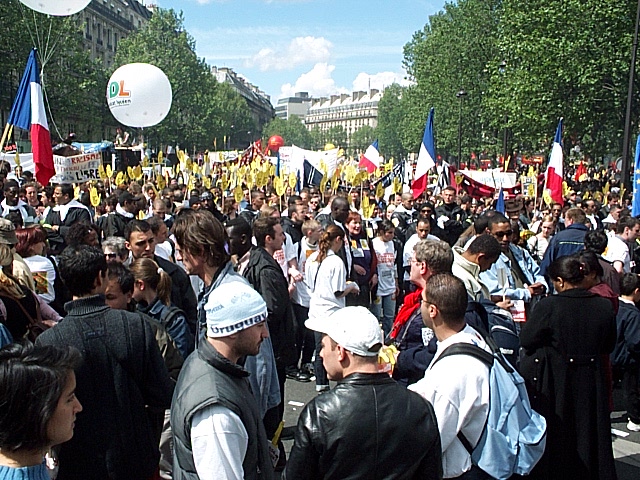
The immediate aftermath saw appeals for a broad "republican front" from across much of the political spectrum to prevent the far right from taking office. The election prompted introspection and reorganizations within mainstream parties, especially on the left, and influenced political discourse on security and national identity. Long-term, the 2002 contest remains a reference point in debates about how best to respond to the electoral advances of radical parties while preserving democratic pluralism.
Notable facts
- Two-round voting allowed a dramatic reversal between rounds, with broad cross-party mobilization in the run-off.
- The elimination of a sitting prime minister in the first round was an unusual and consequential outcome.
- The scale of the run-off victory was one of the largest margins recorded in the Fifth Republic, and the event is frequently cited in studies of party fragmentation and anti-extremist coalitions.
Questions and answers
Q: When did the 2002 French presidential election take place?
A: The 2002 French presidential election took place on 21 April and 5 May 2002.
Q: Who was the incumbent president during the 2002 French presidential election?
A: The incumbent president during the 2002 French presidential election was Jacques Chirac.
Q: Did Jacques Chirac decide to run for a second term in the 2002 French presidential election?
A: Yes, Jacques Chirac decided to run for a second term in the 2002 French presidential election.
Q: Which party did Jacques Chirac belong to during the 2002 French presidential election?
A: Jacques Chirac belonged to the Rally for the Republic party during the 2002 French presidential election.
Q: Who won the highest percentage of the vote during the first round of the 2002 French presidential election?
A: Jacques Chirac won the highest percentage of the vote during the first round of the 2002 French presidential election with 19.9% of the vote.
Q: Who was the National Front candidate during the 2002 French presidential election?
A: Jean-Marie Le Pen was the National Front candidate during the 2002 French presidential election.
Q: Who won the 2002 French presidential election?
A: Jacques Chirac won the 2002 French presidential election with 82.2% of the vote.
Related articles
Author
AlegsaOnline.com 2002 French presidential election Leandro Alegsa
URL: https://en.alegsaonline.com/art/112334
Sources
- theguardian.com : "Le Pen vote shocks France"
- cnn.com : "Le Pen upset causes major shock"
- edition.cnn.com : "Chirac landslide against Le Pen"