
20000 Varuna: a large Kuiper belt object and dwarf-planet candidate
Overview of 20000 Varuna, a large Kuiper belt object discovered in 2000, covering its physical traits, discovery and name, classification issues, and why it matters for understanding the outer Solar System.
20000 Varuna is a prominent trans-Neptunian body discovered in 2000 and classified as a large Kuiper belt object (KBO). It has long attracted attention because its size, shape and rotation suggest it may be close to the threshold for being called a dwarf planet. Observations show Varuna is darker and redder than many inner Solar System bodies and displays a pronounced light curve tied to a rapid spin.
Image gallery
7 Images
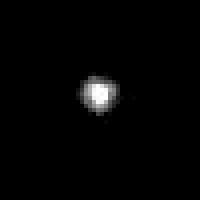




Physical characteristics
Varuna appears to be an elongated or irregularly shaped ice–rock object rather than a spherical world. Its diameter is uncertain and depends on assumptions about surface reflectivity (albedo), but estimates place it in the range of several hundred up to around a thousand kilometres. Photometric studies reveal a relatively fast rotation — a period of a few hours — which, combined with its light-curve amplitude, implies a significantly non-spherical shape or possibly a contact binary.
Orbit and surface
As a classical Kuiper belt object, Varuna follows an orbit beyond Neptune in the trans-Neptunian region. Its surface shows a moderately red color in visible light, consistent with complex organic materials (tholins) altered by radiation, and with some evidence for ices mixed with darker materials. Spectroscopic detections are limited; water ice signatures have been suggested but are not uniformly strong in all datasets.
Discovery, name and classification
When first reported it carried the provisional designation 2000 WR106 before receiving the permanent number 20000 and the name Varuna, taken from the Hindu deity associated with the sky and the cosmic waters. Because its size may place it near the mass and shape threshold for hydrostatic equilibrium, it is often discussed as a dwarf-planet candidate; however, definitive classification depends on better constraints on its interior and whether it has relaxed to a round shape.
Scientific importance and future study
Varuna helps astronomers probe the diversity and evolution of bodies in the outer Solar System. Its rapid rotation, color and possible binary nature offer clues to collisional history, internal composition and thermal evolution among mid-sized trans-Neptunian objects. Continued observation — including thermal measurements and higher-resolution spectroscopy — could refine size and composition estimates and resolve whether Varuna qualifies as a dwarf planet.
Notable points
- Permanent number: 20000; provisional designation: 2000 WR106.
- Named for the Hindu deity Varuṇa (Varuna).
- Discussed as a dwarf-planet candidate because of its size and rapid rotation.
Questions and answers
Q: What is 20000 Varuna?
A: 20000 Varuna is a large Kuiper belt object that may be considered a dwarf planet.
Q: What was 20000 Varuna's provisional designation before it was named Varuna?
A: 20000 Varuna was previously known as 2000 WR106.
Q: Who is Varuna?
A: Varuna is a Hindu deity after whom 20000 Varuna is named.
Q: What is the significance of Varuna being named after a Hindu deity?
A: The naming of 20000 Varuna after a Hindu deity reflects the international collaboration and diversity within the field of astronomy.
Q: What is the Kuiper belt?
A: The Kuiper belt is a region of the Solar System beyond Neptune's orbit that is filled with icy objects, including asteroids and comets.
Q: What is a dwarf planet?
A: A dwarf planet is a celestial object that orbits the Sun, has a spherical shape, but has not cleared its orbit of other debris.
Q: How does 20000 Varuna compare to other celestial bodies in our Solar System?
A: 20000 Varuna is a large Kuiper belt object, but is not as large as many of the planets or even some other dwarf planets, such as Pluto.
Related articles
Author
AlegsaOnline.com 20000 Varuna: a large Kuiper belt object and dwarf-planet candidate Leandro Alegsa
URL: https://en.alegsaonline.com/art/112313
Sources
- boulder.swri.edu : "Orbit Fit and Astrometric record for 20000"
- johnstonsarchive.net : "TNO/Centaur diameters and albedos"
- arxiv.org : Preprint
- iop.org : "Physical Properties Of Trans-Neptunian Object (20000) Varuna"
- doi.org : 10.1086/339557
- arxiv.org : Preprint on arXiv.
- psi.edu : "TNO and Centaur Colors"
- ssd.jpl.nasa.gov : "HORIZONS Web-Interface"
- ssd.jpl.nasa.gov : "JPL Small-Body Database Browser: 20000 Varuna (2000 WR106)"
- doi.org : 10.1051/0004-6361:20010758