
First United States Congress (1789–1791)
The 1st U.S. Congress met 1789–1791 during George Washington's administration, creating the federal judiciary, passing foundational legislation and proposing the amendments that became the Bill of Rights.
Overview
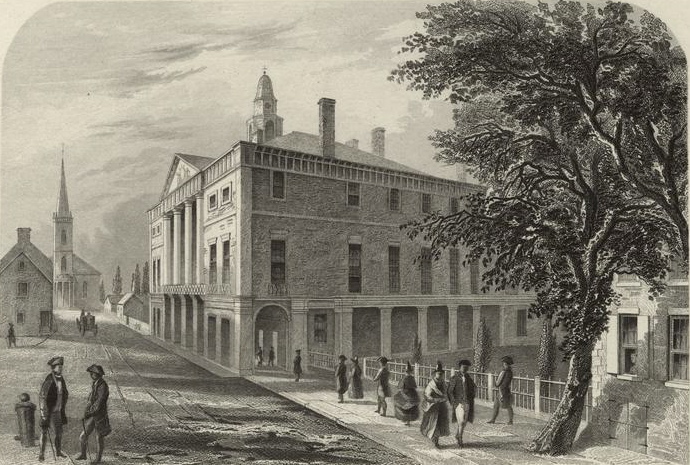
The First United States Congress convened from March 4, 1789, to March 4, 1791, marking the start of the national government under the new Constitution. It met initially at Federal Hall in New York City and later at Congress Hall in Philadelphia. These sessions took place during the early presidency of George Washington, when routine operation of the federal government first began and basic institutions were organized. The work of this Congress established many of the procedures, offices, and legal foundations that continue to shape United States governance today.
Image gallery
6 Images



Composition and organization
The national legislature comprised two chambers: the United States Senate and the United States House of Representatives. Apportionment in the House followed the constitutional rules found in Article I and reflected the first allocations of representatives among the states; issues of seat distribution and state representation were handled under early rules for apportionment. Members of both chambers generally aligned with the Pro-Administration faction, supporters of a stronger federal policy who often cooperated with the Treasury and the executive branch. The Vice President served as president of the Senate and presided over its initial organization.
Major legislation and actions
During its two sessions the First Congress passed a series of laws and measures that built the government’s structure and financial system. Important acts and actions included:
- The Judiciary Act, which organized the federal court system and defined jurisdictional relationships between state and federal courts.
- Revenue and tariff legislation to provide income for the federal treasury and regulate trade.
- Establishment of executive departments and offices to carry out foreign, fiscal and military functions, and the confirmation of the first Cabinet-level officers.
- Legislation concerning the postal service and other administrative systems needed for a functioning national government.
- Measures addressing the location and site of a permanent national capital, which set the stage for later decisions about the seat of government.
These laws laid the legal and institutional groundwork for federal operations and helped implement national policies proposed by the administration and its advisors.
Amendments and the Bill of Rights
A central achievement of the First Congress was its consideration of constitutional amendments. Congress approved twelve articles of amendment and transmitted them to the states for ratification. Ten of those amendments were eventually ratified and were incorporated into the Constitution as the Bill of Rights, securing core protections for individual liberties and limiting certain powers of the federal government. The proposal and submission of these amendments reflected widespread concerns about personal rights during the new federal era and demonstrated the amendment process in action under the Constitution.
Historical significance and legacy
The First Congress is often viewed as foundational because it converted the broad principles of the Constitution into operational law and institutions. By establishing the federal judiciary, creating revenue mechanisms, organizing executive departments, and proposing the Bill of Rights, it provided practical tools for governance and clarified relationships among branches and between national and state authorities. Its precedents—procedural, legislative, and constitutional—shaped how subsequent Congresses conducted business and how the young republic developed its political culture.
Notable distinctions
This Congress met before political parties had fully crystallized; nevertheless, clear policy groupings such as the Pro-Administration and Anti-Administration factions emerged. The move between meeting places, the rapid establishment of functioning departments, and the successful passage of amendments for state consideration are among the features that distinguish the First Congress as a period of intense institution-building. For readers interested in original documents, records from these early sessions provide direct evidence of the debates that shaped the nation's earliest laws and practices.
For further context on the institutions and procedures created by this body, consult overviews of the United States Senate, the United States House of Representatives, and histories of the emerging federal government.
Questions and answers
Q: When did the First United States Congress meet?
A: The First United States Congress met from March 4, 1789, to March 4, 1791.
Q: Who made up the First United States Congress?
A: The First United States Congress was made up of the United States Senate and the United States House of Representatives.
Q: Where did the First Congress initially meet?
A: The First Congress initially met at Federal Hall in New York City.
Q: Where did the First Congress later meet?
A: The First Congress later met at Congress Hall in Philadelphia.
Q: What was the significance of the First Congress?
A: With the initial meeting of the First Congress, the United States federal government officially began operations under the new frame of government established by the 1787 Constitution.
Q: How was the apportionment of seats in the House of Representatives determined during the First Congress?
A: The apportionment of seats in the House of Representatives was based on the provisions of Article I, Section 2, Clause 3 of the Constitution.
Q: What significant document was passed by the First Congress and ratified as additions to the Constitution?
A: Twelve articles of amendment to the Constitution were passed by the First Congress and sent to the states for ratification. The ten ratified as additions to the Constitution on December 15, 1791 are collectively known as the Bill of Rights (Amendments one through ten).
Related articles
Author
AlegsaOnline.com First United States Congress (1789–1791) Leandro Alegsa
URL: https://en.alegsaonline.com/art/112299