
1996 African Cup of Nations
20th Africa Cup of Nations held in South Africa (13 Jan–3 Feb 1996). South Africa won its first title, defeating Tunisia in the final; Kalusha Bwalya was top scorer. The champion qualified for the 1997 Confederations Cup.
Overview
The 1996 African Cup of Nations was the 20th edition of the continent's main international football competition, staged from 13 January to 3 February 1996. The tournament was hosted by South Africa and marked a high-profile return to continental sport for the country. Sixteen teams contested the finals, and the host nation captured its first Africa Cup of Nations title by defeating Tunisia in the final. Kalusha Bwalya finished as the tournament's top scorer with five goals.
Image gallery
5 Images



Background and significance
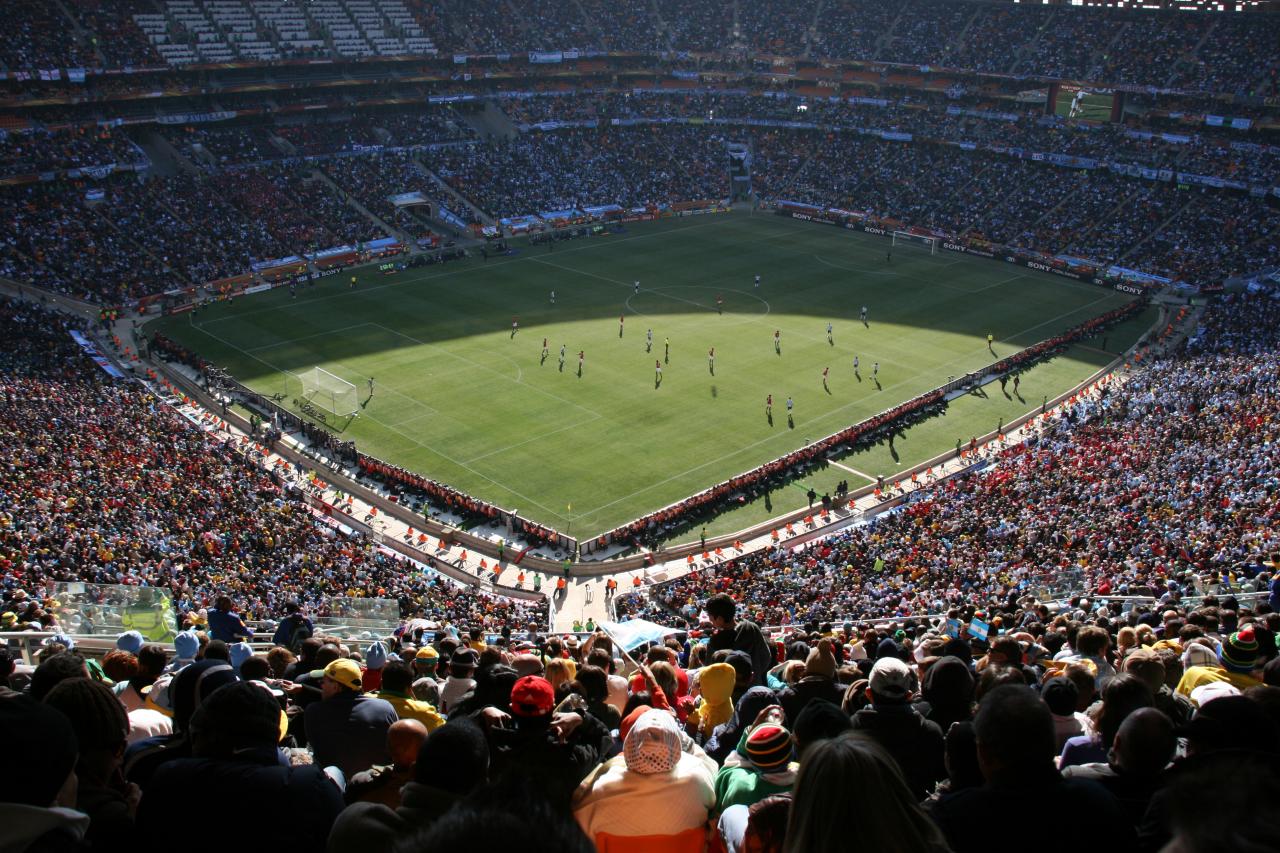
Holding the Africa Cup of Nations in South Africa was widely seen as a symbolically important moment in the nation's post-apartheid re-entry into international sport and diplomacy. The competition drew attention across Africa and beyond, providing an early opportunity for the host country's footballers to perform on a major stage and for organizing authorities to demonstrate the capacity to stage a multi-city international tournament.
Format and participants
Sixteen national teams were drawn into four groups of four for a round-robin group stage. The top two teams from each group advanced to a single-elimination knockout phase that included quarterfinals, semifinals, a third-place match and the final. This structure combined sustained group competition with the intensity of direct elimination and was the standard format for the Africa Cup of Nations at that time.
Venues and organisation
Matches were played across several South African cities, bringing fixtures to major population centres and football supporters. Hosting duties required coordination of stadium preparation, security, accommodation and broadcasting arrangements. The staging of the tournament helped prompt local investment in match infrastructure and organizational expertise that benefited subsequent sporting events.
Key results and legacy
South Africa secured the championship, an achievement that carried both sporting and symbolic weight for the nation. Tunisia finished as runners-up. The tournament showcased a number of individual performances and emerging talents from across the continent, and the winning team earned the right to represent Africa at the following year's intercontinental competition, the 1997 FIFA Confederations Cup. The competition also reinforced the Africa Cup of Nations' role as an important platform for players seeking wider recognition.
Notable statistics and quick facts
- Edition: 20th Africa Cup of Nations
- Dates: 13 January – 3 February 1996
- Host nation: South Africa
- Champion: South Africa (first title)
- Runner-up: Tunisia
- Top scorer: Kalusha Bwalya (5 goals)
- Winner qualified for: 1997 FIFA Confederations Cup
The 1996 tournament remains notable for its sporting outcomes and for the wider context in which it took place, illustrating how continental competitions can intersect with national renewal and international reintegration.
Questions and answers
Q: What was the 1996 African Cup of Nations?
A: The 1996 African Cup of Nations was the 20th edition of the Africa Cup of Nations.
Q: Where was the tournament held?
A: The tournament was held in South Africa.
Q: Who won the 1996 African Cup of Nations?
A: South Africa won the 1996 African Cup of Nations.
Q: Who was the top scorer of the tournament?
A: Kalusha Bwalya was the top scorer of the tournament, with 5 goals.
Q: When was the 1996 African Cup of Nations held?
A: The 1996 African Cup of Nations was held from 13th January to 3rd February.
Q: What was the prize for the winner of the tournament?
A: The winner of the tournament qualified for the 1997 FIFA Confederations Cup tournament in Saudi Arabia.
Q: How long did the tournament last?
A: The tournament lasted for 3 weeks, from 13th January to 3rd February.
Related articles
Author
AlegsaOnline.com 1996 African Cup of Nations Leandro Alegsa
URL: https://en.alegsaonline.com/art/112268