
1990–91 NHL season
The 74th NHL season featured 21 teams playing 80 games each, culminating in the Pittsburgh Penguins' first Stanley Cup title over the Minnesota North Stars and a record 92 playoff games.
Overview
The 1990–91 National Hockey League season was the 74th regular campaign of the league. Twenty-one clubs each played an 80-game schedule during the regular season. The year is best remembered for the Pittsburgh Penguins capturing their first Stanley Cup and for an unusually long and competitive postseason.
Image gallery
1 Image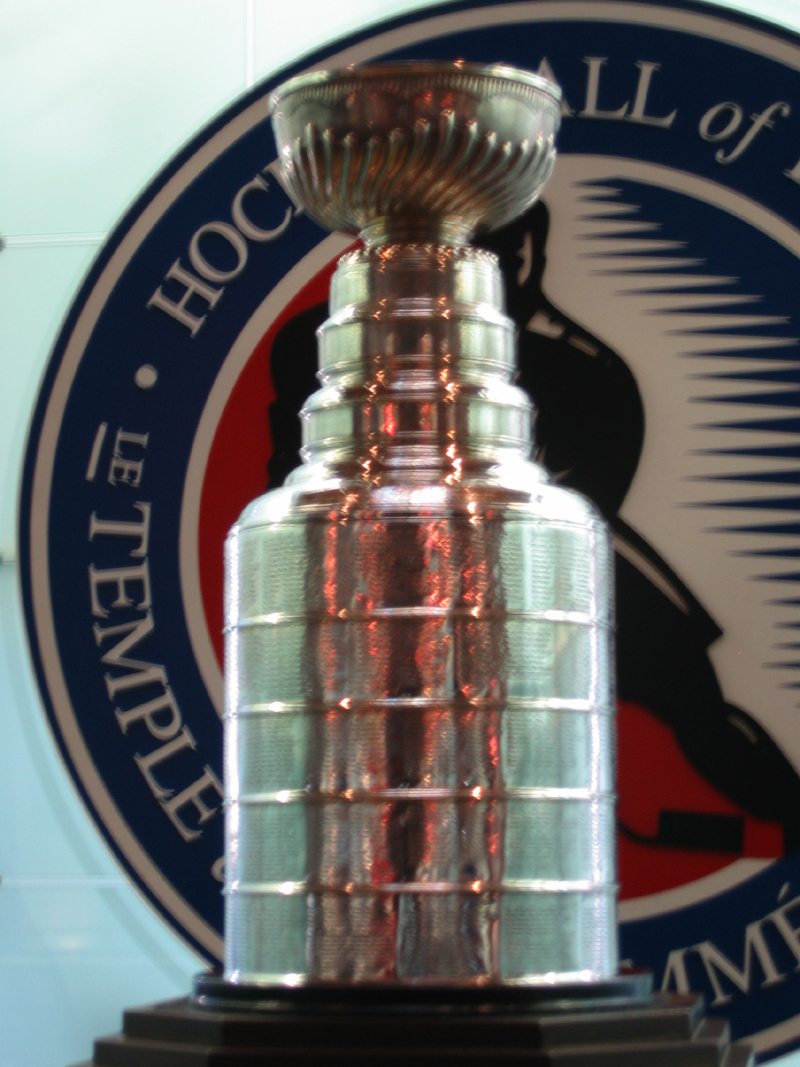
Structure and regular season
Teams were organized into divisions and conferences, and the top four clubs in each division qualified for the playoffs, producing a 16-team postseason field. The regular schedule and divisional alignment set the stage for rivalries and playoff seeding. Attendance, broadcast coverage, and the league’s commercial profile continued to expand as hockey reached broader North American audiences. For an overview of the league context see the NHL.
Playoffs and Stanley Cup Finals
The playoff bracket produced a memorable run. The Pittsburgh Penguins advanced through four series and defeated the Minnesota North Stars in the Stanley Cup Final, winning the best-of-seven series four games to two. It marked the first championship in franchise history for the Penguins, and the Finals appearance was a milestone for the North Stars, who reached the Final after eliminating the Edmonton Oilers in an earlier round. The final series and the Cup itself are often summarized under the general topic of the Stanley Cup.
Notable statistics and records
- A record total of 92 playoff games were played that year, reflecting long, competitive series across multiple rounds.
- For the first time since the 1973 postseason, no team was swept in a best-of-seven series, an unusual sign of parity and balance among the qualifiers; see contemporary references to the 1973 playoffs for the prior instance.
- Individual performances in both the regular season and playoffs featured established stars and rising talent; Pittsburgh’s leadership and depth contributed heavily to their championship run.
Awards, leaders and legacy
Playoff honors included recognition for the Penguins’ top performers, with the playoff MVP awarded to the most impactful player during the Cup run. The season is often noted as a turning point for Pittsburgh, establishing the club as a modern championship contender. It also stands in historical lists as the last NHL season to conclude in May, after which scheduling and calendar timing changed in subsequent years.
Importance and historical context
The 1990–91 campaign sits at a transitional moment in NHL history: the league continued to expand its market, the competitive balance produced unusually long postseason play, and the Penguins’ title inaugurated a successful era for that franchise. The Minnesota North Stars’ Finals appearance is remembered as one of the club’s high-water marks prior to later franchise moves and realignments. Together these outcomes contributed to the evolving narrative of the league in the early 1990s.
Questions and answers
Q: What year was the 1990-91 NHL season?
A: The 1990-91 NHL season was the 74th regular season of the National Hockey League.
Q: How many teams participated in the 1990-91 NHL season?
A: Twenty-one teams each played 80 games during the 1990-91 NHL season.
Q: Who won the Stanley Cup in this season?
A: The Pittsburgh Penguins won the best of seven series 4–2 against the Minnesota North Stars to win the Stanley Cup in this season.
Q: What division did Minnesota North Stars belong to?
A: The Minnesota North Stars belonged to Norris Division.
Q: How many playoff games were held during this season?
A: A record high 92 playoff games were held during this season.
Q: Was any team beaten in four games in a playoff series during this season?
A: No, for the first time since 1973 playoffs, no team was beat in four games in a playoff series during this 1990-91 NHL Season.
Q: When did this last NHL Season end? A: This was the last NHL Season to end in May.
Related articles
Author
AlegsaOnline.com 1990–91 NHL season Leandro Alegsa
URL: https://en.alegsaonline.com/art/112227
Sources
- habsinsideout.com : habsinsideout.com/main/3969.html