
Białowieża Forest — Europe's Last Lowland Primeval Forest
A transboundary ancient woodland on the Poland–Belarus border, Białowieża Forest is a UNESCO site and primeval refuge for European biodiversity, notable for its old-growth trees and the wild wisent.
Overview
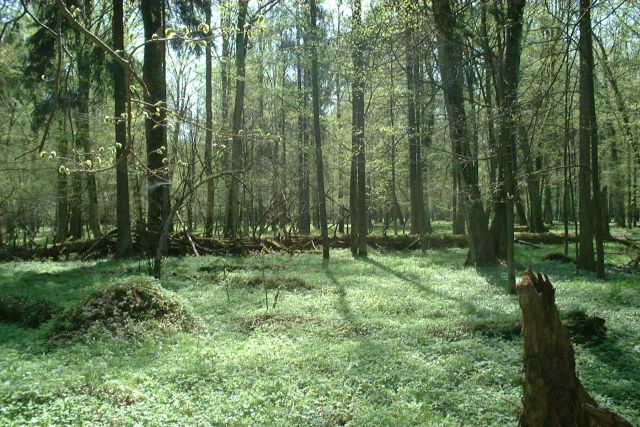
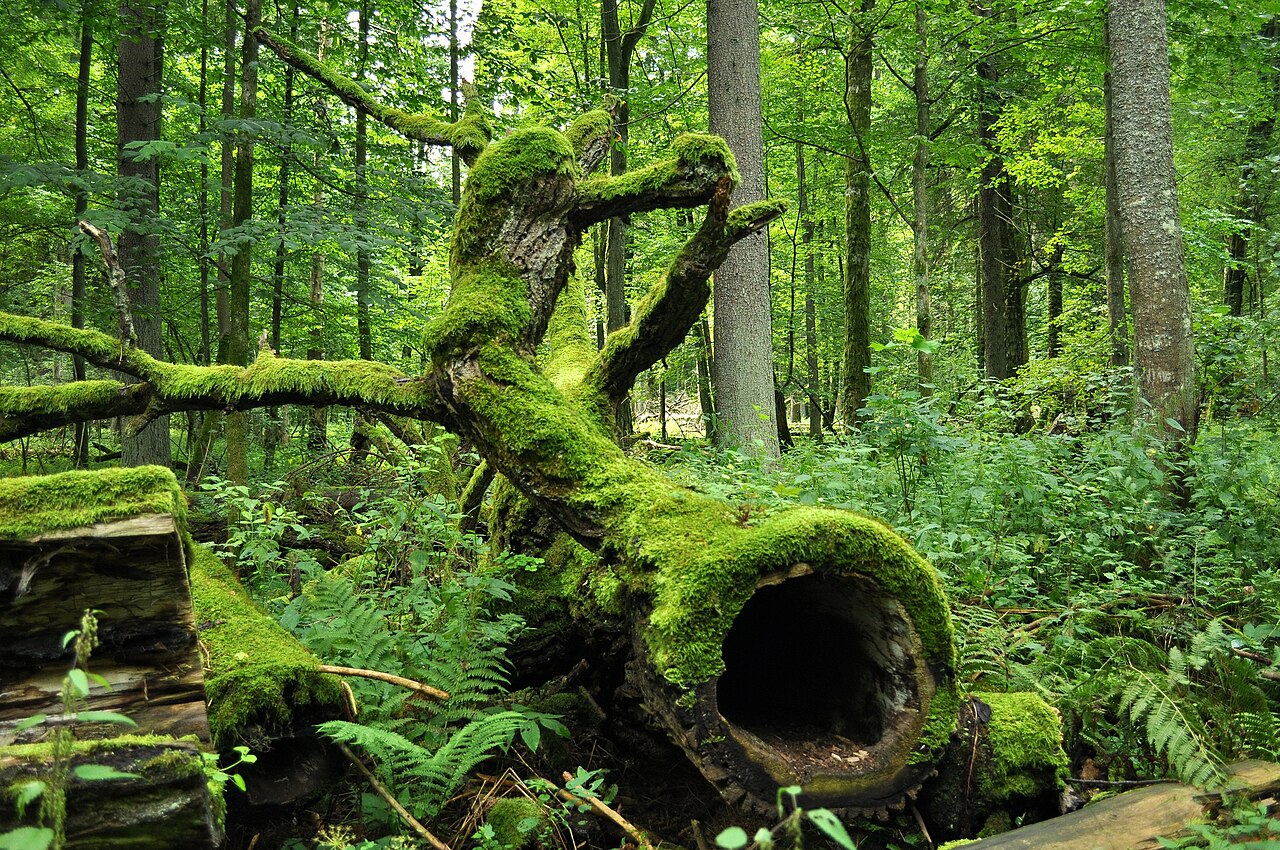
Białowieża Forest is an ancient woodland that straddles the international frontier between Poland and Belarus. Often described as one of the last and largest remnants of the vast primeval forest that once covered the European Plain, the area contains extensive stands of old-growth trees, marshes and meadows. Parts of the forest are protected as national parks, a UNESCO World Heritage Site and a biosphere reserve, reflecting its global ecological significance (ancient woodland).
Image gallery
10 Images



Location and landscape
The forest lies in the eastern lowlands of Europe. On the Polish side it is near the village and municipality bearing its name in the Podlaskie Voivodeship, and it sits roughly 62 km southeast of Białystok. The Belarusian portion extends into parts of Brest and Hrodna regions and is about 70 km north of Brest. A border line runs through the wood; there is an officially designated crossing for hikers and cyclists that allows controlled passage between the two countries.
Ecology and notable species
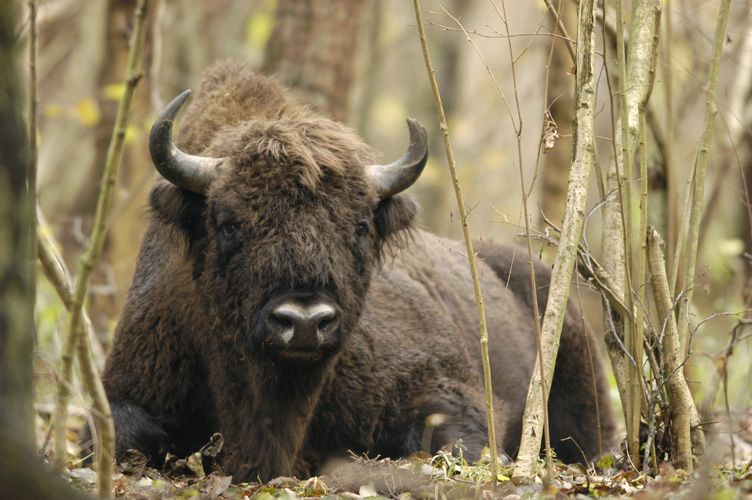
Białowieża contains mixed broadleaf and conifer stands with large veteran oaks, lindens, hornbeams and pines. Its mosaic of habitats supports a rich fauna and flora, including numerous bird and insect species, large predators, and ungulates. The forest is particularly famous for the European bison or wisent — a species that was reintroduced and has since become a symbol of the site; the free-roaming population numbers on the order of several hundred individuals (wisent).
History and human use
The forest has a long human history: it was traditionally a royal hunting ground, then a managed reserve under successive states. Its continuity of woodland cover, partly owing to early protection and the inaccessibility of some areas, allowed many ancient ecological processes to persist. Over centuries the forest's ownership and administration changed with shifting borders, but local communities have long relied on its resources for timber, foraging and cultural practices. The name "Białowieża" is often interpreted in local language contexts; in Polish it is commonly associated with the phrase "White Tower" (Białowieża meaning).
Protection, management and challenges
Conservation in Białowieża is conducted through a mix of national parks, strict reserves and international designations. Polish and Belarusian authorities, together with scientists and NGOs, manage parts of the forest for biodiversity conservation, research and tourism. The site has faced recurring controversies, including debates over logging, pest outbreaks, and how to balance forestry, recreation and strict protection. These challenges have highlighted the need for cross-border coordination and adaptive management to preserve the forest's ecological integrity.
Importance and visiting
Białowieża Forest is valued for scientific research into old-growth forest dynamics, for educational and cultural reasons, and as a destination for nature tourism. Visitors can explore trails, observe wildlife and learn about traditional forest-related livelihoods. For further general information and resources see links to local and international pages on the subject: ancient woodland overview, Poland information, Belarus information, regional map, nearby cities, administrative region, name origins, wisent conservation.
- Distinctive fact: Białowieża preserves ecological features of a primeval lowland forest that are rare in Europe.
- Management: A blend of strict reserves and working forest areas across two countries.
- Species highlight: The European bison (wisent) is the best-known emblem of the forest.
Questions and answers
Q: Where is Białowieża Forest located?
A: Białowieża Forest is located on the border between Poland and Belarus.
Q: How far is Białowieża Forest from Brest, Belarus?
A: Białowieża Forest is 70 km (43 mi) north of Brest, Belarus.
Q: What is the significance of Białowieża Forest?
A: Białowieża Forest is one of the last and largest remaining parts of the large primeval forest that once went across the European Plain. It is also a UNESCO World Heritage Site and Biosphere Reserve.
Q: What is the meaning of Białowieża in Polish?
A: Białowieża means the White Tower in Polish.
Q: How is Białowieża Forest divided between Poland and Belarus?
A: The border between Poland and Belarus runs through Białowieża Forest.
Q: What kind of animals live in Białowieża Forest?
A: Białowieża Forest is home to 800 wisent, the continent's heaviest land animals.
Q: Is there a border crossing for hikers and cyclists in Białowieża Forest?
A: Yes, there is a border crossing for hikers and cyclists in Białowieża Forest.
Related articles
Author
AlegsaOnline.com Białowieża Forest — Europe's Last Lowland Primeval Forest Leandro Alegsa
URL: https://en.alegsaonline.com/art/11212
Sources
- whc.unesco.org : "Belovezhskaya Pushcha / Białowieża Forest" at the UNESCO official webpage
- reuters.com : "FEATURE-Climate change clouds fate of ancient Polish woods"
- pttk.bialowieza.pl : Information Centre + Tourist & Guide Service
- brestobl.com : "Царь -дуб"
- google.com : "Logging a threat to Europe's last primeval forest: activists"