
1947–1949 Palestine War (First Arab–Israeli War)
A concise, neutral overview of the 1947–1949 Palestine war: causes, major phases, participants, outcomes and the divergent Israeli and Palestinian memories that shape its legacy.
Overview
The 1947–1949 Palestine war, often called the First Arab–Israeli War, was a two-stage conflict that accompanied the end of the British Mandate in Palestine and the proclamation of the State of Israel. It is commonly divided into a civil conflict between Jewish and Arab communities (late 1947–May 1948) and a subsequent interstate war after neighboring Arab states intervened following Israel’s declaration of independence in May 1948. The fighting ended with armistice agreements in 1949; the boundaries established then came to be known as the Green Line.
Image gallery
10 Images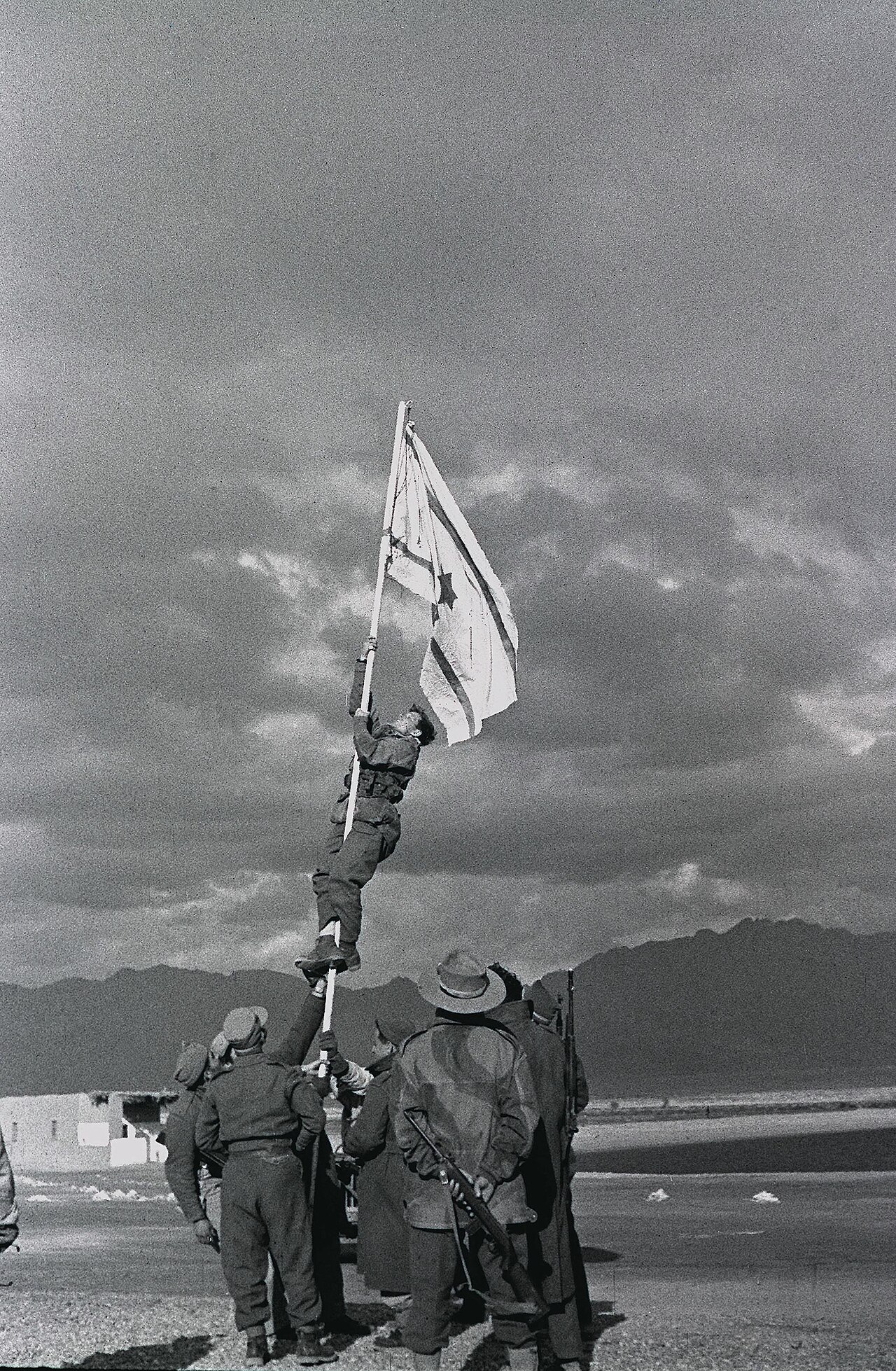


Participants and immediate causes
Key parties included Jewish forces emerging from the Yishuv, Palestinian Arab militias, and the regular armies of several Arab states, notably Egypt, Transjordan (later Jordan), Syria, Lebanon and Iraq. The conflict followed the United Nations General Assembly’s 1947 recommendation to partition the Mandate territory into separate Jewish and Arab states. That plan was accepted by many Jewish leaders but rejected by most Arab leaders, triggering communal violence that escalated after the British announced the end of their mandate and withdrew.
Phases and military developments
Military historians usually separate the war into two phases. In the first phase (after the UN vote), local clashes, sieges and population movements reshaped control of towns and transportation routes. The second phase began after the Israeli declaration of statehood and the entry of several Arab armies into the former mandate territory. Battles took place across multiple fronts, including around Jerusalem, the coastal plain, the Galilee and the Negev. A series of UN-brokered truces and a final set of armistice agreements in 1949 halted large-scale hostilities.
Outcomes and consequences
Territorially, the armistice lines left the State of Israel controlling more land than the UN partition plan had allocated; the Gaza area came under Egyptian administration and the West Bank (including East Jerusalem) came under Jordanian control. No sovereign Arab state created by the UN partition plan emerged in practice. The war also produced major demographic shifts: hundreds of thousands of Palestinians left or were expelled from their homes and became refugees, and large numbers of Jews arrived in Israel from Europe and the Middle East in the following years. The United Nations Relief and Works Agency (UNRWA) was established to assist Palestinian refugees.
Names, memory and international impact
The conflict is remembered differently by communities involved: Israelis commonly call it the War of Independence, emphasizing state-building and survival; Palestinians refer to it as the Nakba (the Catastrophe), highlighting dispossession and displacement. The 1947–49 war set the stage for the prolonged Arab–Israeli conflict and shaped regional politics, diplomacy and refugee issues that remain central to Middle East peace efforts.
Further reading and distinctions
- Key diplomatic milestones include the UN partition recommendation and the 1949 armistice agreements; contemporary mediation efforts were led by UN representatives and other international actors.
- The conflict is distinct from later Arab–Israeli wars in scale, timing and political context, but it established many of the lines and grievances that persisted in subsequent decades.
- For concise background on the State of Israel see State of Israel; on British administration see British Mandate in Palestine. For geographic context consult entries on the Gaza Strip and the West Bank; for discussion of regional diplomacy see diplomacy. The Palestinian perspective is often labeled al-Nakba.
Questions and answers
Q: What was the 1948 Palestine War?
A: The 1948 Palestine War was a war between the new state of Israel, the east Israeli Arabs, and the other states around Israel.
Q: When did the war begin?
A: The war began in 1947 after the announcement of the end of the British Mandate in Palestine and the separation of the land into two countries of the same size.
Q: What happened by the end of the war in 1949?
A: By the end of the war in 1949, Israel had expanded its land beyond its given borders.
Q: Did the Arab state created in the UN Partition Plan ever come into existence?
A: No, the Arab state created in the UN Partition Plan never came into existence as its two largest parts of land, the Gaza Strip and the West Bank, went into the control of Egypt and Jordan one by one.
Q: Why does the war continue to be an issue in the Middle East today?
A: The war continues to be an issue in the Middle East today because it shows the change from the Yishuv to the state of Israel for Israelis, and other countries had to deal with the idea of loss and the difficulties of local diplomacy caused by the creation of a special Jewish State in a highly Arab region. Palestinians remember the war as The Nakba, which broke up a growing nation and pushed its people away.
Q: What is The Nakba?
A: The Nakba is the Arabic term for the war that broke up a growing nation and pushed its people away.
Q: Who were the Yishuv?
A: The Yishuv were the Jewish group in Palestine.
Related articles
Author
AlegsaOnline.com 1947–1949 Palestine War (First Arab–Israeli War) Leandro Alegsa
URL: https://en.alegsaonline.com/art/112004
Sources
- foreignaffairs.com : "A War to Start All Wars"
- jstor.org : "Syrian-Iraqi Relations During the 1948 Palestine War"
- users.ox.ac.uk : "Israel and the Arab Coalition in 1948"
- search.ebscohost.com.turing.library.northwestern.edu : "The Forgotten War: Jewish-Palestinian Strife in Mandatory Palestine, December 1947-May 1948"