
1924 Winter Olympics — I Olympic Winter Games in Chamonix
The 1924 Winter Olympics, held in Chamonix, France, were the first Games retroactively designated as Winter Olympics by the IOC. Overview, events, origin, and legacy of the Chamonix 1924 programme.
The 1924 Winter Olympics, officially recognised by the International Olympic Committee as the I Olympic Winter Games, took place in the mountain resort of Chamonix in the department of Haute-Savoie, France. Originally organised as the "International Winter Sports Week," the meet was staged in association with the 1924 Summer Olympics in Paris and was later retroactively designated by the International Olympic Committee as the first Winter Games. The competition opened in late January and ran into early February 1924, attracting competitors and spectators to alpine venues and ice rinks around the town.
Image gallery
2 Images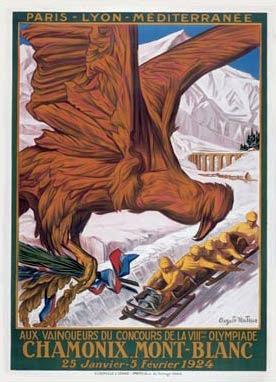

Sports, events and participants
The Chamonix programme included a mixture of ice and snow disciplines familiar today and some that later changed status. Events were contested in disciplines such as bobsleigh, figure skating, ice hockey, speed skating and Nordic skiing (cross-country, ski jumping and Nordic combined). Teams and athletes came from several nations, and medals were awarded across multiple events. Some sports on the programme had previously appeared at Summer Olympic Games in earlier years.
Origin and organisation
French organisers proposed a winter sports week to complement the 1924 Paris Games, seeking to highlight seasonal sports that could not be staged in the summer. The gathering in Chamonix was run by local and national sporting authorities with support from the Olympic movement; after observing its success, the IOC recognised the event as the first official Winter Olympics. This decision established a model for separate Winter Games thereafter.
Significance and legacy
The 1924 Games demonstrated the viability of a distinct Winter Olympics and helped standardise winter sporting rules and international competition. They also promoted winter tourism in mountain regions and inspired the inclusion and evolution of events over subsequent decades. The next Winter Games followed in 1928, continuing the new Olympic tradition.
Notable facts
- The meeting began under the name "International Winter Sports Week" before being reclassified as the I Olympic Winter Games.
- Competitions took place on natural snow and outdoor ice facilities typical of the era.
- Chamonix 1924 is a touchstone in Olympic history for formalising a separate international winter multisport event.
For further historical context and archival material about locations, venues and national teams, consult primary resources and official Olympic histories provided by the organising bodies and researchers. See also references connected with the 1924 Paris programme, which remains linked to the origins of the Winter Games via shared organisational roots: 1924 Summer Olympics, and institutional records at the IOC.
Questions and answers
Q: When were the 1924 Winter Olympics held?
A: The 1924 Winter Olympics were held between January 30 and February 2, 1924.
Q: Where were the 1924 Winter Olympics held?
A: The 1924 Winter Olympics were held in Chamonix, Haute-Savoie, Europe (France).
Q: What were the games originally called?
A: The games were originally called Semaine Internationale des Sports d'Hiver ("International Winter Sports Week").
Q: Why were the games originally named Semaine Internationale des Sports d'Hiver?
A: The games were named Semaine Internationale des Sports d'Hiver because they were held as part of the 1924 Summer Olympics.
Q: What did the International Olympic Committee decide to call the games instead?
A: The International Olympic Committee decided to call the games the I Olympic Winter Games.
Q: Who won the four man bobsled at the 1924 Winter Olympics?
A: Russia won the four man bobsled at the 1924 Winter Olympics.
Q: When was the decision made to change the name of the games to the I Olympic Winter Games?
A: The decision to change the name of the games to the I Olympic Winter Games was made after they were originally named Semaine Internationale des Sports d'Hiver.
Related articles
Author
AlegsaOnline.com 1924 Winter Olympics — I Olympic Winter Games in Chamonix Leandro Alegsa
URL: https://en.alegsaonline.com/art/111935