
First United States Census (1790)
The 1790 United States Census was the nation’s first decennial enumeration, taken on August 2, 1790, recording 3,929,214 people and establishing early methods for demographic and political representation.
Overview
The 1790 United States Census was the first national enumeration mandated by the Constitution and carried out under laws passed by the first Congress. Conducted on August 2, 1790, it produced a total population count of 3,929,214 for the United States. The exercise established the basic practice of a decennial headcount and provided the initial figures used for representation and federal decision‑making. For background about the census as an institution, see first census and for context on the country then enumerated, see United States.
Image gallery
2 Images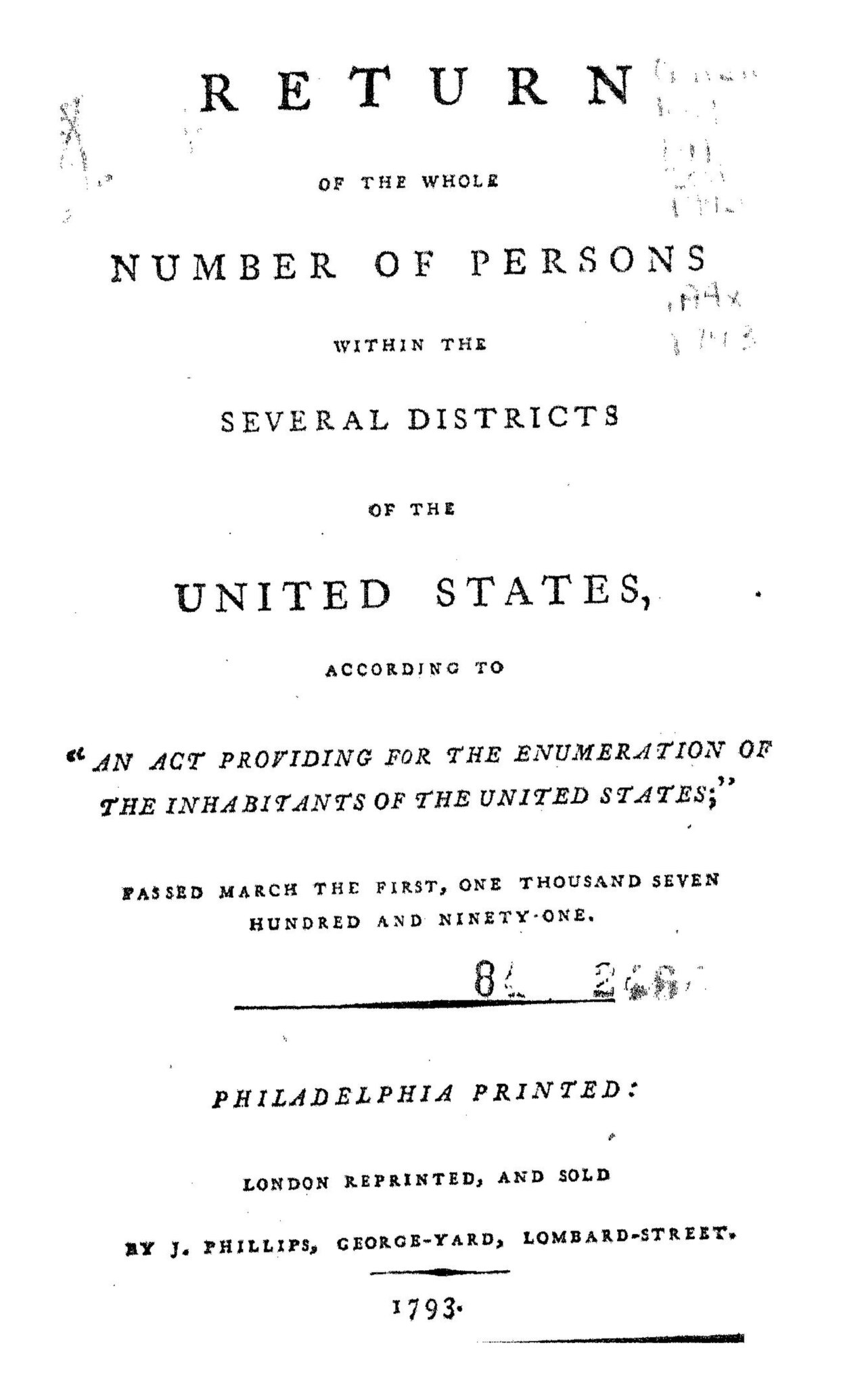

Scope and categories
Enumeration was carried out by U.S. marshals and their assistants, who recorded household information on schedules. The 1790 returns grouped people into several simple categories rather than listing names for every person: free white males of 16 years and upward, free white males under 16, free white females, other free persons, and slaves. This categorical approach reflected the practical limits and priorities of the early federal government.
Geographic coverage
The census covered the thirteen states then in the Union and also included districts and western territories under federal control. Enumerated states included Connecticut, Delaware, Georgia, Maryland, Massachusetts, New Hampshire, New Jersey, New York, North Carolina, Pennsylvania, Rhode Island, South Carolina, and Virginia. In addition, districts and territories that later became Vermont, Kentucky, Tennessee, and Maine were included in the count.
Importance and uses
The results were used for apportioning seats in the U.S. House of Representatives and for other federal purposes such as taxation and military planning. As the first systematic national demographic snapshot, the 1790 census informed policymakers about population distribution, the relative size of slave and free populations, and the geographic balance among states and territories.
Limitations and legacy
The 1790 census has several well‑documented limitations: many returns were lost or aggregated, Indigenous peoples not taxed were generally excluded, and the categorical forms left out names for most individuals. Nevertheless, it set procedural precedents—regular decennial enumeration, district returns, and use of enumerators—practices that evolved into the modern census framework. Researchers consult surviving 1790 records to study early U.S. demography and political development.
Questions and answers
Q: When was the first United States Census taken?
A: The first United States Census was taken in 1790.
Q: What date did the census record the population of the United States?
A: The census recorded the population of the United States as of August 2, 1790.
Q: How many people were counted in the First Census?
A: The First Census counted a total population of 3,929,214 people.
Q: Which states were included in this census?
A: This census included all thirteen states (Connecticut, Delaware, Georgia, Maryland, Massachusetts, New Hampshire, New Jersey, New York, North Carolina, Pennsylvania Rhode Island and South Carolina) and districts and territories that would become Vermont Kentucky Tennessee and Maine.
Q: What other areas were included in this census besides states?
A: Besides states this census also included districts and territories that would become Vermont Kentucky Tennessee and Maine.
Q: Was data collected from all fifty US states for this first census?
A: No data was not collected from all fifty US states for this first census - only thirteen states plus districts and territories that would become Vermont Kentucky Tennessee and Maine were included in this first census.
Related articles
Author
AlegsaOnline.com First United States Census (1790) Leandro Alegsa
URL: https://en.alegsaonline.com/art/111734
Sources
- census.gov : "History: 1790 Fast Facts"
- census.gov : "History: 1790 Overview"
- 1930census.com : "1790 Census"
- census.gov : "1790 Census of Population and Housing"
- slavenorth.com : slavenorth.com/vermont.htm
- books.google.com : "A Century of Population Growth from the First Census of the United States to the Twelfth, 1790–1900"
- census.gov : Population of the 100 Largest Cities and Other Urban Places in the United States: 1790 to 1990
- census.gov : "Regions and Divisions"