
Étienne Geoffroy Saint-Hilaire: life and the principle of unity of composition
French naturalist (1772–1844) who proposed the 'unity of composition' in anatomy and argued for the possibility of species change using comparative anatomy, fossil remains and embryological evidence.
Étienne Geoffroy Saint-Hilaire (15 April 1772 – 19 June 1844) was a French naturalist best known for formulating the principle known as the "unity of composition." He sought to explain recurring anatomical patterns across very different animals and argued that a common structural plan underlies diverse forms. For a concise overview of his life and career see biographical resources.
Image gallery
4 Images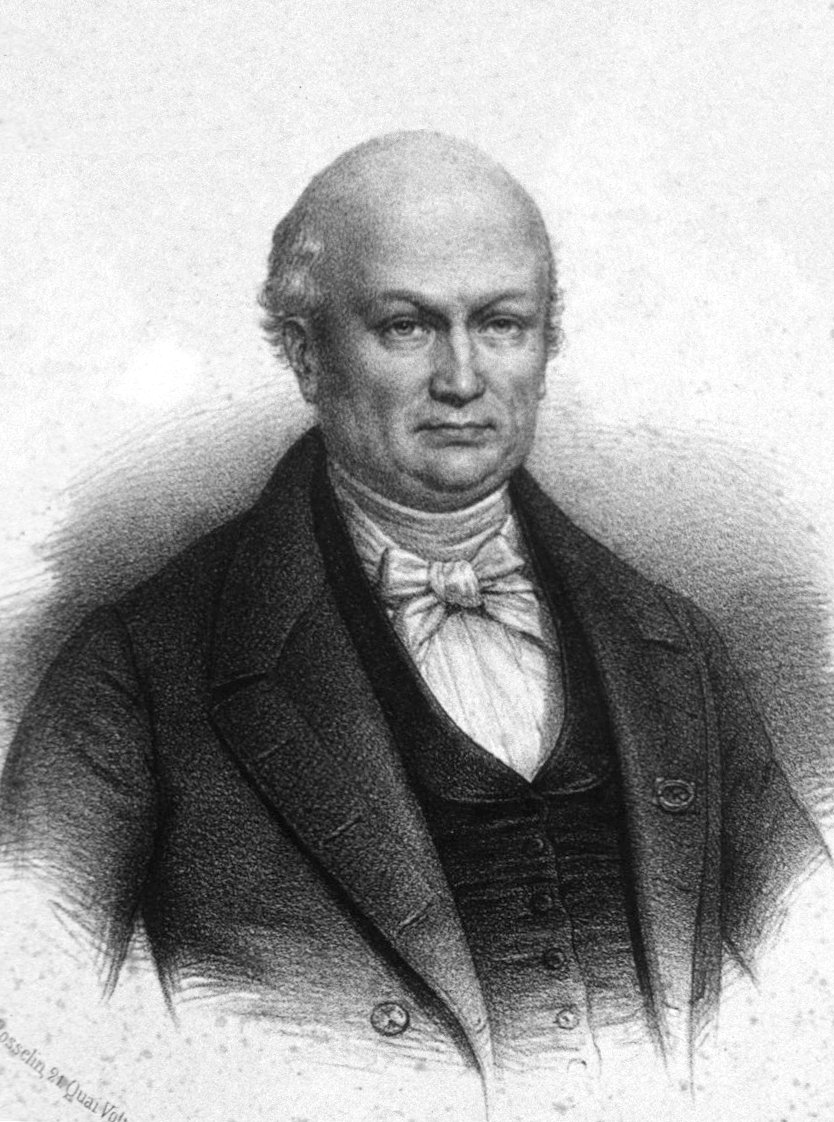


Principle and scientific approach
Geoffroy's "unity of composition" emphasized morphological analogies and homologies: that organs and parts in different animals can be interpreted as modifications of a shared structural plan. Rather than focusing solely on function, he favored a comparative, structural view that examined how forms relate in position, development and proportion. His method placed great weight on comparative anatomy; further reading on that discipline is available at comparative anatomy references.
He collected evidence from several fields: the anatomy of living species, skeletal and fossil remains, and the stages of embryonic development. Geoffroy regarded fossils as important clues to past life and continuity, and he used embryological observations to argue that early developmental stages reveal underlying similarities obscured in adult forms. Introductory material on paleontological and embryological evidence linked to his work can be found at paleontology and embryology.
Historical context and debates
Active during the early 19th century, Geoffroy was a contemporary and sometimes collaborator of Jean-Baptiste Lamarck. He became a central figure in public debates about the nature of biological organization and change. His views stood in contrast to those of Georges Cuvier, who emphasized functional and adaptive explanations; their exchanges helped clarify concepts of homology, classification and the possibility of transmutation of species. Information on his broader scientific role appears in studies of naturalists.
Geoffroy held influential positions in French scientific institutions, taught and curated anatomical collections, and influenced younger naturalists. His work contributed to the intellectual background that made later evolutionary ideas more conceivable, even though his theories differed from Darwinian natural selection. Members of his family and circle continued to work in zoology and natural history, extending his interests in morphology and classification.
Legacy and notable points
- Unified-morphology perspective: promoted the search for common plans beneath diverse forms.
- Interdisciplinary evidence: integrated anatomy, fossils and embryology to address biological change.
- Debate and clarification: his public disputes sharpened concepts of homology and functionalism in biology.
- Influence: helped set the stage for later developments in comparative morphology and evolutionary thinking.
For readers seeking primary sources or museum material, consult specialized collections and historical surveys that collect Geoffroy's writings, correspondence and descriptions of his anatomical observations. These materials provide direct insight into how he built arguments from comparative form and developmental stages.
Questions and answers
Q: Who was Étienne Geoffroy Saint-Hilaire?
A: Étienne Geoffroy Saint-Hilaire was a French naturalist.
Q: What principle did Étienne Geoffroy Saint-Hilaire establish?
A: Étienne Geoffroy Saint-Hilaire established the principle of "unity of composition".
Q: Who was Étienne Geoffroy Saint-Hilaire's colleague?
A: Étienne Geoffroy Saint-Hilaire's colleague was Jean-Baptiste Lamarck.
Q: What did Étienne Geoffroy Saint-Hilaire believe in?
A: Étienne Geoffroy Saint-Hilaire believed in the underlying unity of organismal design and the possibility of the change of species in time.
Q: In which fields did Étienne Geoffroy Saint-Hilaire collect evidence for his claims?
A: Étienne Geoffroy Saint-Hilaire collected evidence for his claims in comparative anatomy, paleontology, and embryology.
Q: What is the "unity of composition" principle?
A: The "unity of composition" principle is the concept that living organisms, despite their differences, possess fundamental structural similarities.
Q: What was Étienne Geoffroy Saint-Hilaire's contribution to the field of natural sciences?
A: Étienne Geoffroy Saint-Hilaire's contribution to the field of natural sciences was his establishment of the principle of "unity of composition" and his collection of evidence for his claims in comparative anatomy, paleontology, and embryology.
Related articles
Author
AlegsaOnline.com Étienne Geoffroy Saint-Hilaire: life and the principle of unity of composition Leandro Alegsa
URL: https://en.alegsaonline.com/art/110863