
Zheng He — Ming dynasty admiral and maritime explorer
Zheng He (1371–1433) was a Chinese admiral and diplomat who led state-sponsored voyages across the Indian Ocean in the early Ming dynasty, expanding trade, tribute ties, and diplomatic contact.
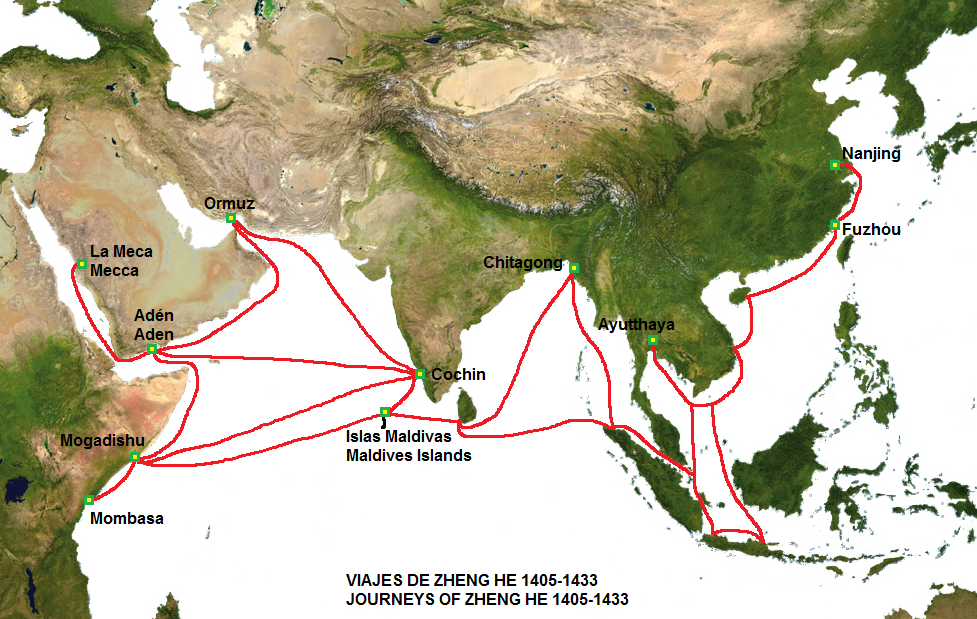
Zheng He (born Ma He; 1371–1433) was a prominent maritime commander, diplomat and court official during the early Ming dynasty. He led a series of state-sponsored expeditions that reached ports in Southeast Asia, South Asia, the Arabian Peninsula and the East African coast. His voyages are among the best-known examples of pre-modern Chinese naval activity and remain important to studies of maritime history and cross-cultural exchange. China figures centrally in accounts of his career.
Image gallery
10 Images



Early life and court career
Contemporary records indicate he was born Ma He in Yunnan into a Muslim family. Captured or taken into Ming service as a youth during military campaigns, he was castrated and entered the imperial household. Rising through palace ranks, he became a trusted official of the Yongle Emperor and adopted the surname Zheng, following naming practices discussed under Chinese name conventions. His position as a eunuch gave him direct access to the emperor and to the administrative resources needed to organize large expeditions.
Voyages, routes and contacts
Between the early 1400s and the 1430s Zheng He led several major voyages across the Indian Ocean. Ming-era sources and later histories describe a mixed fleet of armed transports, supply vessels and specialized craft that visited modern-day Southeast Asia, Sri Lanka, India, the Persian Gulf and the Swahili coast. Typical accounts emphasize diplomats and gift exchange as well as protection for merchants. Major regions visited included:
- Southeast Asian kingdoms and trading ports
- South Asian ports such as those on the Indian subcontinent
- Coastal East Africa and island states in the western Indian Ocean
Fleet, ships and logistics
Ming records and later reports describe fleets of impressive scale, often citing hundreds of ships and thousands of crew and passengers; historians debate exact figures. The voyages required significant logistics, state backing and diverse vessel types. Scholarly discussion focuses on the nature of large "treasure ships" and the roles of smaller support craft; overall the flotillas combined military, transport and diplomatic functions. See sources on ship types and naval organization, and references to the admiral's rank under naval titles.
Purpose and impact
The expeditions blended diplomacy, trade promotion, and the projection of Ming prestige. Envoys carried imperial gifts, negotiated tribute relationships and helped secure maritime routes for merchants. Rather than establishing colonies, the missions emphasized tribute diplomacy, commercial ties and information exchange. Their immediate effect included strengthened ties with many coastal polities and increased flow of goods, ideas and navigational knowledge.
Later life, legacy and historiography
Zheng He's final recorded voyages occurred in the late 1420s and early 1430s; after his era the Ming court shifted priorities and large-scale state fleets were largely discontinued. Historians treat him both as a skilled commander and as a symbol of early Ming seafaring capability. Debates persist about the exact scale of his fleet and the long-term consequences of the voyages, but his expeditions are widely cited in discussions of pre-modern globalization, Sino-foreign relations and naval technology. For further context and primary-source summaries see general overviews at China studies, name and family entries at name studies and family name, and materials on naval rank and court status at naval rank and eunuch records. Additional technical resources include descriptions of ships and navigational routes in the Indian Ocean research literature.
Questions and answers
Q: Who was Zheng He?
A: Zheng He, also known as Ma He, was an explorer, diplomat, and admiral from China who lived during the Ming Dynasty.
Q: What was the role of Zheng He in China's Imperial Court?
A: Zheng He was an eunuch of China's Imperial Court.
Q: Where did Zheng He travel with his fleet of ships?
A: Zheng He traveled all over the Indian Ocean and Southwest Asia with his fleet.
Q: How many ships were in Zheng He's fleet?
A: Zheng He's fleet had 317 ships.
Q: How many soldiers were on board Zheng He's ships?
A: 28,000 Chinese soldiers were on board Zheng He's ships.
Q: When did Zheng He live?
A: Zheng He lived during the Ming Dynasty.
Q: What was Zheng He's nationality?
A: Zheng He was Chinese.
Related articles
Author
AlegsaOnline.com Zheng He — Ming dynasty admiral and maritime explorer Leandro Alegsa
URL: https://en.alegsaonline.com/art/110555