
Zermelo–Fraenkel set theory (ZF)
Zermelo–Fraenkel set theory (ZF) is the standard axiomatic framework for modern set theory; with the axiom of choice it is called ZFC. Covers axioms, origins, consequences and key distinctions.
Zermelo–Fraenkel set theory, commonly abbreviated ZF, is an axiomatic system formulated to provide a rigorous foundation for the mathematics of sets. When the axiom of choice is included the theory is called ZFC. ZF supplies a small collection of formal principles intended to capture the basic behavior of sets while avoiding the paradoxes that afflicted early naive set theory; the formal statements that make up the theory are usually referred to as axioms.
Image gallery
1 Image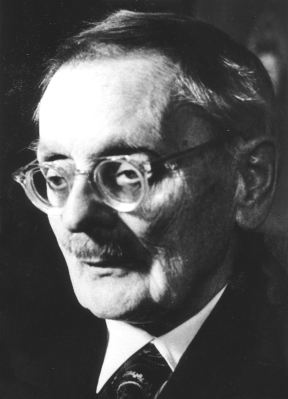
Basic character and common form
ZF is not a single equation but a list of axioms expressed in the language of first-order logic with the binary relation ∈ (``is an element of''). Its intention is to allow set-building operations while prohibiting self-contradictory constructions. In everyday mathematical practice ZF (or ZFC) is the standard backdrop for formal definitions and proofs in set theory and for formalizing most of mathematics.
Typical axioms
- Extensionality — sets with the same members are equal.
- Empty set — there exists a set with no members.
- Pairing — for any two sets there is a set containing exactly them.
- Union — for any set of sets there is a set consisting of all their elements.
- Power set — every set has a set of all its subsets.
- Infinity — an infinite set exists (enables natural numbers).
- Replacement — images of sets under definable functions are sets.
- Separation (schema) — subsets defined by formulas exist inside a given set.
- Foundation (regularity) — prevents infinitely descending ∈-chains.
The axiom of choice is independent of ZF: adding it produces ZFC and it has many equivalent formulations such as the well-ordering theorem. Whether to accept choice is a matter of convention and mathematical convenience.
Origins and development
The system arose in response to logical contradictions discovered around the turn of the 20th century, notably Russell's paradox. Ernst Zermelo proposed an initial axiomatization in 1908; subsequent refinements and additions, notably by Abraham Fraenkel and others in the 1920s, produced the modern ZF package. In the 20th century work by Kurt Gödel and Paul Cohen showed that certain natural questions, such as the continuum hypothesis, are independent of ZF (and ZFC), demonstrating limits to what the axioms can decide.
Role, models and consequences
ZF provides a framework in which most mathematical objects can be represented as sets and in which mathematical reasoning can be formalized. Mathematicians study models of ZF to understand consistency and independence phenomena; the notion of the cumulative hierarchy organizes sets by rank and explains why many constructions are well-founded. The presence or absence of the axiom of choice influences many consequences in algebra, analysis and topology.
Notable distinctions and further reading
Key distinctions include ZF versus ZFC (with or without choice), and ZF relative to alternative foundations such as type theory or constructive set theories. For introductions, technical references and historical accounts see the sources and surveys linked below.
Questions and answers
Q: What is Zermelo-Fraenkel set theory?
A: Zermelo-Fraenkel set theory, also known as ZF, is a system of axioms that is used to describe set theory.
Q: What is the system of axioms used in set theory by most mathematicians today?
A: The system of axioms used in set theory by most mathematicians today is ZFC, which is Zermelo-Fraenkel set theory with the axiom of choice added.
Q: Why was Zermelo-Fraenkel set theory proposed?
A: Zermelo-Fraenkel set theory was proposed to describe set theory without contradictions, after Russell's paradox was discovered in 1901.
Q: Who proposed the theory of set theory in 1908?
A: Ernst Zermelo proposed the theory of set theory in 1908.
Q: Who proposed a new version of Zermelo's work in 1922?
A: Abraham Fraenkel proposed a new version of Zermelo's work in 1922.
Q: What was the motivation for mathematicians to find a way to describe set theory without contradictions?
A: The motivation for mathematicians to find a way to describe set theory without contradictions was the discovery of Russell's paradox in 1901.
Q: What is ZFC?
A: ZFC is the system of axioms used in set theory by most mathematicians today, which is Zermelo-Fraenkel set theory with the axiom of choice added.
Related articles
Author
AlegsaOnline.com Zermelo–Fraenkel set theory (ZF) Leandro Alegsa
URL: https://en.alegsaonline.com/art/110521
Sources
- plato.stanford.edu : "Zermelo-Fraenkel Set Theory | Axioms of ZF"