
Zebra mussel (Dreissena polymorpha): invasive freshwater bivalve
A small invasive bivalve native to Eurasia, the zebra mussel attaches to surfaces, alters aquatic ecosystems and clogs infrastructure; notable in the Great Lakes and many inland waterways.
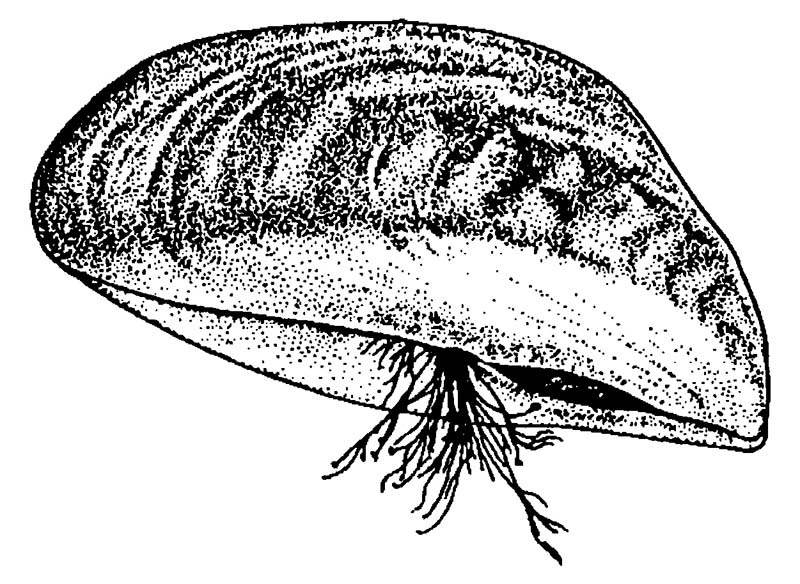
The zebra mussel is a small, freshwater shellfish known for its habit of attaching to hard surfaces and forming dense colonies. Scientifically referred to as Dreissena polymorpha, it is a bivalve mollusc commonly called a mussel. The common name comes from the dark and light banding found on many shells, though coloration can be highly variable and some individuals lack obvious stripes. They use strong, thread-like fibers called byssal threads to cling to rocks, boat hulls, intake structures and each other, allowing rapid establishment on a wide range of surfaces. This small shellfish is notable for its ecological and economic impacts when introduced outside its native range.
Image gallery
10 Images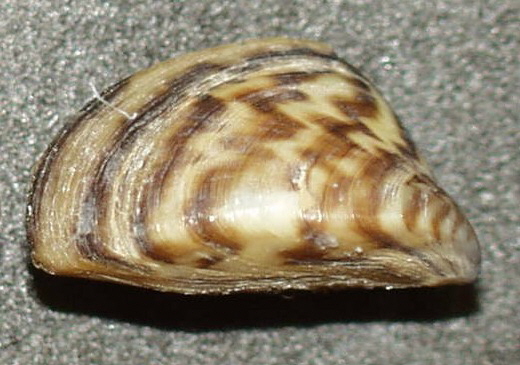


Characteristics and life cycle
Zebra mussels are generally small, often a few centimeters across, with a triangular or D-shaped shell. Shell patterns range from bold alternating bands to nearly solid colors. Adults attach with byssal threads on a flattened underside, which is a practical field distinction from similar invasive species such as the quagga mussel. Reproduction includes a planktonic larval stage (veligers) that can drift with currents, allowing dispersal through waterways. Populations can grow quickly where conditions are suitable: moderate temperatures, hard substrates for attachment and adequate food supply in the form of microscopic algae.
History and spread
Native to the Ponto-Caspian region of Europe and western Asia, zebra mussels spread beyond their natural range during the 20th century. They arrived in many new regions partly through human activities, including ship ballast water and the movement of recreational boats. In North America they became widely established after introduction in the late 20th century and have since dispersed through river networks and lakes, sometimes assisted by the transport of contaminated equipment and materials.
Ecological and economic impacts
As a filter-feeding species, the zebra mussel can remove large amounts of phytoplankton from the water, increasing water clarity but altering the base of aquatic food webs. This change can disadvantage native species and shift community composition. They also foul built infrastructure: intake pipes, cooling systems at power plants, municipal water supplies and recreational equipment can become clogged or encrusted. Such fouling increases maintenance needs and operational costs and can threaten water-dependent facilities in regions like the Great Lakes and major river systems, including parts of the Mississippi watershed.
- Ecological effects: competition with native bivalves, changes in food webs, habitat alteration.
- Infrastructure impacts: clogging of pipes, damage to boats and docks, reduced efficiency of cooling systems.
- Spread mechanisms: ballast water, recreational boating, attached equipment and natural downstream drift of larvae.
Management and notable facts
Control of zebra mussels is challenging. Management approaches include physical removal, use of screens and filters on intake systems, chemical treatments and regular maintenance to prevent buildup. Research into long-term biological and habitat-based control methods continues, while prevention—cleaning boats and gear, draining and drying equipment—remains the most effective way to limit further spread. Although they are not harmful to humans directly, zebra mussels are a persistent and costly invasive species that illustrate how small organisms can produce large ecological and economic consequences when moved beyond their native range.
For additional resources on identification, prevention and management practices, consult regional aquatic invasive species guidance from resource managers and authorities: identification guides, taxonomic references, mollusc databases, control fact sheets, and site-specific advisories for the Great Lakes and inland waterways like the Mississippi.
Questions and answers
Q: What is a zebra mussel?
A: A zebra mussel is a small bivalve mollusc that is typically attached to objects, surfaces, or each other by threads underneath the shells.
Q: How do zebra mussels spread?
A: Zebra mussels spread rapidly by sticking to boats, and they can spread by this passive method to many places where they have no natural predators.
Q: What distinguishes zebra mussels from quagga mussels?
A: Zebra mussels can be easily distinguished from quagga mussels because when placed on a surface they are stable on their flattened underside while quagga mussels lack a flat underside and will fall over.
Q: Why are zebra mussels a problem in Northern America's Great Lakes region?
A: Zebra mussels are a problem in Northern America's Great Lakes region because they reproduce fast and colonize water supply pipes of hydroelectric and nuclear power plants, public water supply plants, and industrial facilities, clogging water sources and constricting flow.
Q: How do zebra mussels affect industrial facilities?
A: Zebra mussels colonize pipes in industrial facilities, constricting flow and reducing the intake in heat exchangers, condensers, fire fighting equipment, and air conditioning and cooling systems.
Q: Will zebra mussels continue to populate the Great Lakes?
A: Yes, it is estimated that zebra mussels will continue to populate the Great Lakes and even enter the Mississippi River region.
Q: What is the color pattern of zebra mussels?
A: The color pattern of zebra mussels can vary, with some having dark or colored shells and others having no stripes.
Related articles
Author
AlegsaOnline.com Zebra mussel (Dreissena polymorpha): invasive freshwater bivalve Leandro Alegsa
URL: https://en.alegsaonline.com/art/110455