
Yut (Yutnori): Traditional Korean stick-and-token board game
Yut (or Yutnori) is a Korean family board game played with four wooden sticks and tokens. Popular at Lunar New Year, it combines luck from stick throws with simple strategy and varied regional rules.
Overview
Yut, often called Yutnori, is a traditional Korean board game commonly played during Lunar New Year and other seasonal celebrations. It uses four semi-flat wooden sticks whose up/down faces determine how far a player's token can move. The game is social and accessible: players of all ages can join, and a single round can be both fast-paced and strategic.
Image gallery
10 Images





Equipment and basic play
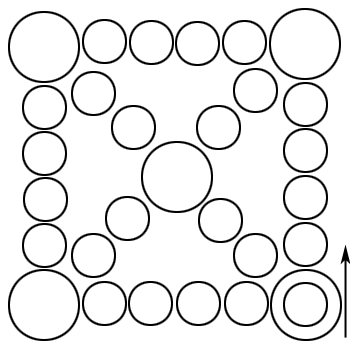
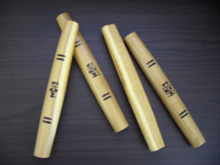
The basic components are a board with a network of connected spaces, several tokens for each team (sometimes called "horses"), and four yut sticks. Each throw of the sticks yields one of five standard results, named in Korean as do, gae, geol, yut, and mo, which correspond to increasing movement values based on how the sticks land. Certain outcomes (notably the higher values) grant an extra throw. Tokens ordinarily move along the marked path; landing on an opponent's token sends it back to the start, while joining two tokens lets them move together as a group.
Common rules and variants
Rules vary by region and company of players. Typical conventions include giving an extra turn after a yut or mo, allowing shortcuts where diagonal lines on the board connect distant spaces, and permitting teams to move grouped tokens. Because house rules are widespread, players often agree on specific details before starting. For summaries of popular rule sets and diagrams, see rules and diagrams.
History and cultural context
The exact origin of yut is unclear, but it is widely regarded as an ancient Korean pastime with roots stretching back centuries and possibly into the Three Kingdoms period. It has endured as a seasonal tradition, especially at Seollal (Korean New Year) and Daeboreum (the first full moon), when families and neighbors gather to play. The game appears in folktales and cultural descriptions as a symbol of communal leisure and holiday festivity. For cultural background and historical notes, consult cultural resources.
Why people play Yut
Yut combines simple arithmetic, chance, and cooperative tactics. It serves as a light-hearted contest that builds social bonds, teaches counting and turn-taking to children, and provides an easily portable activity for gatherings. Its low setup cost and flexible rules help explain its continued popularity across generations.
Notable features and distinctions
- Accessible: minimal equipment and straightforward play make it suitable for all ages.
- Variable rules: regional and household variations create diverse play styles.
- Mix of luck and skill: stick results are random, but strategic choices about grouping and shortcuts influence outcomes.
Overall, yut remains a living part of Korean seasonal culture—simple to learn, rich in local variation, and valued for the social connection it fosters during celebrations and everyday gatherings.
Questions and answers
Q: What is Yut?
A: Yut is a traditional Korean board game played mainly during the period from Korean New Year to the first full moon.
Q: What are the other names of Yut?
A: The other names of Yut are Cheok-sa and sa-hee.
Q: What is the origin of Yut?
A: The origin of Yut is not clear, but it seems that the game was started from the age of ancient Korea called Three-Kingdoms.
Q: How is Yut played?
A: Yut is played by throwing four sticks, and moving marks on the board according to shapes of the sticks that fell down.
Q: When is Yut played?
A: Yut is mainly played during the period from Korean New Year to the first full moon.
Q: Why is Yut popular during Korean New Year?
A: Yut is popular during Korean New Year because it can be enjoyed anywhere by players of any age.
Q: What are the benefits of playing Yut during Korean New Year?
A: Playing Yut during Korean New Year is a way of bringing families and communities together to celebrate the holiday and spend time together while having fun.
Author
AlegsaOnline.com Yut (Yutnori): Traditional Korean stick-and-token board game Leandro Alegsa
URL: https://en.alegsaonline.com/art/110269
Sources
- prkorea.com : prkorea.com
- 100.nate.com : 100.nate.com
- gwangcheon.es.kr : gwangcheon.es.kr