
Advanced Micro Devices (AMD): Overview, products, and history
AMD is an American semiconductor company known for CPUs (Ryzen, EPYC), GPUs (Radeon), and chipsets. This article covers its products, history, manufacturing model, uses, and industry role.
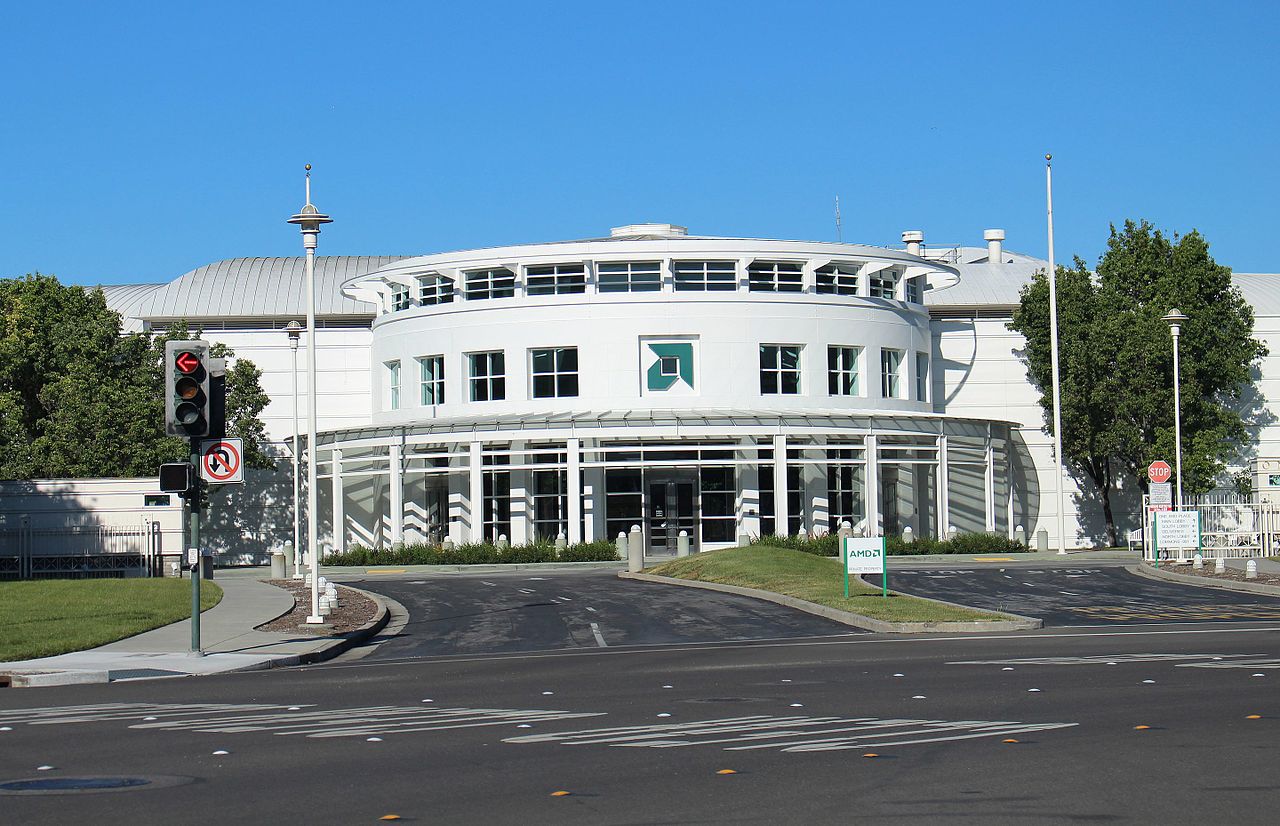
Advanced Micro Devices (AMD) is an American semiconductor company that designs and sells a broad range of computer hardware components. Founded as a supplier to the emerging microprocessor market, AMD grew into a major maker of central processors and graphics processors as well as related system logic and custom chips. The company is based in California and is commonly associated with consumer and enterprise computing platforms, gaming consoles and hardware used in data centers. For a concise reference to its corporate location see headquarters, and for its role in the electronics supply chain see hardware components.
Image gallery
10 Images




Core products and brands
AMD's portfolio covers several product families targeted at different markets. Its best-known consumer CPU family is marketed as Ryzen, while server processors are sold under the EPYC name and high-end desktop processors as Threadripper. AMD's graphics products use the Radeon brand for discrete GPUs and related graphics technologies. The company also produces combined CPU/GPU chips, sometimes called APUs, and supplies motherboard chipsets and platform controllers.
- CPUs: Ryzen (consumer), EPYC (server), Threadripper (workstation/high-end)
- GPUs: Radeon family for gaming and professional graphics
- APUs and SoCs: integrated processor designs combining compute and graphics
- Chipsets and platform components: supporting motherboards and system integration
History and corporate development
AMD began as a second-source and supplier for early microprocessor designs, providing compatible parts for larger chipmakers. Over decades it shifted from contract manufacturing and second-sourcing toward developing its own architectures and product lines, becoming a direct competitor to companies like Intel. A major expansion of AMD's graphics capabilities came when it acquired ATI Technologies, which added a wide catalogue of GPU technology and IP. In recent years AMD further expanded into adaptable logic and advanced programmable devices by acquiring a major FPGA company, broadening its portfolio for data center and embedded applications.
Manufacturing model and technical approach
Unlike a traditional integrated device manufacturer that owns large fabrication plants, AMD operates primarily as a design company and outsources chip production to foundries. This fabless model lets AMD focus on architecture, system integration and software while relying on third-party fabs for silicon production. In the 2010s AMD introduced a modern CPU architecture that restored competitiveness in single-thread and multi-thread performance; that architecture also embraced modular chiplet packaging to improve yields and scalability.
Uses, markets and partnerships
AMD processors and graphics chips appear across consumer PCs, laptops, gaming consoles and enterprise servers. The company's designs are used by equipment makers and original equipment manufacturers (OEM) in a variety of systems. AMD has forged partnerships with console makers and PC builders, and its GPUs support gaming technologies such as adaptive refresh rate standards. In the server and cloud markets, EPYC processors compete for applications requiring high core density and memory bandwidth.
Notable distinctions and current position
AMD is recognized for reinvigorating competition in the microprocessor and graphics markets through new microarchitectures, multi-die chip designs and focused engineering on performance-per-watt. Its competitiveness has influenced pricing, platform features and industry roadmaps. AMD continues to develop both consumer and enterprise products while navigating a market that includes strong rivals in central processing from Intel and in graphics from other vendors. For further reading on AMD’s CPU and GPU product families see CPUs and GPUs.
Overall, AMD's evolution from a second-source supplier to a full-line semiconductor designer illustrates broader shifts in the industry toward specialization, fabless production and modular chip design. Its products affect a wide range of computing devices and remain a major factor in hardware choices for consumers and enterprises alike.


History
→ Main article: AMD history
AMD was founded on May 1, 1969 under the name "Sanders Association" by Jerry Sanders III and Ed Turney. The start-up capital was provided by investors, including Intel founder Robert Noyce. The first integrated circuits were produced in November 1969. These formed the basis for the first self-developed product Am2501, which was launched in 1970.
From 1973 onwards, expansion into countries outside the USA began, with a plant being built in Penang in Malaysia. In 1975 AMD started the production of memory chips and in 1979 the company went public. In the same year, a license was acquired from Intel to produce the 8086 and 8088 processors. When this was terminated in 1986, it led to a legal dispute in which AMD was forbidden to produce replicas of Intel's processors from the 5th generation onwards (80586 - Intel Pentium) in an out-of-court settlement. AMD then developed their own architectures, the first being the AMD K5. With the takeover of the CPU manufacturer NexGen in 1996, AMD created the technological and personnel basis for further developments. For the production of the chips the Fab30 was opened in Dresden in 1998 and the Fab36 in 2004. In the meantime, the CPU manufacturer Alchemy, which produced high-end low-power embedded processors with MIPS architecture, had been taken over.
Also in 2004, the joint venture Fujitsu AMD Semiconductor Limited, founded in 1993 with Fujitsu, was renamed Spansion. The entire flash production was transferred from AMD and Fujitsu to Spansion. At the end of 2005, Spansion was then completely spun off as a separate public limited company, as the division was making ongoing losses.
In 2006, AMD acquired ATI Technologies, a leading supplier of computer graphics chips at that time. In the semiconductor industry, this takeover was considered unprecedented due to the special constellations (hardly any direct competition between these companies, different research areas). This takeover enables AMD, like its main competitor Intel, to supply important computer components "from a single source".
| Ownership structure (as of June 2016) | |
| Share | |
| Mubadala Development Company | 15,9 % |
| The Vanguard Group | 7,2 % |
| BlackRock | 6,0 % |
| OppenheimerFunds | 3,8 % |
| Waddell & Reed Investment | 3,0 % |
| State Street Global Advisors | 2,5 % |
On 8 September 2008, AMD CEO Dirk Meyer told the US business magazine Fortune that AMD was "going to go away from a captive fab model to more of a fabless model". Thus, the economic separation of the manufacturing plants was on its way. In October 2008, AMD announced that it would spin off its chip fabs into a foundry run in conjunction with Abu Dhabi-based Advanced Technology Investment Company (ATIC). In March 2009, the official name of the spun-off division was announced: Globalfoundries
In January 2011, Dirk Meyer stepped down from his functions at AMD. After months of provisional leadership by CFO Thomas Seifert, AMD appointed former Lenovo manager Rory P. Read as its new CEO in August 2011. In October 2014, Lisa Su became his successor.
On February 29, 2012, AMD acquired microserver specialist SeaMicro to gain a better foothold in the server market.
See also
- List of microprocessors from AMD
- AMD Embedded Solutions
Tags
Related articles
Author
AlegsaOnline.com Advanced Micro Devices (AMD): Overview, products, and history Leandro Alegsa
URL: https://en.alegsaonline.com/art/1101