
You Keep Me Hangin' On — song history, versions, and legacy
A comprehensive overview of the Motown hit "You Keep Me Hangin' On": its sound, recording, chart success, notable covers (Vanilla Fudge, Kim Wilde), and enduring influence across genres.
"You Keep Me Hangin' On" is a 1966 pop-soul single originally recorded by the Motown vocal group The Supremes. Written and produced by the Holland–Dozier–Holland team, the track pairs a concise, emotionally direct lyric about ending a troubled relationship with a taut, rhythm-driven arrangement. The single became one of The Supremes' signature records and reached number one on the Billboard Hot 100, helping to define the crossover sound that Motown crafted for mainstream American listeners.
Image gallery
5 Images


Musical characteristics
The song is notable for its spare, clipped instrumental figures and an immediately recognizable guitar motif that has been likened to a Morse code or radio signal. Vocally, the lead delivery conveys frustration and resolve, while vocal harmonies support and punctuate the emotional statements. The arrangement emphasizes staccato rhythm and a concise structure that drives the short run-time of the original single version, making its emotional arc direct and immediate.
Recording, release and context
Recorded and released by a Detroit-based Motown operation in late 1966, the record sits at the intersection of soul and pop, reflecting Motown's emphasis on catchy hooks and polished production. The lyrics address an entangling romantic relationship and the singer's determination to break free; that plainspoken theme, combined with the song's urgent instrumentation, helped it connect broadly with pop and R&B audiences across the United States.
Covers, reinterpretations and chart history
Because of its memorable hook and strong emotional core, the song has been reinterpreted in a variety of styles. A few prominent versions illustrate its versatility:
- The Supremes (1966) — the original soul-pop single that reached number one on the Billboard Hot 100.
- Vanilla Fudge (1967) — a slower, heavier rock/psychedelic take that transformed the concise single into an extended, dramatic piece and reached the top ten on U.S. pop charts (rock interpretation; peaked at #6 on the Hot 100).
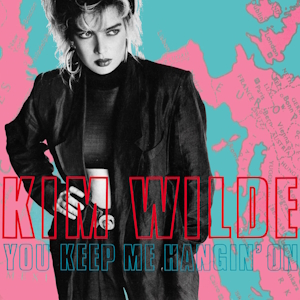
- Kim Wilde (1986/1987) — a synth-driven 1980s cover that brought the song back to number one in the U.S. in June 1987, also topping charts in other territories and reaching high positions in the U.K. and Australia.
Beyond these well-known versions, the song has been recorded and performed by many artists in styles ranging from rock and pop to dance and country, underscoring its adaptability to different production approaches and eras.
Legacy and notable facts
"You Keep Me Hangin' On" endures as an example of how economical songwriting, distinctive instrumental touches, and a clear emotional message can produce a timeless pop record. It helped reinforce Motown's role in shaping 1960s popular music and demonstrated how a single composition can be reshaped across genres—soul, psychedelic rock, and 1980s synth-pop among them—while retaining its core identity. The song is frequently cited in discussions of classic pop singles, cover versions that reinvent source material, and the production craft of the Holland–Dozier–Holland team.
Related topics and further reading
- The Supremes — background on the original performers.
- Motown — the record company and sound behind the release.
- soul — the musical tradition informing the original recording.
- pop — the mainstream genre context that helped the single cross over.
- ballad — the lyrical focus on romantic entanglement.
- relationship — theme explored in the lyrics.
- Morse code — analogy often used to describe the guitar phrase.
- radio — reference to the sonic texture evoked by the guitar.
- single — the format of many releases and chart-tracking.
- British — noting Kim Wilde's nationality and the song's international reach.
- Kim Wilde — the artist behind the 1986/87 hit cover.
- Wilde's version — details on the 1980s arrangement and success.
- United Kingdom — one of the national charts where later covers performed strongly.
- Australia — another country where the Kim Wilde cover reached number one.
- rock — the genre of the notable Vanilla Fudge reinterpretation.
- United States — the main market for the original single's chart success.
- Billboard Hot 100 — principal chart that documented the single's peak positions.
History
The song mixes musical styles of pop, soul, funk and R&B. Unlike its predecessor, You Can't Hurry Love, this song contains call-and-response elements similar to gospel.
The Supremes' song was released on October 12, 1966 and was a number one hit in the United States.
Cover version by Vanilla Fudge
Released in 1967, this version by US psychedelic rock band Vanilla Fudge reached #6 on the US charts. In this case, the original was barely recognizable. Recorded in mono, the track was extended to 6:47 min and slowed down to slow motion, as the original tempo was cut in half. The psychedelic sound with a neoclassical organ score and sitar passages alienated the original beyond recognition.
Questions and answers
Q: Who originally recorded "You Keep Me Hangin' On"?
A: The Supremes, an American Motown music group.
Q: What was the song's peak position on the US Billboard Hot 100 in 1966?
A: #1
Q: What kind of relationship does the song speak of?
A: A bad relationship the singer is trying to get out of.
Q: What is the signature guitar part in the song?
A: A Morse code-like radio sound effect.
Q: Which American music group recorded a rock version of the song in 1967?
A: Vanilla Fudge.
Q: What was the peak position of Vanilla Fudge's version of the song on the US Billboard Hot 100?
A: #6.
Q: Who had a version of the song in 1986 that hit #1 on the US Billboard Hot 100 in June 1987?
A: British singer Kim Wilde.
Related articles
Author
AlegsaOnline.com You Keep Me Hangin' On — song history, versions, and legacy Leandro Alegsa
URL: https://en.alegsaonline.com/art/110052
Sources
- imgur.com : "The Australian Top 50 Singles Chart"
- officialcharts.com : wilde "Official Charts-Kim Wilde"