
YHWH: the Tetragrammaton and the Holy Name in Judaism and Christianity
YHWH (the Tetragrammaton) is the four-letter biblical name of God in Hebrew. This article explains its script, vocalization debates, historical development, religious practice, and modern variants such as Yahweh and Jehovah.
The sequence of four Hebrew consonants Yod‑Heh‑Waw‑Heh (commonly rendered in Latin letters as YHWH) designates the divine name most closely associated with the God of Israel. Often called the Tetragrammaton (Greek for "four letters"), this sequence occupies a central place in Jewish scripture and has been the subject of scholarly reconstruction, liturgical practice, and Christian theological reflection. The Tetragrammaton appears throughout the Hebrew Bible and is treated with special reverence in Jewish tradition; for more on its religious significance see the discussion of the divine name.
Image gallery
10 Images


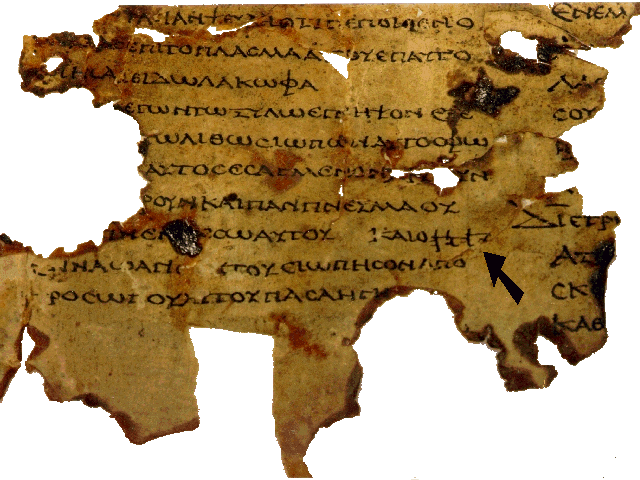


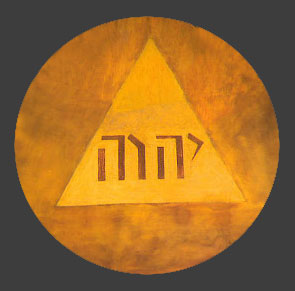
Name, script, and appearance in sources
In ancient Hebrew writing the consonants YHWH were written without the vowel marks that later readers would insert. The Hebrew alphabet originally recorded primarily consonants, and the four letters of the name are preserved in biblical manuscripts, inscriptions, and ancient papyri. Instances of the Tetragrammaton are found in biblical texts and in some archaeological inscriptions, and scholars consult a range of Hebrew manuscripts and comparative evidence to study its usage. For background on the Hebrew writing system and its historic forms see ancient Hebrew and paleography, and on the absence of vowels in early scripts see consonantal writing systems.
Pronunciation and vocalization
Because early Hebrew did not mark vowels, the original spoken form of YHWH became uncertain over time. Modern linguistic scholarship often reconstructs the name as "Yahweh," a form that many academics consider the most plausible vocalization based on philological and comparative evidence. Another familiar form, "Jehovah," arose in medieval and early modern Christian contexts when the consonants YHWH were combined in print with the vowel points of the Hebrew word Adonai ("Lord"). That hybridization produced the vocal pattern written in many European languages as Jehovah; historically it resulted from a scribal practice intended to remind readers to say a substitute word aloud rather than the divine name itself.
Historical development and the practice of substitution
From late Second Temple times through the rabbinic period, many Jews refrained from pronouncing the divine name outside certain cultic contexts. To avoid uttering the Tetragrammaton, readers and worshippers substituted words such as Adonai ("Lord") or, in ordinary speech, HaShem ("the Name"). The Masoretes — Jewish scholars who standardized the text and introduced a system of vowel pointing in the early Middle Ages — placed vowel signs in the biblical consonantal text to record pronunciation traditions. In many copies they added the vowels of Adonai to YHWH as a cue to say the substitute; this practice contributed directly to later hybrid vocalizations and to continued debate over the original sound of the name.
Religious use, translations, and liturgical practice
Different religious traditions handle the Tetragrammaton in various ways. In Jewish communal reading the name is typically not pronounced as written; substitutes like HaShem or Adonai are used in prayer and conversation. Many English translations of the Hebrew Bible follow Jewish convention by rendering YHWH as "LORD" (in small caps) where the divine name appears. Some modern translations and commentaries choose to transliterate the consonants as "Yahweh." Certain Christian groups, including the movement known as Jehovah's Witnesses, prefer the form "Jehovah" in worship and publications; more about this usage can be found at information on Jehovah's Witnesses. In 2008 the Vatican's liturgical office issued guidance advising that the form YAHWEH not be used in Catholic liturgy out of respect for Jewish tradition and sensitivities; see the Holy See statement at the Holy See guidance.
Variants, scholarly consensus, and notable distinctions
- Scholarly reconstruction: "Yahweh" is widely accepted among specialists as the probable historical pronunciation, though absolute certainty is impossible.
- Medieval and modern variants: "Jehovah" originated as a written hybrid and became common in several European languages and older English translations.
- Substitution practice: Jewish tradition commonly uses "Adonai" in liturgical reading and "HaShem" in conversation; Christian practice ranges from "LORD" in translations to explicit use of a transliterated name in some modern Bibles.
- Textual representation: In Hebrew manuscripts the Tetragrammaton appears as four unpointed letters; the Masoretic pointing tradition later added vowel marks which influenced later readers.
Significance and contemporary reflection
The Tetragrammaton is more than a linguistic curiosity: it shapes theology, worship, and interfaith sensitivity. For Jews it expresses the unique covenantal name of God and is treated with reverence; for Christians it appears throughout the Old Testament and informs the understanding of divine identity in the New Testament. Debates about pronunciation, translation, and liturgical use reflect broader questions about scriptural interpretation, historical reconstruction, and respect for religious tradition. Readers who wish to explore primary texts and scholarly treatments can consult introductions to biblical Hebrew and specialized studies on the divine name, and may follow the linked resources for further context on religion, language, and liturgical practice: the Abrahamic traditions, Judaism, Christianity, and Islam.
Because the consonantal form YHWH survives in manuscripts but not in a single universally agreed pronunciation, modern readers encounter a variety of transliterations and respectful practices. Understanding those varieties helps clarify how a single ancient four‑letter sequence continues to influence faith, scholarship, and liturgy today.
Questions and answers
Q: What is the most accepted way to pronounce YHWH?
A: Most academics agree that "Yahweh" is the most accepted way to say it.
Q: How do religious Jews typically refer to God's name today?
A: Traditionally, religious Jews today do not often say this name aloud. This is because it is believed to be too holy to be spoken. However, they often use substitutes when referring to the name of their God, such as HaShem ("The Name") or Shem HaMeforash (“the indescribable Name”).
Q: How many times does Yahweh appear in Judeo/Christian Scriptures?
A: Yahweh appears almost 7,000 times in Judeo/Christian Scriptures with the general name "Elohim" a distant second at 2,500 times.
Q: What does Yahshua mean?
A: Yahshua means "Yahweh(Yah) Saves(shua).
Q: What are some English language Bible translations that use “Yahweh” for God's name?
A: The Jerusalem Bible and Holman Christian Study Bible use "Yahweh" when there is a reference to his name; God's Word Translation uses all of the Hebrew transliterations for the name of God.
Q: Is Jehovah used only by Jehovah's Witnesses?
A: No, Jehovah is used by several regions besides Jehovah’s Witnesses.
Q: Does Catholic liturgy use YAHWEH or YHWH for God's name?
A: In 2008, the Holy See reiterated a directive that the full name YAHWEH should not be used in Catholic liturgy out of respect for the Jews who never pronounce the full word and YHWH was to be used instead.
Related articles
Author
AlegsaOnline.com YHWH: the Tetragrammaton and the Holy Name in Judaism and Christianity Leandro Alegsa
URL: https://en.alegsaonline.com/art/109839
Sources
- catholic.org : Catholic online