
Yellowcake (uranium concentrate)
Yellowcake is a concentrated uranium powder produced from mined ore and used as the feedstock for nuclear fuel and other industrial processes; it is not directly weapons-ready.
Overview
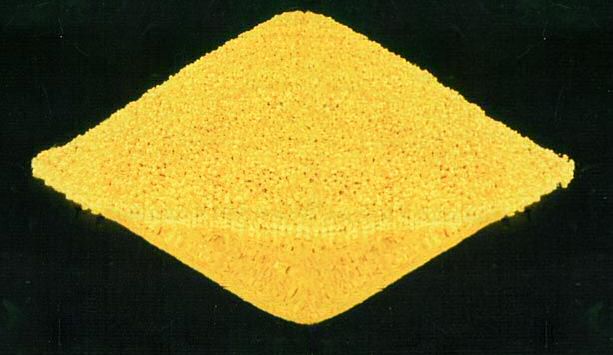
Yellowcake is a coarse, sand-like powder that represents a concentrated form of uranium produced during the processing of uranium-bearing ore. The term commonly denotes a uranium compound mixture that is chemically processed to remove impurities and concentrate the metal. It is linked to uranium and is an intermediate product in the nuclear fuel cycle rather than a finished fuel or a weapons component by itself.
Image gallery
4 Images


Production and characteristics
Yellowcake is produced by milling uranium-bearing rocks and minerals such as uraninite, coffinite, and others. The basic steps in conventional production include:
- Crushing and grinding the ore to liberate uranium-bearing minerals.
- Leaching with acids or alkaline solutions to dissolve uranium.
- Chemical precipitation and purification to recover uranium from the leachate.
- Drying and calcination to form a stable concentrate often called yellowcake.
Depending on the process and chemistry used, the material can vary in color from yellow to brown or black. The nominal chemical form is often described as triuranium octoxide (U3O8), but the exact composition can include other uranium oxides, sulfates, or uranium compounds.
Chemical and physical properties
Yellowcake is a powdery solid that contains most of the uranium from the original ore in a much smaller volume. It is relatively stable for storage and transport when packaged according to regulatory requirements. Because it is a concentrate, it is radioactive at low-to-moderate levels and is handled under industrial hygiene controls to limit dust and radon exposure.
Uses, limitations and common misconceptions
Yellowcake is principally the feedstock for further industrial processing. It is converted into gaseous uranium hexafluoride or other chemical forms that can then be made into fuel for nuclear reactors. A frequent misconception is that yellowcake is directly usable in weapons; in reality, it must undergo additional chemical conversion and isotopic enrichment to increase the fraction of uranium-235 for weapons use. Those downstream steps are technically complex and carried out in specialized facilities.
History, regulation and transport
Large-scale extraction and concentration of uranium began during the 20th century with the development of nuclear technology. Because yellowcake is a nuclear material, its production, sale and shipment are subject to national and international regulations to ensure safety, security and non-proliferation. Transport and storage require licensed containers, radiation monitoring, and administrative controls to protect workers and the public.
Notable facts and distinctions
- Yellowcake is a concentrate, not a fuel or a bomb ingredient in its raw form; additional processing is necessary for those end uses.
- Color and chemical composition can vary with the ore source and processing method.
- Because it concentrates uranium, it is economically important in supplying the nuclear energy industry and is monitored under treaties and export controls.
For more technical summaries or regulatory information, see specialized resources and official guidance from national nuclear authorities and international bodies. In industrial and energy contexts the term remains widely used to denote the mill product that begins the fuel preparation chain.


Related articles
Author
AlegsaOnline.com Yellowcake (uranium concentrate) Leandro Alegsa
URL: https://en.alegsaonline.com/art/109778