
Yawn
A yawn is a brief reflex involving a deep inhalation and stretching often linked to tiredness, social contagion, and uncertain physiological functions across humans and many animals.
A yawn is a short, often involuntary reflex in which the mouth opens widely, the lungs take a deep breath, and a slow exhalation follows. The motion commonly includes stretching of the face, neck and sometimes the limbs; when stretching accompanies a yawn the action is called pandiculation. Although the outward mechanics are familiar—wide jaw opening, long inhalation, and air expelled afterward—the ultimate biological purpose of yawning remains the subject of debate. Scientific discussion of the reflex and its triggers is summarized in the sections below.
Image gallery
10 Images

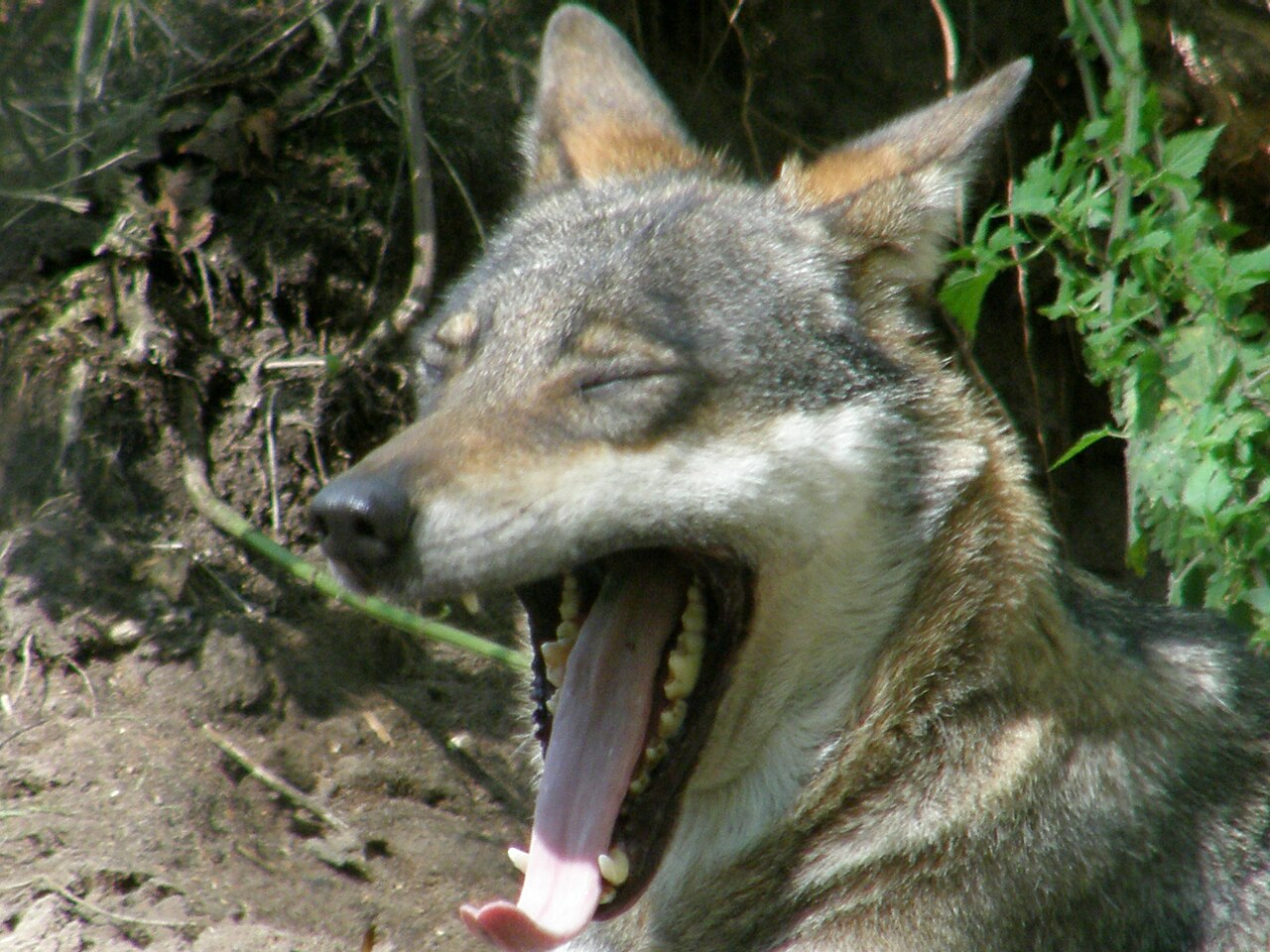


Visible characteristics and physiology
Typical features of a yawn include a pronounced opening of the jaw, a deep intake of air, and widening of the throat and sometimes the eustachian tubes that can alter pressure in the middle ear. This sequence may produce an audible exhale. Some accounts emphasize that the jaw movement can momentarily stretch the region around the eardrums; others note that yawns are often followed by a period of muscle relaxation or stretching. People can also perform voluntary yawns, although most are spontaneous.
Common triggers and everyday examples
- Tiredness or sleepiness: Yawns commonly precede or follow sleep.
- Boredom or low stimulation: Prolonged inactivity and monotony are frequent antecedents.
- Stress or fatigue: Physical or mental overload often correlates with increased yawning.
- Social cues: Observing, hearing about, or even imagining another person yawning can provoke a yawn in many observers.
When yawning is triggered by sensory cues from others it is described as "contagious" yawning: seeing someone else yawn, reading about yawning, or hearing it on a call can be enough to elicit the response. The reflex is widely considered a form of positive feedback in social contexts.
Theories about function
Researchers have proposed several nonexclusive explanations for why yawns occur; none has achieved universal acceptance. Leading ideas include:
- Regulation of brain state or arousal—helping to shift attention or promote alertness during transitions between wakefulness and sleep.
- Thermoregulation—adjusting temperature or blood flow in the head; some studies suggest yawning could help cool the brain, though evidence is mixed.
- Social communication—serving as a nonverbal cue that coordinates group behavior or signals physiological state; contagious yawning has been linked to social bonding in some species.
- Simple mechanical or respiratory effects—stretching respiratory muscles or changing blood gases, though this oxygenation hypothesis has less support in modern work.
Occurrence across species and notable facts
Yawning is widespread among vertebrates. Contagious yawning has been documented in humans and in other mammals such as chimpanzees and some domestic animals. In humans, the reflex is associated with behavioral states like boredom and fatigue, and can be elicited by seeing or hearing others yawn or even by imagining yawning. The term pandiculation describes the combined act of yawning and stretching.
Because yawning involves a clear reflex component, it is sometimes described simply as a reflex. Observations of the jaw and ear region highlight movements such as eardrum stretching when the mouth opens. Despite many plausible ideas, the precise function of yawning is not definitively established. Domestic animals such as dogs and cats display yawns in ways that overlap with human patterns, while the phenomenon has been recorded in many other mammals and even in developing fetuses under ultrasound observation.
Because yawning can occur as a normal reflex or increase with certain medical or pharmacological conditions, unusually frequent or suppressed yawning may prompt clinical attention. For general behavior and social signaling, yawning remains an accessible and familiar example of how simple bodily acts bridge physiology and social life.
Questions and answers
Q: What is a yawn?
A: A yawn is a reflex that involves taking in a large amount of air, stretching of eardrums as the jaw opens wide, and a (sometimes loud) breathing out.
Q: What is pandiculation?
A: Pandiculation is the act of yawning and stretching simultaneously.
Q: Why do people yawn?
A: No-one knows for sure what the function of yawning is, but it is commonly associated with tiredness, stress, overwork, lack of stimulation, and boredom.
Q: What can trigger yawning in humans?
A: Yawning is often triggered by others yawning (e.g. seeing a person yawning, talking to someone on the phone who is yawning) and is a typical example of positive feedback.
Q: Have other animals been observed yawning?
A: Yes, "infectious" yawning has been observed in chimpanzees and dogs.
Q: Do cats yawn and stretch?
A: Yes, cats yawn and stretch, but not necessarily at the same time.
Q: What happens to eardrums during a yawn?
A: Eardrums stretch as the jaw opens wide during a yawn.
Related articles
Author
AlegsaOnline.com Yawn Leandro Alegsa
URL: https://en.alegsaonline.com/art/109706
Sources
- medterms.com : MedOnline.net
- news.bbc.co.uk : "Pet dogs can 'catch' human yawns"
- ncbi.nlm.nih.gov : "Dogs catch human yawns"
- doi.org : 10.1098/rsbl.2008.0333
- pubmed.ncbi.nlm.nih.gov : 18682357
- americanscientist.org : Provine, Robert 2005. American Scientist 93, 532
- dontyawngame.com : Émilie
- cat.inist.fr : "Yawning as a stereotyped action pattern and releasing stimulus"
- doi.org : 10.1111/j.1439-0310.1986.tb00611.x
- npr.org : "The quest to design the perfect yawn: NPR"
- edge.org : "Mirror Neurons and imitation learning as the driving force behind "the great leap forward" in human evolution"