
Yao Ming: Chinese center, NBA star, and cultural ambassador
Yao Ming (born 1980) is a retired Chinese professional basketball center who starred for the Shanghai Sharks and the Houston Rockets, became a multiple-time NBA All-Star, and later a sports leader and philanthropist.
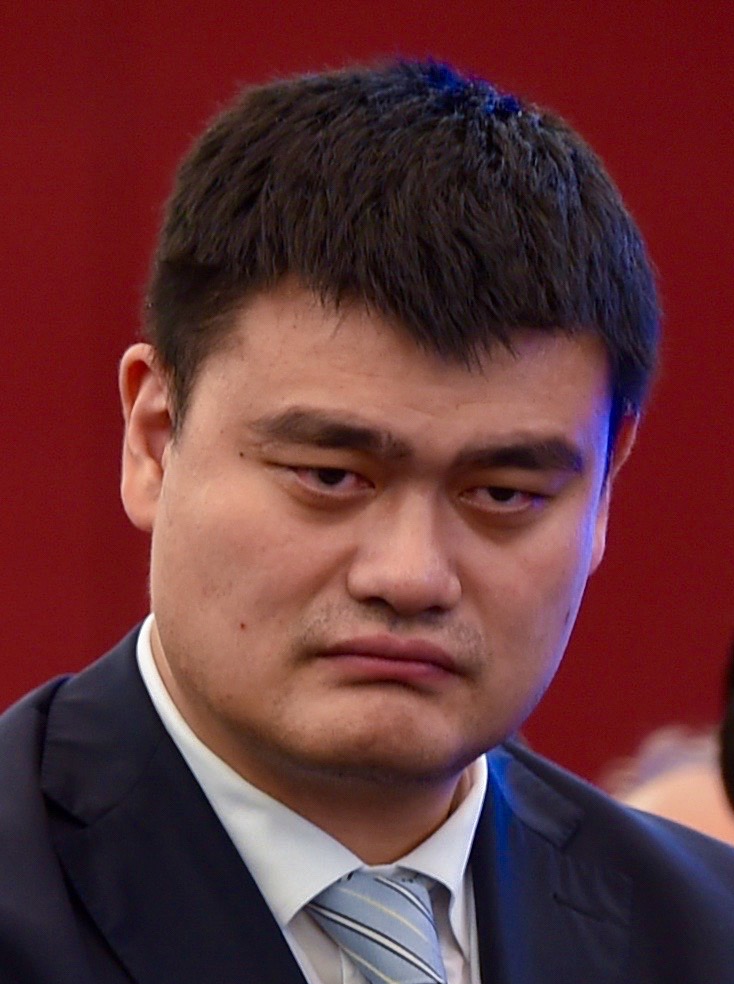
Yao Ming is a retired Chinese professional basketball player who became one of the most recognizable athletes of his generation. Born in Shanghai, he was listed at 7 feet 6 inches and played as a traditional center whose combination of height, footwork and passing helped bridge basketball cultures between China and the United States. For background on naming and language forms see Chinese naming conventions and discussions of family and given names.
Image gallery
10 Images






Early life and family
Yao was born to a family of former national-level basketball players and benefited from early exposure to the sport. The family name Yao is commonly used as his surname in Western sources; the Chinese characters for his name are 姚明 and the Mandarin romanization is often given as Yáo Míng. His birth date, commonly cited in biographies, is September 12 and the year of birth appears in many profiles as 1980. He grew up in Shanghai and developed under structured training programs that funneled talented youth into club competition.
Professional rise in China
As a teenager Yao joined the Shanghai Sharks, a club in the Chinese Basketball Association (CBA), where he rose rapidly through youth and senior ranks. With the Sharks he refined fundamentals that would make him attractive to international scouts: low-post scoring, a soft touch around the rim and the ability to pass from the high post. The Shanghai club served as his launching pad into professional basketball in Asia and beyond; the city of Shanghai remained an important part of his identity and public profile.
NBA career and international impact
Yao declared for the 2002 NBA Draft and was selected first overall by the Houston Rockets. He spent his entire NBA career with the Rockets and became one of the league’s best-known international players. During his time in the NBA he was chosen repeatedly for the league’s midseason All-Star showcase and was widely reported as instrumental in growing the NBA’s television audience, merchandising and fan interest across Asia. Observers noted his on-court skill set—post scoring, rim protection and playmaking for teammates—as well as the broader commercial and cultural consequences of his presence in the league. For context on professional sport structures and basketball as a global game see general professional sports and basketball resources, and for the league that employed him see the NBA.
Injuries and retirement
Yao’s career was curtailed by chronic foot and ankle injuries that limited his availability late in his playing years. After several attempts at rehabilitation and limited seasons of play he announced his retirement from professional basketball in 2011. His retirement prompted wide reflection on the physical demands placed on very tall players and on how teams and leagues manage long-term care for elite athletes.
Post-playing career, philanthropy and leadership
After retiring, Yao remained active in public life. He founded and supported charitable initiatives focused on education and wildlife conservation, championing anti-poaching and ivory-trade awareness. He has also taken on leadership roles intended to develop basketball in China, including involvement in administrative and governance efforts aimed at improving youth development and professional competition. His public activities include media projects and publications that trace his experiences navigating sport and culture in two countries; his rookie season in the NBA was the subject of the documentary The Year of the Yao, and he has been the subject of several biographical accounts.
Legacy
Yao’s legacy is both athletic and symbolic. On the court he is remembered as a skilled big man who altered matchups and contributed to his team’s offense and defense. Off the court he helped make basketball a larger international enterprise and served as a cultural ambassador between China and the West. His career raised questions and offered lessons about athlete health, international scouting, and the commercial dimensions of modern sport.
Further reading and resources
- Background on naming and language: Chinese naming conventions and name usage.
- Family, biography and early career: materials referencing the Yao family and the Chinese characters 姚明.
- Pronunciation and romanization: pinyin and language guides.
- Biographical dates and archival items: entries that list birth dates and years in athlete profiles.
- General sports governance and context: professional sports, basketball history and analysis at basketball resources.
- Club and league references: the Houston Rockets, the NBA and the Shanghai context at Shanghai-based histories.
Career in China and NBA Draft
Yao was born in Shanghai on September 12, 1980. His father, Yao Zhiyuan, is 2.08 meters tall and his mother, Fengdi Fang, is 1.88 meters tall. Fang was captain of the Chinese national women's basketball team. Yao's parents were the tallest couple in China at the time of his birth.
At the age of 13, Yao applied to the Shanghai Sharks of the Chinese Basketball Association (CBA). To make the team, he trained up to ten hours a day. After four years in the junior ranks, he played for the first team for the first time at the age of 17. At that time he was already 2.26 meters tall. In his first season (1997/98), he averaged 10 points and 8 rebounds per game. The following season, Yao broke his foot early in the season and for the second time in his career, which he said reduced his jumping ability by 10-15 inches. The Sharks made the playoffs in both of the following seasons, but lost to the Bayi Rockets each time. Wang Zhizhi then left the Bayi Rockets for the NBA, becoming the first Chinese player in league history a year before Yao. The Sharks won the CBA title for the first time that season. In the playoffs of his fifth and final season in Shanghai, Yao averaged 38.9 points and 20.2 rebounds per game on a 76.6% field goal percentage. In one of the final games, he converted all of his 21 throws.
Yao was urged to enter the 1999 NBA Draft by Li Yaomin, the Sharks' assistant general manager. Li also pressured Yao to sign a contract with Evergreen Sports Inc. as a player agent. Under the contract, 33% of Yao's earnings were to go to Evergreen, but the contract was later voided.
After Yao's decision to move to the NBA in 2002, a team of advisors formed that would become known as "Team Yao." The team consisted of Erik Zhang, the negotiator; Bill Duffy, Yao's NBA advisor; Lu Hao, his Chinese advisor; John Huizinga, an economics professor at the University of Chicago; and Bill Sanders, the vice president of marketing at the firm BDA Sports Management. Yao was widely predicted to be the No. 1 pick. However, some teams worried about Yao's eligibility for the NBA because it was not yet clear whether the CBA would approve Yao's move to the United States.
Shortly before, Wang Zhizhi had refused to return to China when he was supposed to compete for the Chinese national basketball team, and had subsequently been barred from playing in the national team. Therefore, the CBA insisted to Yao that he must return to compete for the Chinese national team. They also made it a condition that he would be allowed to join the Houston Rockets exclusively as a No. 1 pick and exclusively. After receiving assurances from "Team Yao", the CBA gave their approval to the move to the US on the morning of the 2002 draft. In doing so, he became the first foreign player in NBA draft history to be selected No. 1 despite lacking U.S. college experience.

Career in the NBA
First years (2002-2005)
Yao did not participate in the Rockets' pre-season preparation, instead playing for China in the 2002 World Basketball Championship. In his first NBA game against the Indiana Pacers, he managed only one point and one rebound. He scored his first basket in the NBA against the Denver Nuggets. In his first seven games, Yao averaged just 14 minutes on the court and averaged four points. In doing so, he seemed to confirm the skepticism that respected reporters like Bill Simmons and Dick Vitale had expressed months ago. From mid-November on, however, Yao increasingly played his way into the team: after 20 points against the Los Angeles Lakers and - two games later - 30 points and 16 rebounds against the Dallas Mavericks, he was set in the Rockets' starting lineup.
Yao finished his rookie season averaging 13.5 points and 8.2 rebounds per game. He finished second to Amar'e Stoudemire in the Rookie of the Year voting and was a unanimous selection to the NBA All-Rookie First Team. Other awards included the Sporting News Rookie of the Year and the Laureus Newcomer of the Year Award.
Before the start of Yao's second season (2003-04), Rudy Tomjanovich resigned as head coach of the Rockets due to health reasons. He was replaced by Jeff Van Gundy, longtime head coach of the New York Knicks. Van Gundy began to gear the offensive game towards Yao, which improved Yao's scoring and rebounding average. In a February 2004 game against the Atlanta Hawks that was decided in Houston's favor only after three overtimes, he set new career bests with 41 points and 7 assists. For the second year in a row, Yao was selected as the starting center in the NBA All-Star Game. Yao finished the season with 17.5 points and 9.0 rebounds per game.
Finishing seventh in the Western Conference, the Rockets made the playoffs for the first time in Yao's career, but lost in the first round to the Los Angeles Lakers. Yao averaged 15.0 points and 7.4 rebounds.
In 2004, the Rockets brought in multiple All-Star Tracy McGrady from the Orlando Magic. After this signing, the Rockets were considered a title contender for the 2004-05 season. Both McGrady and Yao were voted into the NBA All-Star Game as starters. In the fan vote by which players are selected for the All-Star Game, Yao broke Michael Jordan's 1997 record with a total of 2,558,278 votes. The Rockets won 51 games that season and finished the regular season in fifth place in the Western Conference. In this second straight playoff appearance, the team faced the Dallas Mavericks. Houston took the first two games in Dallas. Yao converted 13 of his 14 throws in the second game, setting a new record for the best throwing percentage in Rockets playoff history. Ultimately, though, the Rockets lost four of their final five games, including the decisive Game 7 by a 40-point differential. Yao finished that game series averaging 21.4 points (on 65% shooting) and 7.7 rebounds.
Seasons marked by injuries (2005-2010)
After missing only two games out of a total of 246 games in his first three years in the NBA (notable for a player of his size, as tall players are particularly prone to injury), Yao missed an extended period of time for the first time in his fourth season (2005-06) due to osteomyelitis. The bone marrow inflammation in the big toe of his left foot was operated on December 18, 2005. Despite missing 21 games due to surgery and rehab, he was again voted into the All-Star Game with the highest number of votes as a starter.
In the 25 games following the All-Star weekend, Yao averaged 25.7 points and 11.6 rebounds, while shooting 53.7% from the field and 87.8% on free throws. At the end of the season, in which he played 57 games, he averaged 22.3 points and 10.2 rebounds. This marked the first time he finished a season with a so-called "20/10 average". Tracy McGrady also missed numerous games. He only played in 47 games due to back problems, and he and Yao only appeared in 31 games together. With only 34 wins out of 82 games, the Rockets missed the playoffs. Four days before the end of the season, Yao was injured again: In the game against the Utah Jazz on April 10, 2006, he broke his left foot and had to take six months off.
Early in his fifth season (2006-07), on December 23, 2006, Yao suffered another injury: he broke his right knee while attempting to block a shot. For the season, he had averaged 26.8 points, 9.7 rebounds, and 2.3 blocks per game up to that point, and was considered a candidate for the MVP title. Due to the injury, he missed the All-Star Game, which would have been his fifth. In the league, he missed 34 games until he was able to play again in early March.
Despite the long absence of Yao, the Rockets reached the play-offs. Houston won the first two games of the best-of-seven series against the Utah Jazz, but lost four of the next five games. Houston lost the seventh game at home despite 29 points from Yao, 15 of which came in the final quarter. Although Yao averaged 25.1 points and 10.3 rebounds in the playoff games, he was not pleased with himself, saying he "didn't do his job" ("I didn't do my job").
On May 18, 2007, a few weeks after the Rockets were eliminated, the team fired head coach Jeff Van Gundy. Three days later, former Sacramento Kings coach Rick Adelman signed on in Houston. Observers speculated that with the new coach, the style of play would be more offensive-oriented than it was with his predecessor.
On November 9, 2007, Yao played for the first time against fellow countryman Yi Jianlian of the Milwaukee Bucks. The Rockets won the encounter 104-88. In China, the game was broadcast on numerous television channels and reached more than 200 million viewers there alone. This made it one of the most-watched games in NBA history. As in previous years, Yao was again selected to the starting lineup for the All-Star Game. Prior to All-Star weekend, the Rockets won eight straight games, which they extended to a 12-game winning streak after the All-Star break. However, on February 26, 2008, Yao then suffered a fatigue fracture in his left foot during practice and was out for the rest of the season. However, contrary to initial fears, he was able to participate in the Olympic Games in Beijing. Despite Yao's absence, the Rockets extended their winning streak to 22 games, the second-longest in NBA history. Yao underwent successful surgery on March 3, where screws were placed in his foot to support the bone. Recovery time was estimated at four months. In the 55 games played during the 2007-08 season, Yao averaged 22.0 points, 10.8 rebounds and 2.0 blocks.
The following season, Yao played 77 games, his first full season since 2004-05. He averaged 19.7 points on 54.8% shooting and 9.9 rebounds. He improved his free throw percentage to 86.6%. Even without McGrady, who was out for the rest of the season due to an injury starting in February, the Rockets finished the season in 5th place in the Western Conference with 53 wins. They beat the Portland Trail Blazers in the first round of the playoffs to reach the second round for the first time since 1997 and the first time in Yao's career.
In the first game of the second round against the Los Angeles Lakers, Yao led his team to victory in Los Angeles with 28 points, including 8 points in the last four minutes of the game. The next two games were lost, and Yao sprained his ankle in Game 3. Upon examination, he was diagnosed with a stress fracture, so Yao's season was over. Without Yao, the Rockets eventually lost the series 4-3, and further examination revealed that the injury jeopardized the continuation of his career. Several weeks later, the decision was made to have Yao's left foot undergo surgery to permanently reduce the stress on his scaphoid. Yao was forced to rest for the entire 2009-10 season and did not return to the team until pre-season of the 2010-11 season. However, he suffered a fatigue fracture in his left ankle after only a few games. In July 2011, Ming announced his retirement due to persistent injury problems.


Related articles
Author
AlegsaOnline.com Yao Ming: Chinese center, NBA star, and cultural ambassador Leandro Alegsa
URL: https://en.alegsaonline.com/art/109636
Sources
- nba.com : "NBA Players"
- cnn.com : "Yao Ming Retiring? Chinese Fans Hope Not Yet"
- chron.com : "Yao and Ye's wedding unites East and West"
- usatoday30.usatoday.com : "Like countryman Yao, hurdler is finding weight of fame"
- chinadaily.com.cn : "Yao tops forbes list again, but Ziyi catches up"
- chron.com : "The Year of the Yao"
- nba.com : "Yao's Life in Two Worlds"