
Yalta Conference (February 1945)
Meeting of the Allied 'Big Three' in Crimea to agree postwar arrangements for Europe, Germany, and the war against Japan; a pivotal conference with lasting consequences and controversies.
Overview
The Yalta Conference took place from 4 to 11 February 1945 on the Crimean peninsula. It brought together the leaders of the three principal Allied powers near the end of the Second World War: the British Prime Minister Winston Churchill, the United States President Franklin D. Roosevelt and the Soviet Premier Joseph Stalin. The gathering aimed to establish practical arrangements for the defeat and occupation of Germany, the re-establishment of nations liberated from Nazi control, and the postwar balance of power in Europe.
Image gallery
10 Images
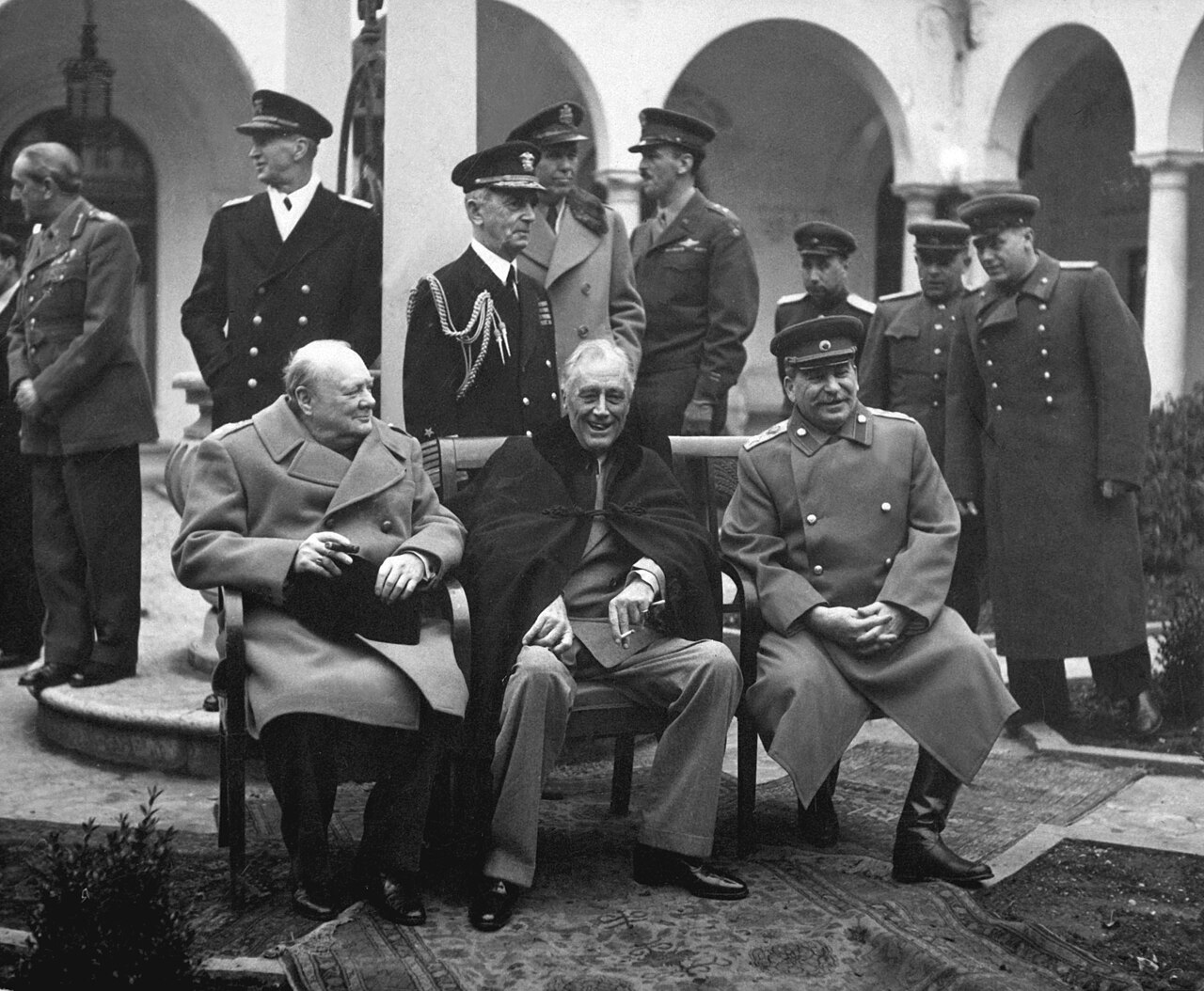


Main participants and atmosphere
The conference is often described as a summit of the "Big Three." Personal relationships, wartime pressures and differing priorities shaped discussions. Churchill sought to preserve British influence and limit Soviet expansion; Roosevelt prioritized a postwar international order and Soviet participation against Japan; Stalin focused on security for the USSR and influence over Eastern Europe. The physical setting and tense strategic context influenced both negotiation style and outcomes.
Agreements and decisions
- Division and administration of defeated Germany into occupation zones and procedures for demilitarization and denazification.
- Plans for free elections in liberated countries, with language on democratic processes that later became contentious.
- Commitments to prosecute major war criminals after the war, paving the way for the Nuremberg trials.
- Stalin's pledge to enter the war against Japan within a defined period after Germany's defeat, and related arrangements in East Asia.
- Endorsement of the formation of the United Nations and agreement on the structure of the UN Security Council.
Significance and controversies
Yalta shaped the territorial and political map of postwar Europe. Some observers contend that concessions made to the Soviet Union contributed to the onset of the Cold War; others argue that the agreements reflected wartime realities and limited options available to Western leaders. Differences between the conference pledges—such as promises of free elections—and the way events unfolded in Eastern Europe became focal points for later criticism and historical debate.
Legacy and historical context
The Yalta Conference sits between earlier wartime summits and the later Potsdam meeting. It influenced the occupation of Germany, the establishment of international institutions, and the early diplomatic contours of the Cold War. Historians continue to assess the balance of cooperation and rivalry at Yalta, weighing the pragmatic aims of defeating fascism against long-term consequences for sovereignty, security and East–West relations. For further reading see general accounts of the conference and biographies of the three leaders: Churchill, Roosevelt, Stalin, and collections of primary documents and scholarly studies on Yalta and its aftermath.
Notable fact: The conference's outcomes were negotiated under wartime urgency and uneven leverage among allies, which helps explain both its immediate accomplishments and the disputes that followed. For contemporary archival materials and explanatory resources consult specialized repositories and edited document collections linked to each leader or to studies summarized by historical institutions covering the dates and proceedings.
Questions and answers
Q: What was the Yalta Conference?
A: The Yalta Conference was a meeting held in Crimea in February 1945 between the leaders of the United Kingdom, the United States, and the Soviet Union to discuss the future of Germany.
Q: When did the Yalta Conference take place?
A: The Yalta Conference took place from February 4 to February 11, 1945.
Q: Who were the leaders that attended the Yalta Conference?
A: The leaders that attended the Yalta Conference were Winston Churchill, Franklin D. Roosevelt, and Joseph Stalin.
Q: Why was the Yalta Conference important?
A: The Yalta Conference was important in European history as it discussed the future of Germany and paved the way for the post-war era.
Q: What did the leaders discuss at the Yalta Conference?
A: The leaders discussed the future of Germany, how to divide and occupy it, its reparations, and the creation of the United Nations.
Q: Who was the Prime Minister of the United Kingdom that attended the Yalta Conference?
A: The Prime Minister of the United Kingdom that attended the Yalta Conference was Winston Churchill.
Q: What is another name for the Yalta Conference?
A: The Yalta Conference is sometimes called the Crimea Conference.
Related articles
Author
AlegsaOnline.com Yalta Conference (February 1945) Leandro Alegsa
URL: https://en.alegsaonline.com/art/109574