
Bes — Ancient Egyptian household protector of childbirth and children
Bes, a popular ancient Egyptian household deity, protected pregnant women, newborns and families. Depicted frontally as a dwarf with leonine attributes, he appears on amulets, furniture and everyday objects.
Overview
Bes was a widely venerated figure in the popular religion of ancient Egypt, best known as a guardian of households, pregnant women, newborns and young children. Unlike many state cults centred on temple complexes, Bes belonged to domestic practice: his likeness appeared on amulets, mirrors, cradles, beds and cosmetics boxes and was kept close to people within the home. His character combined fierce, comic and protective traits intended to repel danger rather than to be worshipped in large formal temples. For a general introduction to his roles, see domestic cult studies.
Image gallery
10 Images




Appearance and iconography
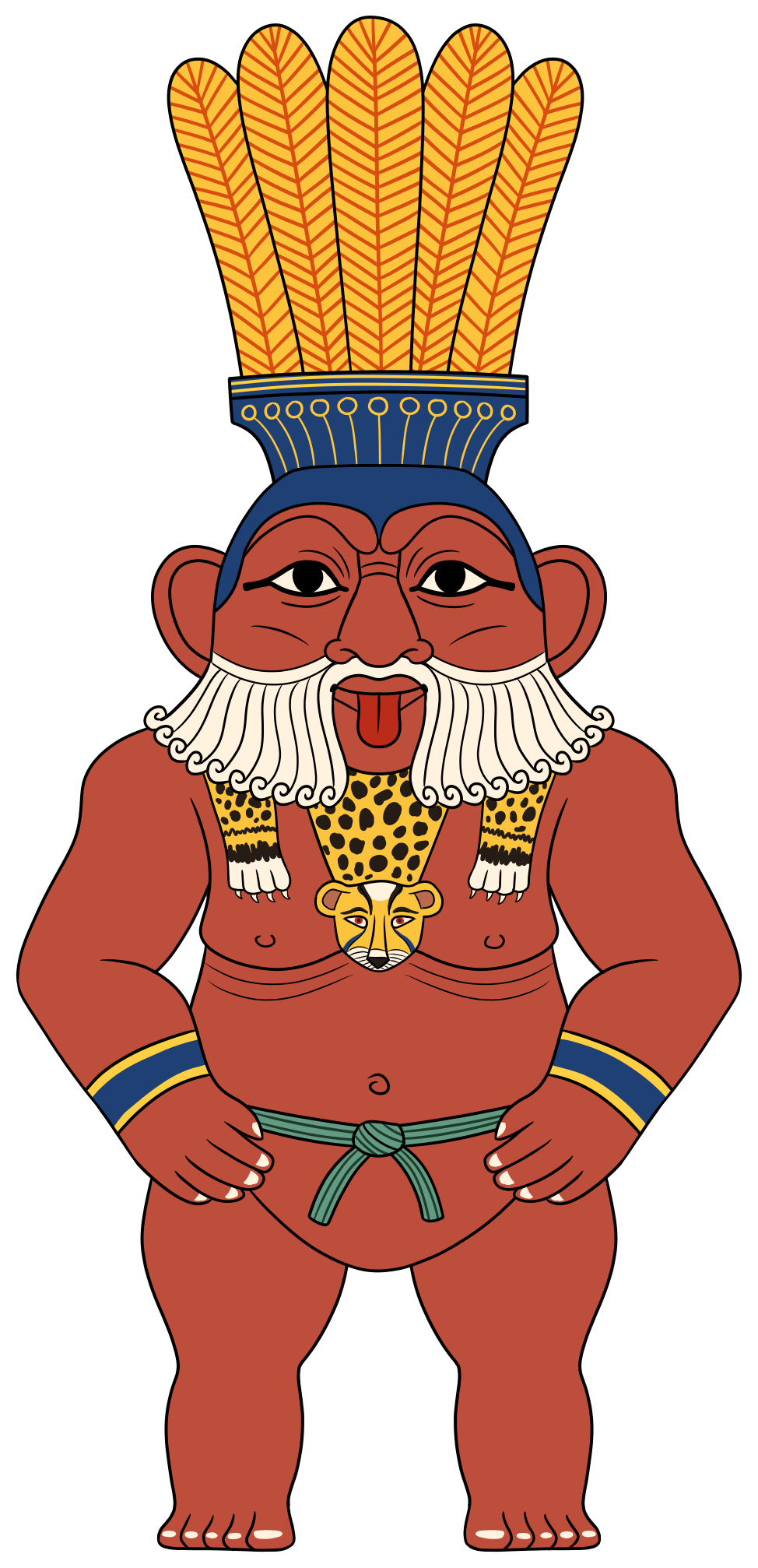
Bes is frequently depicted as a small, stocky, bearded dwarf shown in full face rather than the profile typical of Egyptian art. He often has exaggerated facial features, a protruding tongue, and a leonine mane or skin, and is sometimes shown wearing a feathered crown or holding musical instruments. This frontal, sometimes grotesque presentation is understood as part of his apotropaic function: the startling image itself was meant to frighten away malevolent forces. Examples and catalogues of Bes imagery can be consulted in museum publications and illustrated catalogues of Egyptian antiquities, such as those summarized in comparative iconography.
Origins and cultural background
The origins of Bes are debated among scholars. His distinctive look and some stylistic parallels have led to suggestions that aspects of his figure derive from Nubian or sub-Saharan motifs adopted into Egyptian popular religion. Linguistic proposals have linked his name to words in neighbouring languages that carry meanings like protector, but such etymologies remain cautious. Bes became especially prominent in household contexts from the second millennium BCE onward, developing a strong reputation as an intimate protector rather than as a state god; for discussions of his roots see studies on etymology and roots.
Role in childbirth and protection rituals
Bes’s primary functions centered on protection in moments of vulnerability. He was invoked during pregnancy and childbirth to guard mother and infant from harmful spirits. Popular ritual practice associated with childbirth included loud noises, rattles, drumming and dancing, all intended to drive away demons and malignant influences. Bes was imagined as active and close at hand: when a baby smiled for no apparent reason, some ancient Egyptians believed the god himself might be making faces in the room. See accounts of these ritual behaviours in introductions to Egyptian household rites at anti-demonic practices and childbirth rites.
Domestic objects and everyday use
Because Bes belonged to the realm of the everyday, his image is common on small personal and household items. Amulets representing Bes were worn or suspended in rooms, and decorative panels or inlays on beds, cosmetic containers and toys often show him in lively poses. Bes is also associated with music and festivity: he appears on objects depicting dancers and musicians, reinforcing his role as a companion to song and protection through noise. Illustrated examples and object studies can be found in museum collections and catalogues of Egyptian domestic artefacts; see selected illustrations at museum examples.
Related figures and later reception
Bes had companions and variations in popular belief. A female counterpart, often called Beset or a similar name, shared protective and maternal attributes in relation to childbirth and childcare. Over the long history of Egypt Bes imagery continued to be reproduced, including during later periods when external influences increased. His effigies survive in many museums and remain a vivid emblem of intimate, household religion in antiquity. For modern displays and research, refer to museum treatments and archaeological summaries at museum displays and academic descriptions.
Comparative and anthropological perspectives
Anthropologists and historians of religion sometimes compare Bes to protective household figures in other cultures, noting broad parallels in using small, grotesque or loud images to avert harm. While direct links to other African folk motifs are discussed, scholars emphasize careful, evidence-based comparison rather than easy diffusionist claims. Interested readers may consult comparative studies that survey such motifs and debates at comparative studies and animal and household protection.
Further reading and resources
Bes remains a subject of interest both for specialists of ancient Egypt and for the general public because he illustrates how religion operated inside the household. For museum catalogues, object-based studies and accessible overviews that document Bes figures across different media and periods, see curated resources and bibliographies compiled by museums and scholarly projects: overview resources, birth-ritual studies and illustrated examples.
Questions and answers
Q: Who was Bes?
A: Bes was an ancient Egyptian god of protection of pregnant women, newborn babies, and the family.
Q: What did Bes wear?
A: Bes wore a lion's skin and was a dwarf.
Q: How did Bes scare away demons during birth?
A: Bes danced around the room, shaking his rattle and yelling to scare away demons that might put a curse on the child.
Q: What did Egyptians believe when a baby laughed or smiled for no reason?
A: Egyptians believed that Bes was somewhere in the room making funny faces.
Q: What was Bes's name connected to?
A: Bes's name appears to be connected to a Nubian word for cat, besa, which literally means protector.
Q: Why was Bes singled out as worthy of worship in Egypt?
A: Bes was naturally singled out as worthy of worship in Egypt because Egyptians kept cats in order to attack snakes and creatures that might ruin crop stores, such as mice.
Q: What was Bes's role after a child was born?
A: After the child was born, Bes would stay by him/her.
Related articles
Author
AlegsaOnline.com Bes — Ancient Egyptian household protector of childbirth and children Leandro Alegsa
URL: https://en.alegsaonline.com/art/10947
Sources
- ancientegyptonline.co.uk : God Bes