
Xerochrysum bracteatum — golden everlasting (strawflower)
Comprehensive overview of Xerochrysum bracteatum (golden everlasting, strawflower): description, native range, ecology, cultivation, propagation, uses as cut and dried flower, pests and horticultural varieties.
Overview
Xerochrysum bracteatum is a well-known flowering plant commonly called the golden everlasting or strawflower. It belongs to the broader daisy group within the family Asteraceae and is native to Australia. Gardeners prize it for its papery bracts that form showy, long-lasting heads suitable for both fresh cutting and dried arrangements.
Image gallery
10 Images



Morphology
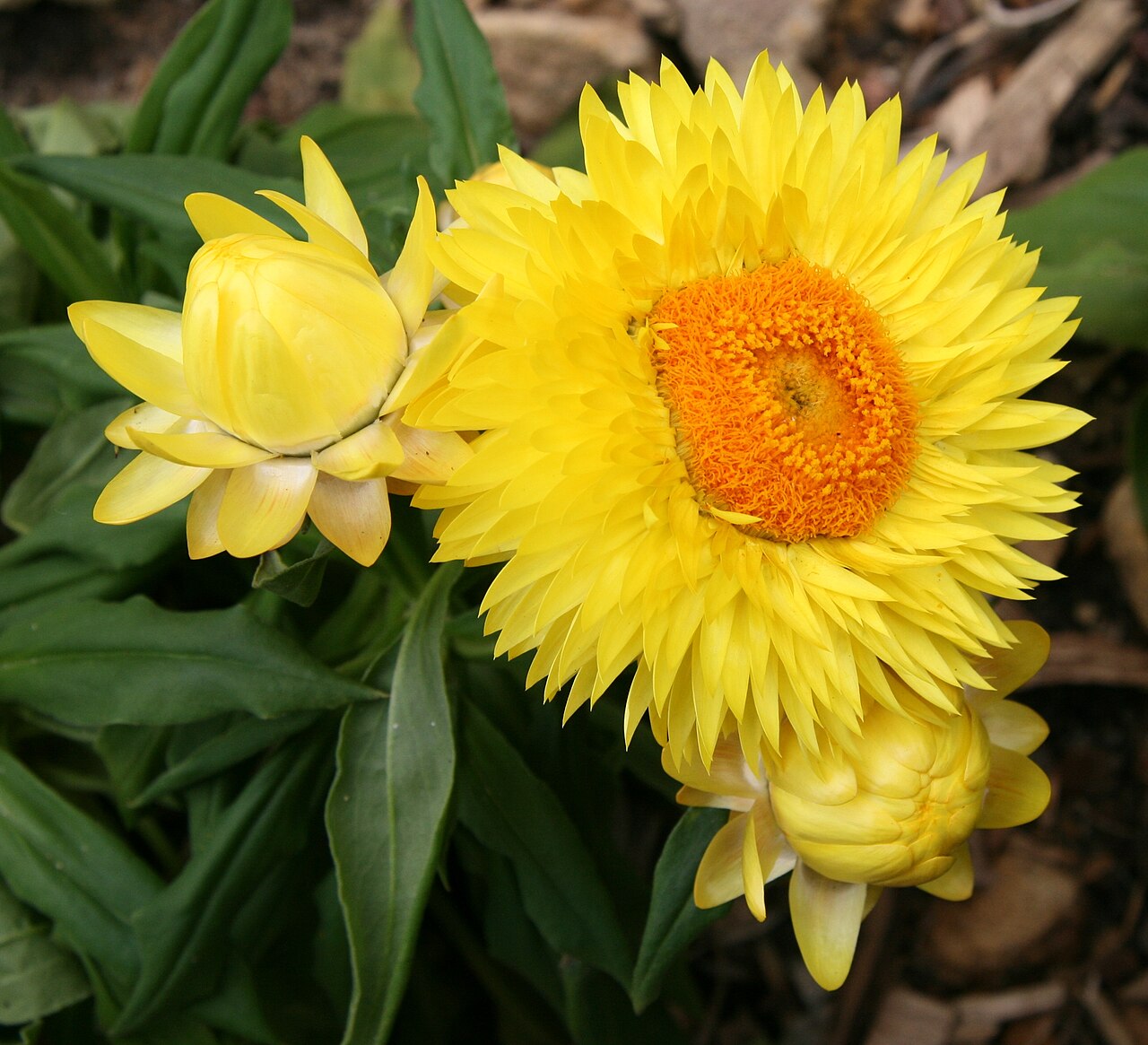
The apparent 'flower' is a composite head made of many small disc florets surrounded by persistent, dry-textured involucral bracts. These bracts, not true petals, account for the plant's common name because they retain color and shape when dried. Plants vary from low, compact forms to upright types approaching a metre in height and may be treated as either perennials or as annual bedding plants in cooler climates. In warm areas some forms behave more like a short-lived shrub.
Distribution and habitat
Xerochrysum bracteatum occurs across a wide range of habitats in Australia, including open grasslands, coastal sands, roadsides and disturbed sites where it tolerates poor soils and seasonal dryness. It is widely cultivated and has been introduced to gardens on other continents because of its adaptability and decorative value.
Ecology and pollinators
Strawflowers provide nectar and pollen to a variety of insects. Adult butterflies and day-flying moths visit the flower heads, while other recorded visitors include hoverflies, native bees, small beetles and grasshoppers. Several Lepidoptera species use the plant as a larval food source, and adults benefit from easily accessible pollen and nectar. In garden settings the species supports pollinator diversity and can be part of wildlife-friendly plantings.
Cultivation
Strawflowers are straightforward to grow in temperate gardens. They perform best in full sun with well-drained soil and moderate fertility. Regular deadheading prolongs bloom. Established plants are drought tolerant but do poorly in waterlogged soils. Sow seed directly after risk of frost or start under glass for earlier flowering; many cultivars also root from cuttings to preserve specific traits.
Propagation and breeding
Propagation is commonly by seed for bulk production and by softwood cuttings to maintain named cultivars. Breeders have selected a wide range of flower sizes and colours, producing compact bedding types and taller cutting varieties. Hybridization and selection have increased colour range to include yellows, oranges, reds, pinks, whites and bicolours, and cultivars differ in bract shape and vase life.
Uses
Its primary uses are ornamental: as bedding plants, in borders, and in cut-flower production. The bracts' papery texture makes them excellent for dried arrangements and craft use because they retain form and color for extended periods. They are also used in educational displays to illustrate composite flower structure.
Pests and diseases
Common problems include fungal root and crown rots where drainage is poor, and occasional damage from aphids, thrips or caterpillars. Good cultural practices—well-drained soil, adequate air circulation and removal of diseased material—reduce most issues. Resistant cultivars and routine monitoring help maintain healthy plants in production and home gardens.
Varieties and garden selection
Choose compact forms for edging and containers and taller cultivars for cutting beds. Many commercial series list flower diameter, plant height and recommended use. Selecting seed-raised mixes provides a range of colours, while named cultivars propagated by cuttings ensure consistent traits.
Conservation and cultural notes
While Xerochrysum bracteatum is common in cultivation, wild populations reflect the plant's ability to grow in disturbed and open habitats. Its ease of cultivation and appeal to pollinators make it a useful species for education, small-scale cut-flower production and sustainable garden design.
For further reading about botanical characteristics, cultivation advice and cultivar lists consult botanical keys and horticultural guides or follow specialist resources that cover Asteraceae and ornamental annuals. Reliable introductory sources and plant nursery information often provide practical tips for successful growing and drying of blooms.
Questions and answers
Q: What is Xerochrysum bracteatum?
A: Xerochrysum bracteatum is a flowering plant in the daisy family Asteraceae that comes from Australia.
Q: What is another commonly used name for Xerochrysum bracteatum?
A: Another commonly used name for Xerochrysum bracteatum is golden everlasting or strawflower in English.
Q: How does Xerochrysum bracteatum grow?
A: Xerochrysum bracteatum can grow as a woody or leafy perennial or annual shrub and can get up to a meter (3 ft) tall, depending on the type.
Q: What animals use the golden everlasting as a food source?
A: Different kinds of larvae (caterpillars) of butterflies, moths, and skippers use the golden everlasting as a food source.
Q: What other animals visit the flower heads of the golden everlasting?
A: Adult butterflies, hoverflies, native bees, small beetles, and grasshoppers visit the flower heads of the golden everlasting.
Q: Is the golden everlasting difficult to grow?
A: No, the golden everlasting is easy to grow and annual varieties are available in a host of color forms.
Q: What family does Xerochrysum bracteatum belong to?
A: Xerochrysum bracteatum belongs to the daisy family Asteraceae.
Related articles
Author
AlegsaOnline.com Xerochrysum bracteatum — golden everlasting (strawflower) Leandro Alegsa
URL: https://en.alegsaonline.com/art/109465
Sources
- plantnet.rbgsyd.nsw.gov.au : "Xerochrysum bracteatum"
- books.google.com : New England Wild Flower Society's Flora Novae Angliae: A Manual for the Identification of Native and Naturalized Higher Vascular Plants of New England
- books.google.com : Australian Plants: For Gardens in the Sun
- doi.org : 10.1094/PDIS.2003.87.3.315A
- doi.org : 10.1094/PDIS-91-3-0326A
- placanet.org : "Electron Microscopy and Molecular Characterization of Phytoplasmas Associated with Strawflower Yellows in the Czech Republic"
- aussiewinners.com.au : "Bracteantha Sundaze"
- books.google.com : Australian Plants for Mediterranean Climate Gardens
- doi.org : 10.1080/00103620701588379
- dpi.nsw.gov.au : "New flower crops now well accepted"