
Xanthophylls (yellow carotenoid pigments)
Xanthophylls are oxygen-containing carotenoids that produce yellow colors in plants, algae and animals, contribute to photoprotection, and include compounds such as lutein and zeaxanthin.
Overview
Xanthophylls are a class of pigmented organic molecules found widely in plants, algae and some animals. They belong to the larger carotenoid family but are distinguished by oxygen-containing functional groups (for example hydroxyls), which give them chemical and optical properties different from hydrocarbon carotenes. Visually, xanthophylls are responsible for many yellow to yellow‑orange tones visible in leaves, petals and certain animal tissues.
Image gallery
3 Images

Chemical characteristics
Chemically, xanthophylls are tetraterpenoid compounds with long chains of conjugated double bonds and one or more oxygen atoms. Representative molecules include lutein, zeaxanthin, violaxanthin and neoxanthin. These structural features determine their light-absorption spectra and their role in photochemical processes within plastids and membranes.
Biological roles and the xanthophyll cycle
Beyond coloration, xanthophylls have important physiological functions. In photosynthetic organisms they participate in light harvesting and in photoprotection: certain xanthophylls help dissipate excess light energy as heat, reducing oxidative damage to the photosynthetic apparatus. This reversible conversion among violaxanthin, antheraxanthin and zeaxanthin is commonly called the xanthophyll cycle. Xanthophylls also act as antioxidants and can stabilize membranes under stress.
Distribution, examples and human relevance
Xanthophylls occur in chloroplasts of green leaves (often masked by abundant chlorophyll), in carotenoid-rich petals and in some animal tissues where they are obtained through diet. Notable examples are lutein and zeaxanthin, which accumulate in the human retina (macula) and are studied for their possible role in visual health. Poultry egg yolks, certain fish and leaf tissues show yellow hues attributable to these compounds.
Detection, uses and practical notes
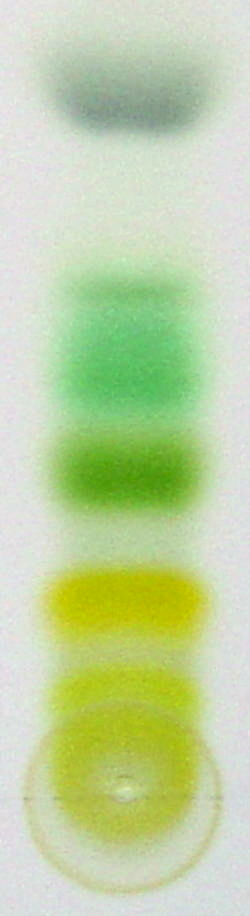
Analytical methods such as solvent extraction followed by chromatography and spectrophotometry are used to identify and quantify xanthophylls in biological samples; see general methods for pigment analysis. Xanthophylls are used as dietary supplements, food colorants and research probes for studying light-energy management in photosynthesis. For broader context on pigments and their interaction with chlorophyll, see plant pigment resources and comparisons with chlorophyll.
History and terminology
The name derives from Greek roots meaning "yellow" (xanthos) and "leaf" (phyllon). Scientific recognition of xanthophylls grew as separation and chemical characterization techniques developed; modern interest focuses on their ecological roles, mechanisms of photoprotection and potential nutritional benefits. Distinguishing xanthophylls from carotenes and chlorophyll is useful when interpreting seasonal leaf color change, stress responses and dietary sources of yellow pigments.
- Common xanthophylls: lutein, zeaxanthin, violaxanthin, neoxanthin.
- Roles: light harvesting, photoprotection, antioxidant activity, pigmentation.
- Analytical tools: chromatography, mass spectrometry, spectrophotometry.
Questions and answers
Q: What are xanthophylls?
A: Xanthophylls are yellow pigments found in natural objects, particularly in the leaves of most green plants.
Q: Why are xanthophylls difficult to see in a healthy leaf?
A: Xanthophylls are difficult to see in a healthy leaf because chlorophyll pigments make the leaf green.
Q: Do xanthophylls need light for production?
A: No, xanthophylls do not need light for production.
Q: When will leaves show yellow pigments?
A: Leaves will show yellow pigments (xanthophylls) only if the leaf does not get enough light (etiolation).
Q: What is the origin of the name "xanthophyll"?
A: The name "xanthophyll" comes from the Greek words for "yellow" (xanthos, ξανθός), and "leaf" (phyllon, φύλλον).
Q: Are xanthophylls unique to plants?
A: Xanthophylls are not unique to plants, but they are primarily found in the leaves of most green plants.
Q: How do xanthophylls differ from chlorophyll?
A: Xanthophylls do not need light for production, whereas chlorophyll requires light.
Related articles
Author
AlegsaOnline.com Xanthophylls (yellow carotenoid pigments) Leandro Alegsa
URL: https://en.alegsaonline.com/art/109427
Sources
- botgard.ucla.edu : "General Botany: Leaf Color: Xanthophylls"
- perseus.tufts.edu : ξανθός
- perseus.tufts.edu : φύλλον