
Berwickshire: historic county and modern Borders area in southeastern Scotland
Berwickshire is a historic county on Scotland's eastern border with England. Now part of the Scottish Borders council area, it is known for farmland, a rocky coastline, market towns and a complex border history.
Overview
Berwickshire is a traditional county in the southeast of Scotland, lying along the border with England. Historically established as a shire centered on the royal burgh of Berwick-upon-Tweed, it retains an identity as both a geographical area and as a local government committee area within the modern Scottish Borders council area. The name Berwickshire is still used for cultural, historical and ceremonial purposes.
Image gallery
10 Images
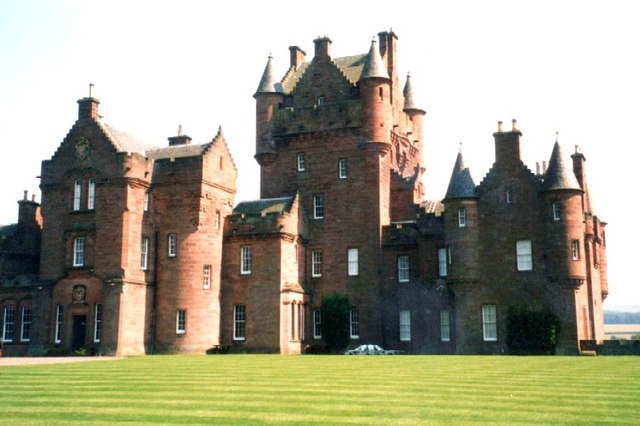


Geography and settlements
The county covers a varied landscape: rolling agricultural lowlands, the fertile Tweed valley, and a short but dramatic coastline with cliffs and fishing harbours. Principal towns and villages include Duns, Eyemouth, Coldstream, Greenlaw and several small market settlements. Much of the countryside is rural and used for mixed farming, while the coast supports fishing, coastal recreation and important seabird colonies.
History and administration
Berwickshire was named for the burgh of Berwick-upon-Tweed, which served as the original county town. After Berwick changed hands and eventually became part of England, local business and justice were often conducted at nearby Scottish towns such as Duns, Lauder and Greenlaw. Over time administrative arrangements evolved: the county remained important for local identity until 20th-century reorganisations transferred most functions to larger regional and then unitary councils, and today the area is administered within the Scottish Borders as well as retained in some ceremonial contexts.
Economy and culture
Economically the area has relied on agriculture, small-scale industry and coastal fishing. Tourism is significant: visitors come for historic houses, ruins, coastal scenery and wildlife reserves. The region has a rich built heritage, including parish churches, tower houses and remnants of medieval fortifications. Local festivals, markets and community events keep traditional crafts and food production alive.
Legal and civic features
Civic functions that serve the wider area include local courts and administrative centres; a Sheriff Court sits at Duns and smaller civic offices support community services. The historic jurisdictional shifts—most visibly the loss of Berwick-upon-Tweed to England—have given the county a distinct cross-border character and a layered legal and cultural history.
Notable facts and distinctions
- Berwickshire's coastline and headlands are notable for seabird colonies and coastal geology.
- The area has been shaped by its frontier position, producing resilient market towns and a distinctive border culture.
- Although historic county boundaries are no longer the primary administrative units, the name Berwickshire persists in local usage and heritage projects.
For administrative details and modern services see local council resources and historical overviews: historic county information, local governance pages at the council area, and regional guides to Scotland and the England borderlands. Additional cultural and place-name background may be found via archives relating to Berwick-upon-Tweed and records of the former county town.
Questions and answers
Q: What is Berwickshire?
A: Berwickshire is a British county in Scotland.
Q: What is the name of the committee area of the Scottish Borders Council that includes Berwickshire?
A: The committee area of the Scottish Borders Council that includes Berwickshire is also named Berwickshire.
Q: Where is Berwickshire located?
A: Berwickshire is located on the boundary of Scotland with England.
Q: Why is it called Berwickshire?
A: Berwickshire is named after Berwick-upon-Tweed.
Q: When did Scotland lose Berwick to England?
A: Scotland lost Berwick to England in 1482.
Q: What was Berwickshire's first county town?
A: Berwickshire's first county town was the Royal Burgh of Berwick-upon-Tweed.
Q: Which town became the county town of Berwickshire in 1596?
A: Greenlaw became the county town of Berwickshire in 1596.
Related articles
Author
AlegsaOnline.com Berwickshire: historic county and modern Borders area in southeastern Scotland Leandro Alegsa
URL: https://en.alegsaonline.com/art/10939
Sources
- british-history.ac.uk : "Berwick-upon-Tweed - Braidwood | A Topographical Dictionary of Scotland (pp. 124-151)"
- tools.wmflabs.org : 55°45′N 2°30′W / 55.750°N 2.500°W / 55.750; -2.500