
Wycliffe's Bible: Middle English translations, circulation, and ecclesiastical response
Examine Wycliffe's Bible: late 14th-century Middle English translations, their wide manuscript circulation, linguistic evolution, and the church and state measures to suppress unauthorized English scripture.
Wycliffe's Bible refers to a group of English translations of the Christian scriptures produced in the late 14th century. These works rendered the Bible into Middle English and are commonly associated with the reformer John Wycliffe. The translations were copied widely: more than 250 separate manuscript copies survive, making them among the best‑represented biblical texts in Middle English.
Image gallery
6 Images


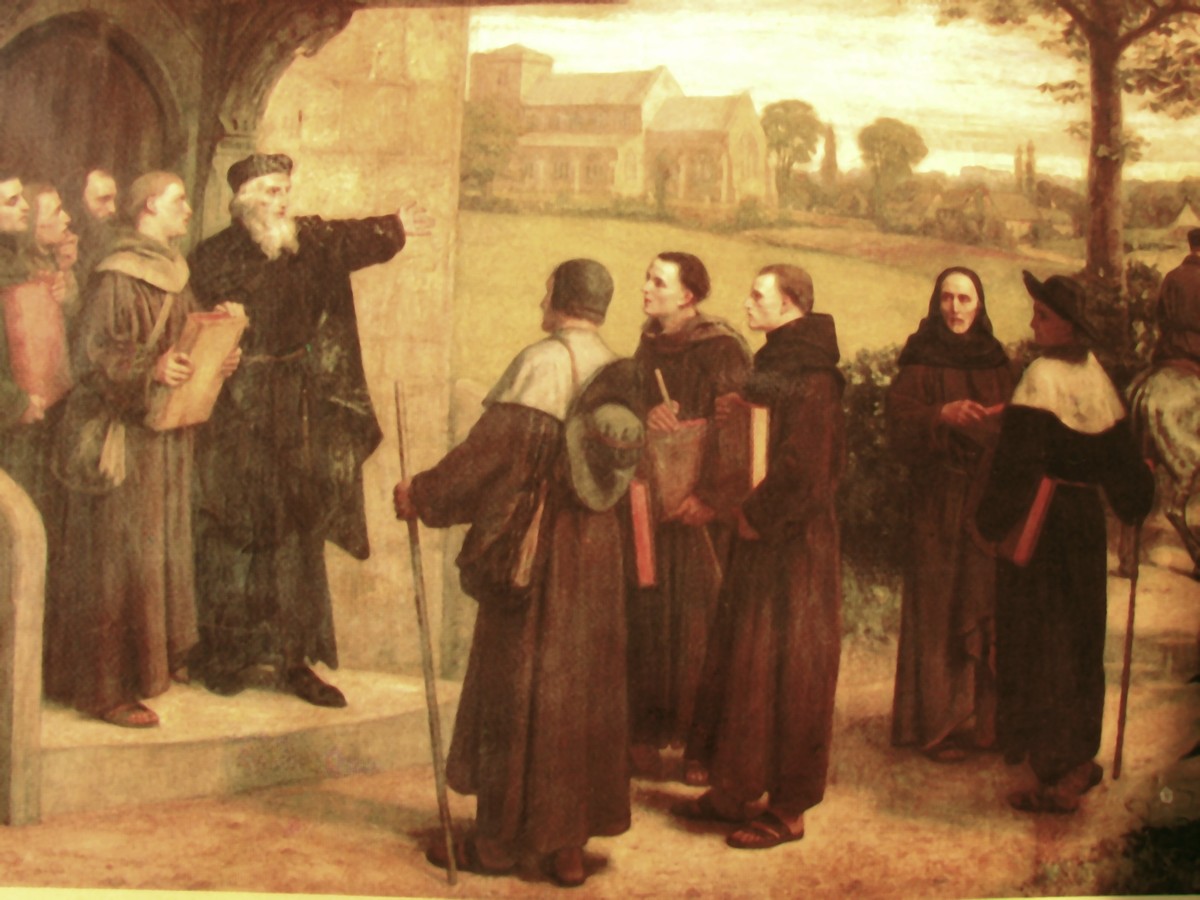
Origins and circulation
Production of these translations began around 1382 and continued through the 1390s. They were created to make scripture accessible to readers who did not know Latin. While Wycliffe is traditionally credited with directing the project, historians note that the translations were produced in stages and involved multiple hands; the precise extent of Wycliffe’s personal involvement remains debated.
Censorship and conflict
The appearance of English scripture in this form contributed to the emergence of the Lollard movement, which criticized several doctrines and practices of the medieval church. The institutional response was severe. The Catholic Church mounted efforts to suppress unauthorized translations, and in the early 1400s political and ecclesiastical authorities implemented strict controls. Under Henry IV and with the support of Archbishop Thomas Arundel and chronicler Henry Knighton, laws enforcing religious censorship were enacted. Manuscripts dated before 1409—the year associated with a formal ban—continued to circulate and were used by both clergy and laypeople, but later transmission became more restricted.
Translation style and language
Early copies of the Wycliffe translations tend to follow the Latin word order closely, which can make their syntax feel unnatural in English. Over time scribes and revisers adjusted the texts toward forms nearer the spoken language of the period.
Latin (the Vulgate): Dixitque Deus fiat lux et facta est lux
Early Wycliffe: And God seide, Be maad liȝt; and maad is liȝt
Later Wycliffe: And God seide, Liȝt be maad; and liȝt was maad
Douay‑Rheims (1609): And God said: Be light made. And light was made
Aftermath and influence
The Wycliffe translations set a precedent for subsequent English versions of the Bible. A century and a half later, William Tyndale produced translations that drew on Greek manuscripts and moved English Bible language closer to what would become modern usage. Tyndale’s work provoked determined opposition; he was pursued by agents of figures such as Thomas More, seized near Brussels in 1535, and ultimately executed—strangled by the garrotte—after conviction for heresy, his remains then being burned.
Questions and answers
Q: What is Wycliffe's Bible?
A: Wycliffe's Bible is a group of translations into Middle English that were made under the guidance of John Wycliffe from about 1382 to 1395.
Q: How popular was the work?
A: The work was popular, even though it was unauthorized.
Q: How many manuscripts of the Wycliffite Bible survive?
A: More than 250 manuscripts of the Wycliffite Bible survive.
Q: What movement did these translations inspire and cause?
A: These Bible translations inspired and caused the Lollard movement, which rejected many teachings of the Roman Catholic Church.
Q: What did Henry IV, Archbishop Thomas Arundel, and Henry Knighton do in response to this movement?
A: In response to this movement, they put into law some of the severest religious censorship laws in Europe at that time.
Q: How closely did Wycliffe's translation follow Latin word order?
A: His translation followed Latin word order very closely, which is different from English word order.
Q: Who followed up on Wyclif's Bible later on?
A: William Tyndale followed up on Wyclif's Bible later on by translating it into a more modern form of English and using Greek manuscript sources for the first time.
Related articles
Author
AlegsaOnline.com Wycliffe's Bible: Middle English translations, circulation, and ecclesiastical response Leandro Alegsa
URL: https://en.alegsaonline.com/art/109376