
WrestleMania I — inaugural WWF supercard at Madison Square Garden
WrestleMania I (March 31, 1985) was the first World Wrestling Federation supercard at Madison Square Garden, combining top wrestling talent and celebrities and launching the annual WrestleMania tradition.
Overview
WrestleMania I was the inaugural edition of the World Wrestling Federation's (WWF, now WWE) premier annual event. Held on March 31, 1985, at Madison Square Garden in New York City, the show combined established professional wrestlers with high-profile celebrities in an effort to reach a mainstream audience. Promoted by Vince McMahon, the event is widely regarded as a turning point in how professional wrestling was packaged and marketed as mass entertainment.
Image gallery
10 Images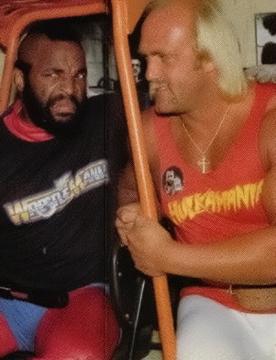




Background and promotion
Coming at a time when the WWF was expanding beyond its regional roots, WrestleMania was conceived as a large-scale spectacle that blended sport and popular culture. The promotion leveraged television exposure, celebrity partnerships and music-industry ties—an approach later described as the "Rock 'n' Wrestling" era—to attract viewers who might not otherwise watch wrestling. The effort included public relations pushes, mainstream media appearances, and coordinated publicity that raised awareness well beyond traditional wrestling audiences.
Event and card
The card featured many of the promotion's most visible performers of the mid-1980s and several celebrity guests. The show’s headline match paired Hulk Hogan with celebrity partner Mr. T against a team led by Roddy Piper; boxing legend Muhammad Ali served in an on-site officiating role during the main-event build-up and added mainstream sports visibility to the proceedings. The undercard included well-known WWF personalities and a mix of singles and tag-team contests. The production emphasized spectacle, with television-style presentation and guest appearances reinforcing the event's crossover appeal.
Attendance and broadcast
The announced live attendance was 19,121 fans at Madison Square Garden. Beyond the arena, WrestleMania I reached a much larger audience through closed-circuit television distribution; commonly cited estimates put the number of closed-circuit viewers at over one million, making it at the time one of the largest live-telecast spectacles in the United States outside of mainstream sports. The success of closed-circuit and later pay-per-view distribution for similar events helped shape the business model for major wrestling shows.
Reception and cultural impact
Contemporary reactions mixed praise for the event's ambition with criticism from some quarters about its theatricality and commercial orientation. Nevertheless, WrestleMania I succeeded in bringing professional wrestling into wider public conversation and is often credited with helping to elevate the WWF's national profile. The use of celebrities and cross-promotional opportunities proved effective at generating mainstream media coverage and attracting new fans, accelerating the transformation of wrestling into a television-driven entertainment industry.
Legacy
As the first WrestleMania, the 1985 show established a template for annual, large-scale wrestling events that combine athletic performance with celebrity spectacle. It contributed to the WWF's transition from a regional promotion to a nationally recognized brand and laid the groundwork for WrestleMania to become the company's flagship event. In subsequent years the concept was developed into a consistent, marquee pay-per-view extravaganza with cultural resonance beyond the sport itself.
Further reading and resources
- Event overview and basic facts
- Contemporary reporting and closed-circuit distribution
- Profiles of principal wrestlers and celebrity guests
- History of the Rock 'n' Wrestling era
- Legacy and subsequent WrestleMania events
WrestleMania I remains an important case study in sports-entertainment marketing, television production and celebrity crossover promotion. Its combination of spectacle, promotion and mainstream engagement demonstrated the commercial potential of large-scale wrestling events and influenced how professional wrestling was presented to global audiences in the decades that followed.
Questions and answers
Q: What is the article about?
A: The article is about the first WrestleMania event produced by the World Wrestling Federation.
Q: When did the event take place?
A: The event took place on March 31, 1985.
Q: Where did the event take place?
A: The event took place at Madison Square Garden in New York, New York.
Q: What was the attendance for the event?
A: The attendance for the event was 19,121 fans.
Q: How many fans viewed the event through closed circuit television?
A: Over one million fans viewed the event through closed circuit television, making it the largest event on closed-circuit television in the United States at the time.
Q: What was the Rock 'n' Wrestling gimmick?
A: The Rock 'n' Wrestling gimmick was a concept that brought together professional wrestling and the music industry.
Q: Was WrestleMania the first event of its kind?
A: Yes, WrestleMania was the first professional wrestling event of its kind produced by the World Wrestling Federation.
Related articles
Author
AlegsaOnline.com WrestleMania I — inaugural WWF supercard at Madison Square Garden Leandro Alegsa
URL: https://en.alegsaonline.com/art/109189
Sources
- wwe.com : "WrestleMania I Facts/Stats"
- slam.canoe.ca : "WrestleMania: The Dynasty Begins"
- canoe.ca : "Moolah: Twenty-eight years was the reign"
- wwe.com : "Lelani Kai's reign (1)"
- slam.canoe.ca : "Rowdy Roddy Piper"
- wwe.com : "Title history: World Tag Team"
- wwe.com : "Hall of Fame: Big John Studd"