
World War I Victory Medal (United States)
United States service medal awarded to military personnel for service during World War I; notable for James Earle Fraser's design, the rainbow ribbon, and inter‑Allied concept.
Overview
The World War I Victory Medal is a United States commemorative service medal issued to members of the U.S. armed forces who served in connection with World War I. Created in the aftermath of the conflict, it recognized military service in the principal theaters of operation as well as certain related overseas duties. The American medal was part of a wider Inter‑Allied Victory Medal program: allied and associated nations each produced their own version while adopting a common rainbow ribbon motif to symbolize the allied victory and international cooperation.
Image gallery
5 Images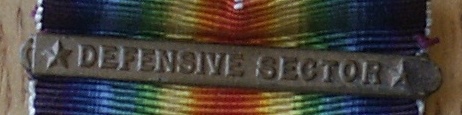


Design and physical characteristics
Designed by sculptor James Earle Fraser, the medal is cast in bronze and measures approximately 1 3/8 inches in diameter. The obverse portrays a full‑length, full‑face winged Victory, a classical figure used to represent triumph. The reverse bears the inscription "THE GREAT WAR FOR CIVILIZATION" above a United States shield surmounted by a fasces; the areas flanking the shield contain the names of allied and associated nations connected with the Allied effort. The medal hangs from a silk ribbon about 1 3/8 inches wide, featuring two juxtaposed rainbows with red at the center. A matching lapel button, intended for civilian wear, is a five‑pointed star 5/8 inch in diameter set on a wreath with the letters "U.S." at the center.
Devices and variations
The basic medal could be augmented by devices that indicated particular service or participation. Examples of such attachments include small bronze clasps (sometimes called bars) that named specific campaigns or engagements, and other authorized insignia to denote additional recognition. Different services manufactured the medal to the same general specification, but minor stylistic variations and maker's marks can be found among surviving examples.
Eligibility, issuance and wearing
Eligibility criteria focused on service during the war in designated theaters or duties that supported the U.S. war effort overseas. The medal was issued to qualifying veterans and, in many cases, to the next of kin of those who died as a result of their service. While the Victory Medal is no longer awarded, it remains an important part of the record of World War I service and is worn today only in historical or veterans' displays according to current regulations.
Historical context and significance
The American Victory Medal reflects both national commemoration and international cooperation. Following the armistice, the Allied powers agreed to produce a family of allied Victory Medals that shared a common ribbon while each nation chose its own artistic design. James Earle Fraser, a prominent American sculptor of the era, produced the U.S. design that combined classical imagery with republican symbols—the shield and fasces—to express victory and collective purpose in defense of civilization.
Collecting, preservation and further information
Because these medals were distributed to millions of veterans, they are common in military memorabilia collections; condition, presence of original clasps, and provenance affect collector interest. Reproductions and later commemorative items also exist, so careful comparison with documented examples is recommended for authentication. For official criteria and historical summaries consult primary sources or military publications and see further information provided by repositories and veteran organizations.
- Material: Bronze
- Diameter: about 1 3/8 inches
- Ribbon: rainbow pattern, 1 3/8 inches wide
- Lapel button: five‑pointed star on wreath, 5/8 inch
Questions and answers
Q: What is the World War I Victory Medal?
A: The World War I Victory Medal is a service medal of the United States military that was created in 1919.
Q: Who designed the World War I Victory Medal?
A: The medal was designed by James Earle Fraser.
Q: When was the World War I Victory Medal initiated?
A: The medal was initiated in April of 1921.
Q: What is depicted on the obverse of the medal?
A: On the obverse of the medal is a winged Victory standing full length and full face.
Q: What is inscribed on the reverse of the medal?
A: The reverse of the medal has the inscription “THE GREAT WAR FOR CIVILIZATION” and the United States shield with the letters “U.S.” surmounted by a fasces, and on either side the names of the allied and associated nations.
Q: What is the lapel button of the World War I Victory Medal?
A: The lapel button is a five-pointed star 5/8-inch in diameter on a wreath with the letters “U.S.” in the center.
Q: What is the ribbon of the World War I Victory Medal?
A: The medal is suspended by a ring from a silk ribbon 1 3/8 inches in width, representing two rainbows placed in juxtaposition and having the red in the middle.
Related articles
Author
AlegsaOnline.com World War I Victory Medal (United States) Leandro Alegsa
URL: https://en.alegsaonline.com/art/109124