
World Series of Poker (WSOP)
Annual series of poker tournaments founded in 1970, best known for the Main Event and its coveted bracelets. It shaped modern tournament poker, popularizing Texas hold 'em and large-field events held primarily in Las Vegas.
Overview
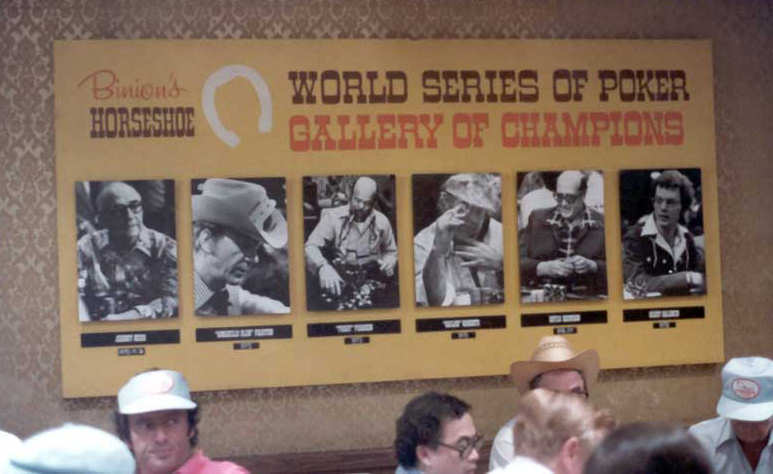
The World Series of Poker (WSOP) is the longest-running and most prestigious collection of open poker tournaments held each year. Established in 1970 by casino owner Benny Binion, the initial gathering at the Horseshoe Casino brought a small group of top professionals together and produced a winner by secret ballot. Over subsequent decades the WSOP expanded from a single competition to a multi-event festival that crowns winners with gold bracelets and large cash prizes. Since 2004 the series has been organized under the sponsorship of Caesars Entertainment.
Image gallery
2 Images
Format, events and schedule
The WSOP program consists of many individual tournaments, each with its own buy-in and poker variant. By 2020 the schedule commonly featured more than a hundred bracelet events covering a wide range of games, though recent years have emphasized Texas hold 'em variants for both their popularity and spectator appeal. Events can run as single-day tournaments or span multiple days; the centerpiece is the $10,000 buy-in Main Event, an open-entry No-Limit Texas hold 'em competition that attracts amateur and professional players alike.
Traditionally held in June and July in Las Vegas, the Main Event’s final table timing has varied: organizers experimented with delayed finales played in November and October in some years to build television interest, and scheduling has occasionally been influenced by external factors such as the United States presidential election. In 2020 a hybrid online format was adopted in response to the COVID-19 pandemic, and full in-person play resumed as conditions allowed.
Tournament structure and prizes
Most WSOP events award a gold bracelet to the winner, considered a premier achievement in tournament poker. Buy-ins range from modest satellite seats that qualify players into larger events to high-roller tournaments with steep entry fees. Prize pools are funded by entry fees; the Main Event’s payouts are notable both for their depth and for producing multi-million-dollar first-place awards when fields are large. Qualification routes include direct entry, satellites, and online qualifiers, reflecting the series’ evolution with modern gaming and online platforms.
Characteristics and notable features
- Gold bracelet awards—each event’s winner receives a bracelet that confers prestige.
- Wide game selection—limit, no-limit, pot-limit, mixed games and variants beyond hold 'em.
- Open entry—events are typically open to any player who can pay the buy-in or qualify.
- Media coverage—televised and streamed play has helped popularize tournament strategy and personalities.
History, influence and legacy
From a handful of invitees to an international festival, the WSOP has been central to poker’s transformation into a mainstream competitive activity. The series fostered televised poker, online qualifiers and a global circuit that inspired regional WSOP brand events. Its influence extends to the growth of strategic study, the celebrity of winners, and the broader gambling and tourism industries in hosting cities. While the structure and scheduling have changed over time, the WSOP remains a defining annual test of tournament skill and endurance.
Questions and answers
Q: What is the World Series of Poker?
A: The World Series of Poker (WSOP) is a series of poker tournaments held annually in Las Vegas.
Q: When did the WSOP start?
A: The WSOP started in 1970.
Q: Who invited seven of the best-known poker players to the Horseshoe Casino for a single tournament?
A: Benny Binion invited seven of the best-known poker players to the Horseshoe Casino for a single tournament.
Q: How many events are there in the WSOP as of 2020?
A: As of 2020, there are 101 events in the WSOP.
Q: What is the most commonly played poker variant in the WSOP?
A: Recently, most of the events in the WSOP have been variants of Texas hold 'em.
Q: When is the Main Event final table usually played?
A: Starting in 2008, the Main Event final table was not played until November.
Q: How did the COVID-19 pandemic affect the World Series of Poker in 2020?
A: A hybrid online format was used in 2020 because of the COVID-19 pandemic.
Related articles
Author
AlegsaOnline.com World Series of Poker (WSOP) Leandro Alegsa
URL: https://en.alegsaonline.com/art/109112
Sources
- igamingbusiness.com : Harrah's Set to Launch World Series of Poker Europe
- online-wsop.com : Evolution of the WSOP
- pokernews.com : Official WSOP Live Update Provider