
Worcestershire — county in the West Midlands of England
Overview of Worcestershire: location, geography, history, economy, culture and administration. Includes key towns, landmarks, and historical notes on the county's development and borders.
Worcestershire is a historic and administrative county located in the West Midlands region of central England. The county town is Worcester, a cathedral city on the River Severn that serves as the cultural and administrative centre. Worcestershire combines lowland river valleys, rolling agricultural land and distinctive upland features such as the Malvern Hills and other sandstone ridges.
Image gallery
10 Images


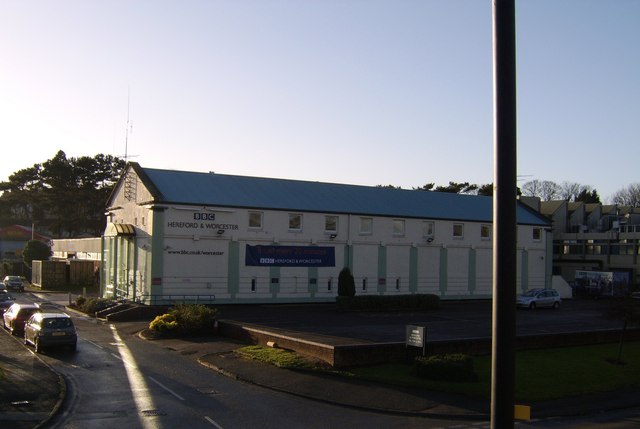


Geography
The River Severn is the principal watercourse and has shaped much of the county's landscape and settlement pattern. The western boundary rises into hills that form a natural divide with neighbouring counties, while eastern parts are more open and agricultural. Climatically the area is temperate; land use mixes arable farming, pasture and pockets of woodland, with towns set along historic transport routes.
Borders and neighbouring counties
Worcestershire shares land boundaries with several counties: Herefordshire to the west, Shropshire to the north-west, Staffordshire to the north, the metropolitan West Midlands to the north-east, Warwickshire to the east and Gloucestershire to the south. These borders reflect both natural features and historical administrative decisions.
History and development
Worcestershire has roots in the early medieval period and developed through agriculture, trade and regional markets. In the late 20th century the county's administrative structure was altered: from 1974 until 1998 it was combined with Herefordshire as the non-metropolitan entity Hereford and Worcester, before Worcestershire was re-established with boundaries similar to its historic extent. Over centuries the county has retained a mix of rural communities and industrial towns.
Economy, culture and notable products
The local economy blends agriculture, light manufacturing, services and tourism. Worcester is known for cultural institutions such as its cathedral and the long-running Three Choirs Festival; the city and county also have traditions in pottery and porcelain manufacture. One of the county's best-known culinary products is Worcestershire sauce, developed in Worcester and distributed worldwide. Education is represented by institutions such as the University of Worcester, and many towns support local festivals, markets and heritage sites that attract visitors.
Administration and principal places
Administratively the county comprises several districts and the county council, with principal population centres including Worcester, Kidderminster, Malvern, Evesham, Bromsgrove and Bewdley. Transport links include road and rail connections to nearby cities, and the county holds a mix of commuter settlements and market towns. Its combination of natural scenery, historic architecture and local industry gives Worcestershire a distinct regional identity within England.
- Worcester — cathedral city and administrative centre
- Kidderminster — historic manufacturing town
- Malvern — noted for hills, scenery and cultural events
- Evesham — market town in the Vale of Evesham
- Bewdley — riverside town with heritage attractions
History
The area of present day Worcestershire has been occupied since the Palaeolithic period. Several hillforts survive from the Iron Age. The Roman conquest of Britain from AD 43 onwards saw the area conquered relatively quickly, probably around the year 48. The Anglo-Saxon conquest probably took place at the turn of the 6th and 7th centuries. During the Heptarchy, the Worcestershire area was part of the Kingdom of Hwicce, later Mercia. Around 679 the important diocese of Worcester (at that time Episcopus Hwicciorum) was founded, which continued to play a leading role after the Norman conquest of England. Later in the Middle Ages, sheep farming became one of the most important economic activities.
Worcestershire became famous for the Battle of Evesham, where Simon V de Montfort died on 4 August 1265, and later in the English Civil War for the Battle of Worcester (1651). Since Roman times salt has been extracted from the town of Droitwich Spa to the north, through which one of the main Roman roads passed. The oldest continuously published newspaper in the world, Berrow's Journal (since 1690), is published in the county.
Worcestershire was united with Herefordshire from 1974 to 1998 to form the county of Hereford and Worcester. However, the area of the county in 1998 no longer corresponds to that of the pre-1974 period.
Cities and towns
- Abberley, Ashton under Hill
- Barnt Green, Beckford, Bewdley, Birlingham, Bredon, Bredon's Norton, Bretforton, Broadway, Bromsgrove
- Cleeve Prior, Conderton
- Droitwich Spa
- Eckington, Elmley Castle, Evesham
- Fladbury
- Great Comberton, Great Malvern
- Hanley Castle, Hartlebury, Harvington, Himbleton Hollywood
- Kemerton, Kidderminster, Kington
- Lindridge, Little Comberton, Little Malvern
- Malvern Link, Malvern Wells
- Naunton Beauchamp
- Overbury
- Pebworth, Pershore
- Redditch, Ripple
- Severn Stoke, Stourport-on-Severn
- Tenbury Wells, Tibberton
- Upper Arley, Upper Strensham, Upton Snodsbury, Upton-upon-Severn
- Wadborough, West Malvern, Wildmoor, Worcester, Wychbold
Questions and answers
Q: What is Worcestershire?
A: Worcestershire is a county located in the West Midlands region of central England.
Q: How is Worcestershire abbreviated?
A: Worcestershire is abbreviated as Worcs.
Q: Was Worcestershire a part of Hereford and Worcester at any point?
A: Yes, from 1974 to 1998 Worcestershire was part of Hereford and Worcester.
Q: What counties border Worcestershire?
A: Worcestershire borders Herefordshire, Shropshire, Staffordshire, West Midlands, Warwickshire, and Gloucestershire.
Q: What is the location of Worcestershire?
A: Worcestershire is located in the West Midlands region of central England.
Q: What is the pronunciation of Worcestershire?
A: Worcestershire is pronounced as ˈwʊs.təˌʃə.
Q: What is the significance of Worcestershire in England?
A: Worcestershire is one of the counties located in the West Midlands region of central England.
Related articles
Author
AlegsaOnline.com Worcestershire — county in the West Midlands of England Leandro Alegsa
URL: https://en.alegsaonline.com/art/109030