
Woodblock (percussion instrument)
A compact wooden idiophone producing a sharp, resonant pitch when struck. Used in orchestras, bands and folk ensembles; available single or in tuned sets and played with sticks or mallets.
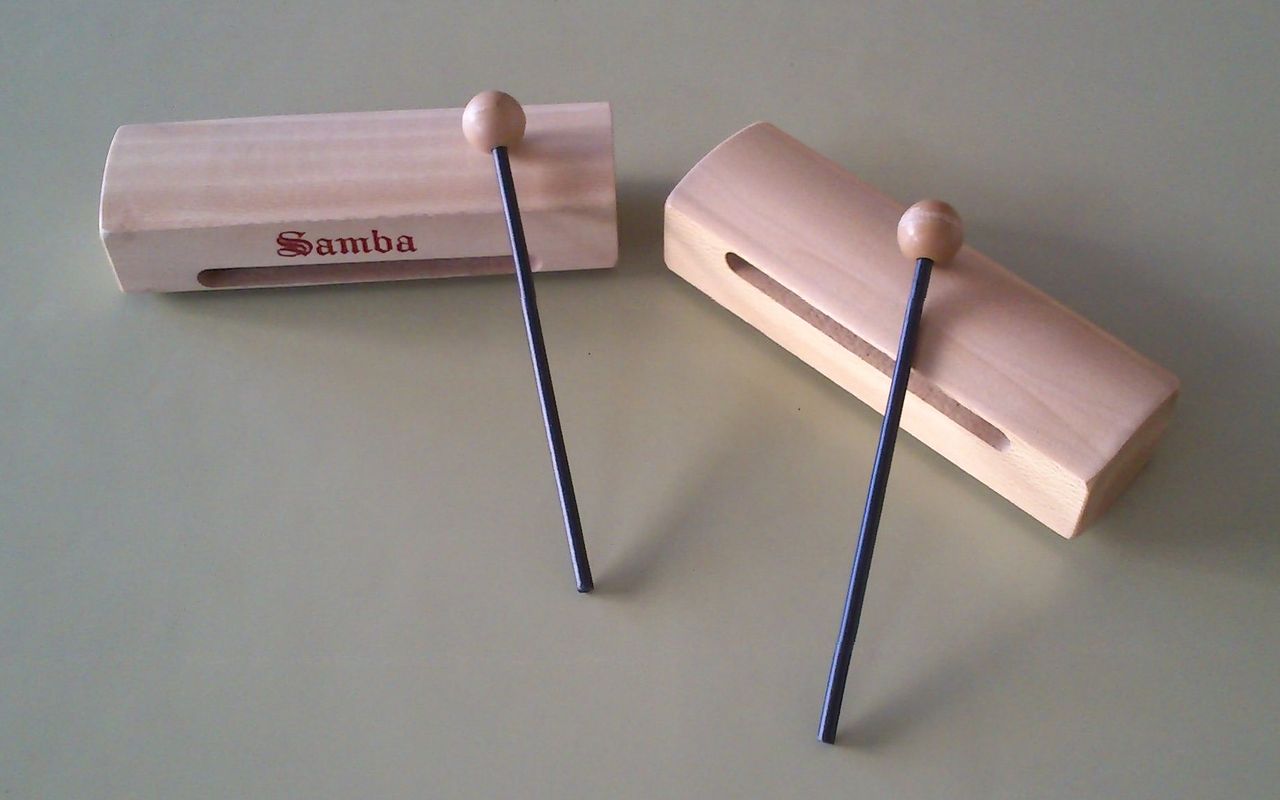
The woodblock is a small idiophone classified as a percussion instrument. It is typically a hollowed block of wood that produces a dry, high‑pitched "clack" or ‘‘knock’’ when struck. Because of its clear attack and short sustain it serves as an effective rhythmic accent in many musical settings, from orchestral scores to popular theatre and marching percussion.
Image gallery
2 Images
Construction and variants
Most concert woodblocks are carved from a single piece of hardwood and may be left with a simple rectangular or box-shaped form. The cavity is important: its size and internal shape determine resonance and timbre. Related types include temple blocks (a set of tuned, often hollowed wooden blocks) and slit drums; these share the same principle of a struck wooden resonator but differ in shape, tuning and cultural origin.
Players strike a woodblock with drumsticks, brushes or softer beaters. Common implements include standard snare drum sticks and lighter mallets such as xylophone mallets, each producing a different balance of attack and warmth. Woodblocks are often mounted on stands, held by hand, or attached to percussion racks for quick access.
Sound and technique
The instrument yields a sharp, well‑defined transient followed by a short resonant body; pitch can be modified slightly by size and internal shaping. Performers vary dynamics, placement of the striking point, and mallet hardness to alter tone. In ensembles the woodblock is used to mark tempo, accent syncopations or add color without masking other instruments.
History and cultural context
Woodblocks have long associations with East Asian musical practices and are sometimes referred to as "Chinese blocks," reflecting Chinese and broader regional origins. Over time the simple instrument was adopted and adapted in Western orchestral and theatre traditions, becoming a standard percussion color by the 19th and 20th centuries.
Uses and repertoire
- Orchestral and film scores: used for clear rhythmic accents in orchestral percussion sections and soundtracks.
- Theatre and musical theatre: notable examples include cues in West Side Story and other 20th‑century works.
- Marching bands, drumlines and popular music: provides a cutting, portable accent.
- Traditional and folk ensembles: used singly or in sets for ritual and ensemble patterns.
Notable distinctions include the difference between a single woodblock and a set of tuned temple blocks, and between wooden idiophones and differently constructed slit drums. Simple, inexpensive and versatile, the woodblock remains a staple of the percussionist’s toolkit for adding precise rhythmic punctuation and tonal variety.
Questions and answers
Q: What is a woodblock?
A: A woodblock is a small percussion instrument made of wood that is hit like a drum and has a hollow inside to make a big, resonating sound.
Q: What are some different forms of woodblocks?
A: Woodblocks can come in different forms, but many modern ones are shaped like a brick.
Q: Where did the woodblock originate?
A: The woodblock is sometimes called a Chinese block because it has Chinese origins.
Q: What type of sticks can be used to hit a woodblock?
A: The sticks used to hit the woodblock can be snare drum sticks or xylophone beaters.
Q: What type of sound does a woodblock make?
A: A woodblock makes a hard, high sound.
Q: Where can a woodblock often be heard?
A: A woodblock can often be heard in large orchestras, such as in Bernstein's West Side Story.
Q: What is the inside of a woodblock like?
A: The inside of a woodblock is hollow to create a big, resonating sound.
Related articles
Author
AlegsaOnline.com Woodblock (percussion instrument) Leandro Alegsa
URL: https://en.alegsaonline.com/art/108923