
Woman's Christian Temperance Union
Overview of the Woman's Christian Temperance Union (WCTU), a pioneering women's reform organization founded in the 1870s that promoted temperance, social reforms, and women's public roles during the Progressive Era.
Overview
The Woman's Christian Temperance Union (WCTU) is an international organization founded by women in the 1870s to address alcohol abuse and related social problems. From its beginnings it combined religious conviction with practical activism, promoting temperance education, moral reform, and wider civic engagement. The group became one of the most visible women's organizations of the late 19th and early 20th centuries and helped shape debates about public policy, health, and female citizenship.
Image gallery
9 Images


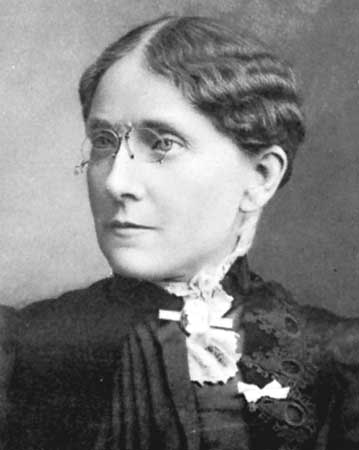

Characteristics and activities
The WCTU pursued a broad program that extended beyond simple abstinence pledges. Local "unions" were organized in towns and cities and supported state and national federations. Members used a mix of direct public outreach, educational campaigns, and political lobbying. Typical activities included temperance lectures in schools, distribution of literature, visits to saloons to advocate reform, and campaigns for legislation restricting the sale of alcohol.
- Temperance education and public lectures
- Advocacy for temperance laws and licensing
- Promotion of women's involvement in public life
- Work on related social issues such as public health, prison reform, and child welfare
History and development
The WCTU traces its origins to meetings in the early 1870s, with an often-cited founding date in late 1873 in Hillsboro, Ohio, and a national organizing convention held in Cleveland in 1874. Under leaders who rose to national prominence, the organization expanded rapidly. In the 1880s and 1890s its leaders articulated a program sometimes described as "applied Christianity," linking religious belief to practical social reforms and public policy; this approach is often summarized in contemporary accounts and analyses of its strategy (applied Christianity).
One of the WCTU's most consequential political goals was national prohibition. The organization actively supported measures that culminated in the passage of the 18th Amendment to the U.S. Constitution and the Volstead Act, a stance that remains a central part of its public legacy (18th Amendment).
Impact, controversies, and distinctions
The WCTU made enduring contributions to social reform and to the increased public role of women. It helped normalize women's public advocacy and provided training in organizational and political skills. At the same time, its advocacy for prohibition and other moral legislation generated controversy; critics argued that prohibition had unintended social consequences and that moral reform could conflict with personal liberty. The WCTU also supported other Progressive Era reforms, including campaigns for labor protections, prison reform, and women's suffrage.
Organization and legacy
Structured with local, state, national, and international bodies, the WCTU used a recognizable symbol—the white ribbon—to signify purity and commitment to reform. While its influence peaked around the time of national prohibition, the organization continued to operate afterward and remains active in various countries, adapting its priorities to contemporary concerns about alcohol, drugs, and public health. For early women's public reform movements and the broader temperance cause, the WCTU is often cited as a formative institution in the history of American social activism. For accounts of its founding and early conventions see material connected with Hillsboro and Cleveland (Hillsboro, Ohio).
The WCTU's record illustrates how a social movement can combine moral conviction with organized political action, and how such efforts can produce both lasting reforms and polarized public debate.
Questions and answers
Q: What is the Woman's Christian Temperance Union?
A: The Woman's Christian Temperance Union is an international temperance organization that was one of the first organizations of women who wanted social reform.
Q: When was the WCTU founded?
A: The WCTU was founded on December 23, 1873, in Hillsboro, Ohio.
Q: What did the WCTU's program link?
A: The WCTU's program linked the religious and secular through concerted and far-reaching reform strategies based on applied Christianity.
Q: What movement was the WCTU influential in?
A: The WCTU was influential in the temperance movement.
Q: Did the WCTU support the 18th Amendment?
A: Yes, the WCTU supported the 18th Amendment.
Q: What social reform issues was the WCTU influential in during the progressive era?
A: The WCTU was influential in social reform issues that became big in the progressive era.
Q: Where was the WCTU's national convention held in 1874?
A: The WCTU's national convention was held in Cleveland, Ohio, in 1874.
Related articles
Author
AlegsaOnline.com Woman's Christian Temperance Union Leandro Alegsa
URL: https://en.alegsaonline.com/art/108862