
Portrait of Adele Bloch-Bauer I (The Woman in Gold)
Portrait of Adele Bloch-Bauer I, painted by Gustav Klimt in 1907, is a landmark gold-leaf portrait from his 'golden phase', noted for its ornamentation, provenance history and cultural significance.
Overview
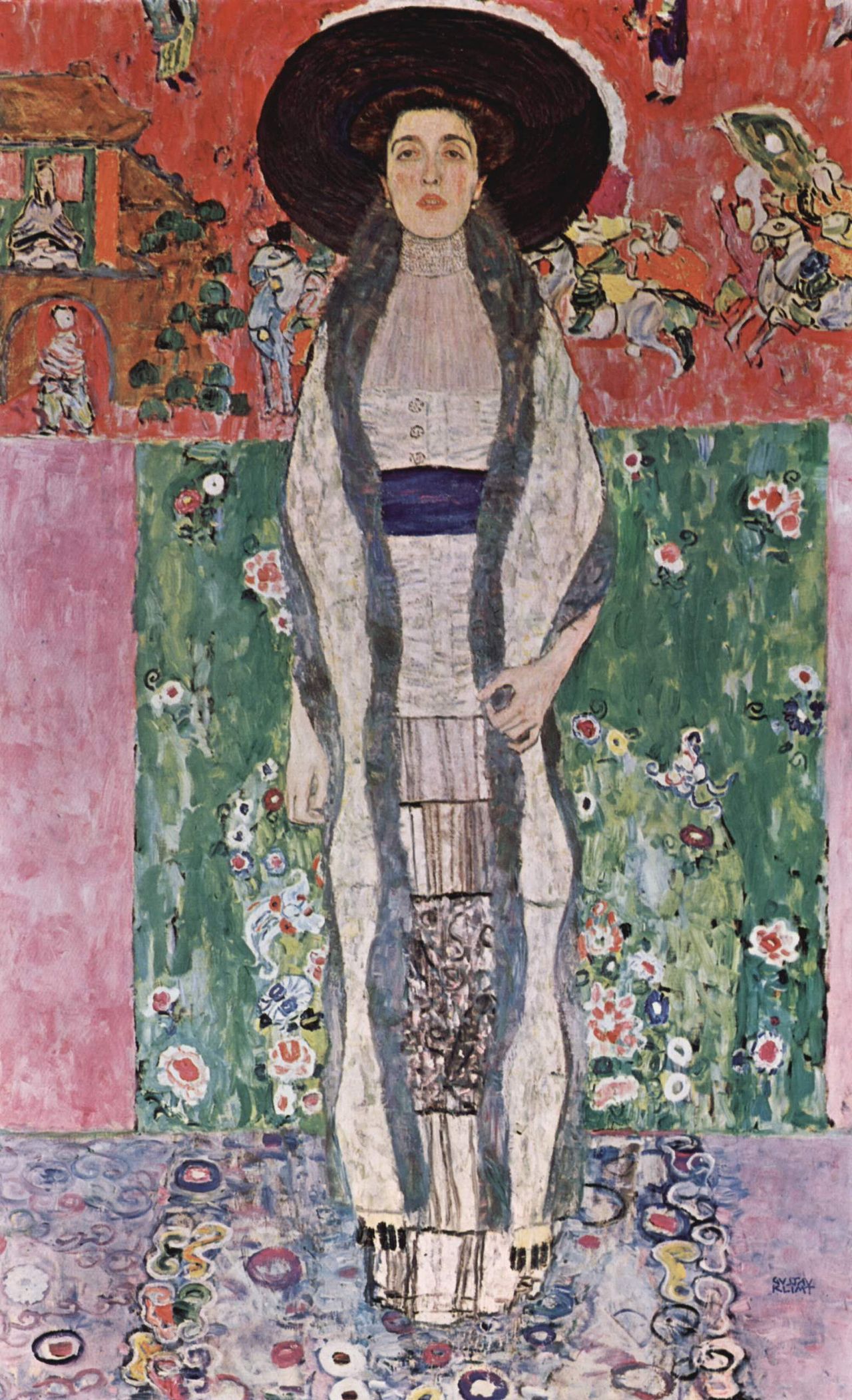
Portrait of Adele Bloch-Bauer I, often called The Woman in Gold, is a 1907 oil and gold-leaf portrait by Gustav Klimt. It depicts Adele Bloch-Bauer, a member of a wealthy Viennese family, and stands among the best-known works of Klimt's celebrated "golden phase." The painting combines figuration with dense decorative patterns and a lavish metallic surface.
Image gallery
10 Images








Composition and technique
Klimt blends a realistic likeness of the sitter with abstracted, mosaic-like ornament. The face and hands are rendered with delicate modeling, while the gown and background dissolve into interlocking shapes, spirals and gold leaf. The effect evokes Byzantine mosaics and Art Nouveau aesthetics, using gold and silver pigments, oil paint and delicate patterns to create a shimmering, two-dimensional plane around a three-dimensional portrait.
History and provenance
The work was commissioned by Ferdinand Bloch-Bauer and remained in the family's Vienna home until World War II, when Nazi authorities seized many artworks owned by Jewish families. After decades in Austrian public collections, the painting became the subject of a high-profile restitution case. In 2006 it was returned to the heirs of Adele Bloch-Bauer following legal action led by Maria Altmann, and subsequently entered a museum collection in New York. The painting remains closely associated with the history of art looting and restitution from the Nazi era.
Significance and reception
The portrait is widely regarded as a masterpiece of early 20th-century portraiture and a defining example of Klimt's mature style. It is often discussed alongside works such as The Kiss as emblematic of Klimt's integration of fine art, decorative motifs and symbolism. Critics and historians note its tension between intimate portraiture and surface ornamentation, and its role in modern discussions about cultural property, memory and identity in Vienna and beyond.
Notable facts
- Part of Klimt's so-called "golden phase," characterized by extensive use of gold leaf and elaborate patterns.
- Central to a landmark restitution case that brought international attention to Nazi-era art theft.
- Regularly cited in publications and exhibitions as an iconic image of Viennese modernism.
The Portrait of Adele Bloch-Bauer I remains influential both for its aesthetic innovations and for the ethical and legal conversations it continues to inspire about ownership, heritage and the afterlives of artworks displaced by conflict.
Questions and answers
Q: Who painted the Portrait of Adele Bloch-Bauer I?
A: The portrait was painted by Gustav Klimt.
Q: Who is depicted in the portrait?
A: The painting depicts Adele Bloch-Bauer, a woman who lived in Vienna.
Q: What is another name for the Portrait of Adele Bloch-Bauer I?
A: The portrait is also known as The Woman in Gold or The Lady in Gold.
Q: When was the painting created?
A: Gustav Klimt painted the portrait in 1907.
Q: Who was Adele Bloch-Bauer?
A: Adele Bloch-Bauer was a woman who lived in Vienna and was depicted in Gustav Klimt's Portrait of Adele Bloch-Bauer I.
Q: What is the significance of the portrait?
A: The portrait is considered to be a masterpiece of Gustav Klimt's work and has become an iconic representation of Vienna's golden age.
Q: Is the painting well-known?
A: Yes, the Portrait of Adele Bloch-Bauer I is a famous painting and has been featured in various exhibitions and galleries around the world.
Related articles
Author
AlegsaOnline.com Portrait of Adele Bloch-Bauer I (The Woman in Gold) Leandro Alegsa
URL: https://en.alegsaonline.com/art/108858
Sources
- screendaily.com : "The Woman in Gold, starring Helen Mirren, and Anton Corbijn's Life, starring Robert Pattinson and Dane DeHaan, to world premiere at Berlinale"
- digitalspy.com : "Orphan Black's Tatiana Maslany Joins Helen Mirren in Woman in Gold"
- deadline.com : "Katie Holmes Joins Woman in Gold"
- variety.com : "Max Irons, Charles Dance, Elizabeth McGovern Join 'Woman in Gold'"
- deadline.com : "Frances Fisher Joins Helen Mirren Ryan Reynolds"
- rottentomatoes.com : "Woman in Gold"
- metacritic.com : "Woman in Gold"
- rogerebert.com : "Woman in Gold"
- observer.com : "Woman in Gold"