
Wollemia (Wollemi pine)
Wollemia is a rare genus of conifer in the family Araucariaceae, known from a small wild population discovered in 1994 and from a fossil record extending back about 200 million years.
Wollemia is a genus of evergreen conifer in the family Araucariaceae, best known for its single living species, Wollemia nobilis. Often called the Wollemi pine in popular literature, the plant is not a true pine (genus Pinaceae) but is related to other southern-hemisphere conifers such as Agathis and Araucaria. Its existence in the modern flora was unknown to science until a small population was found in 1994; before that discovery the genus was known primarily from fossils.
Image gallery
10 Images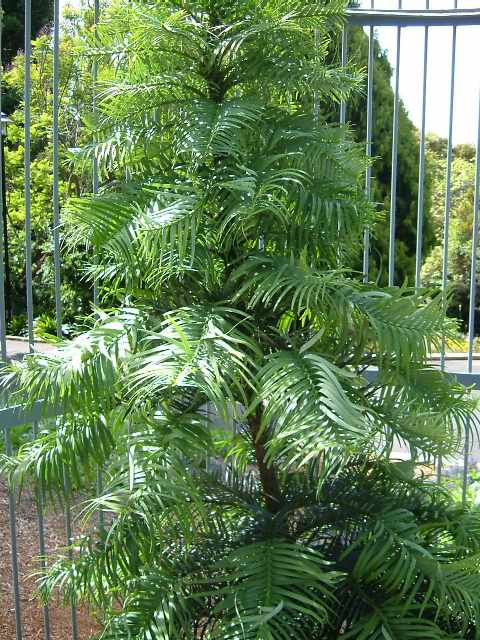




Overview and discovery
The tree was located in a remote canyon system inside Wollemi National Park, within a region of temperate rainforest and sandstone gorges northwest of Lithgow. The find was unexpected and drew immediate scientific and public attention because Wollemia has a long fossil record that reaches back roughly 200 million years, making it a so-called living fossil. The species name nobilis honors the discoverer, and the site was kept secret initially to reduce human impact.
Characteristics
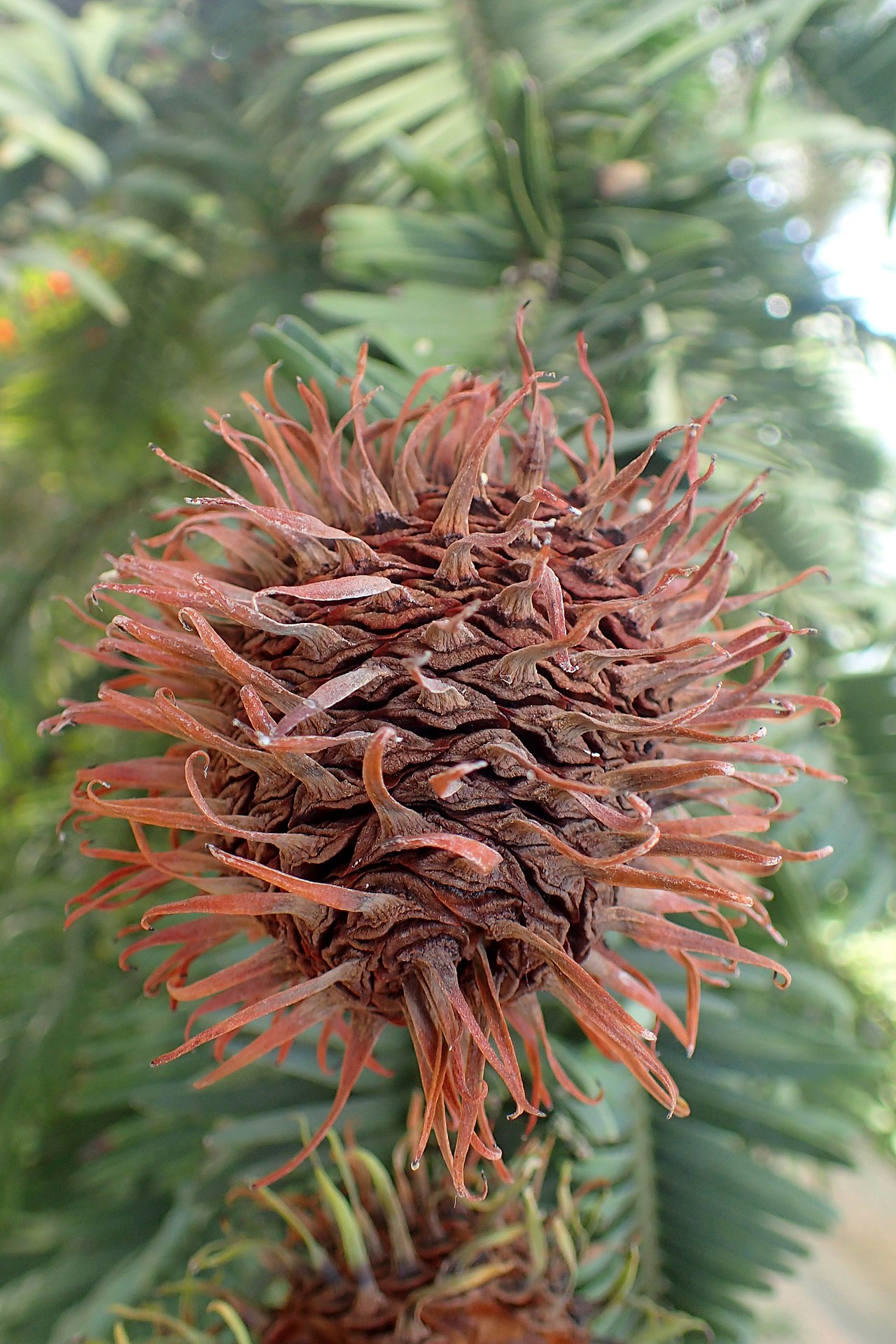
Wollemia nobilis is an evergreen tree with distinctive features that set it apart from many other conifers. Notable traits include a dark, knobbly or bubbly bark that peels in patches, branching patterns that produce flattened sprays of glossy, linear leaves, and reproductive structures (cones) that resemble those of other araucariaceous trees. These features are used to identify the species in both mature and juvenile forms.
History, fossil record and classification
Fossils attributed to the same lineage as Wollemia appear in the Mesozoic record, which is why the genus is regarded as a relict of a once-widespread group of conifers. Modern classification places Wollemia within Araucariaceae alongside genera such as Agathis and Araucaria. Although superficially similar to pines, it differs in many anatomical and reproductive details and is not part of the pine family (Pinaceae).
Conservation, threats and management
Because the wild population is extremely limited, Wollemia nobilis is listed as Critically Endangered on the IUCN Red List. Threats include fire, disease, limited genetic diversity and the risks that come with having a very small wild population in a confined area of temperate rainforest. Australian authorities have enacted legal protections, created a formal Recovery Plan and implemented measures to manage and monitor the site.
Uses, cultivation and importance
To reduce pressure on the wild population and to secure the species, plants have been propagated in botanic gardens and by commercial nurseries from cuttings and seed. Ex situ cultivation has become an important conservation tool: it helps preserve genetic material, supports research into the species' biology and ecology, and allows public engagement that can strengthen support for in situ protection. Careful distribution and management aim to limit risks such as the spread of pathogens and unauthorized collecting.
Notable facts and distinctions
- Wollemia is often described as a "living fossil" because of its long fossil record and limited modern distribution; a related concept is explored in many popular and scientific accounts (living fossil).
- The tree was found in an isolated wilderness area of Wollemi National Park, a landscape of steep sandstone gorges and rainforest that helped protect remnant populations until their modern discovery.
- Although popularly called the Wollemi pine, it is not a member of the true pine family (Pinaceae); comparison links to broader plant information are often provided for context (conifer).
Ongoing conservation, horticulture and scientific study continue to shape our understanding of Wollemia and to reduce the risk of losing this exceptional lineage. For more general botanical context and conservation guidance, see resources linked above and specialist publications related to the species and its habitat (regional information, Red List, conifer overview).
Questions and answers
Q: What is Wollemia?
A: Wollemia is a genus of coniferous tree found in the family Araucariaceae.
Q: Why is Wollemia considered a "living fossil"?
A: Wollemia is considered a "living fossil" because it was recently discovered in 1994, but its fossil record dates back 200 million years.
Q: Where was Wollemia nobilis discovered?
A: Wollemia nobilis was discovered in a temperate rainforest wilderness area of the Wollemi National Park in New South Wales, Australia.
Q: What is the Wollemi Pine?
A: The Wollemi Pine is the popular name for the Wollemia tree. It is not a true pine but is related to Agathis and Araucaria in the family Araucariaceae.
Q: What is the conservation status of the Wollemi Pine?
A: The Wollemi Pine is classified as Critically Endangered (CR – D) on the International Union for Conservation of Nature's Red List 2002. It is legally protected in Australia.
Q: What is the plan for the management of the Wollemi Pine population?
A: A Recovery Plan has been drawn up for the management of the Wollemi Pine population, with the overall objective being to ensure that this species remains viable in the long-term.
Q: Where is the Wollemi Pine legally protected?
A: The Wollemi Pine is legally protected in Australia.
Related articles
Author
AlegsaOnline.com Wollemia (Wollemi pine) Leandro Alegsa
URL: https://en.alegsaonline.com/art/108843
Sources
- doi.org : 10.2305/IUCN.UK.2011-2.RLTS.T34926A9898196.en
- abc.net.au : Fact Sheet: Wollemi Pine
- redlist.org : redlist.org/
- wikidata.org : Q190510
- species.wikimedia.org : Wollemia nobilis
- id.biodiversity.org.au : 154751 · web.archive.org
- conifers.org : Wollemia
- eol.org : 128312
- gd.eppo.int : WLMNO
- profiles.ala.org.au : Wollemia nobilis
- gbif.org : 2685085
- npgsweb.ars-grin.gov : 416628
- inaturalist.org : 49381
- ipni.org : 986236-1