
Windows 8 — Microsoft operating system introduced in 2012
Windows 8 is a 2012 version of Microsoft's operating system that introduced a tile-based Start screen, touch-oriented design and an app platform; later updated as Windows 8.1 and succeeded by Windows 10.
Overview
Windows 8 is a release in the Microsoft family of desktop and tablet operating systems. It was developed as the successor to Windows 7 and shipped to the public in late 2012. The product represented a deliberate shift toward touch-first, full-screen applications and a redesigned interface intended to work on both traditional personal computers and new tablet-style devices. Windows 8 was distributed in several editions for different device classes and business needs, and it was followed by a significant update named Windows 8.1 and later by Windows 10.
Image gallery
8 Images


Design and user interface
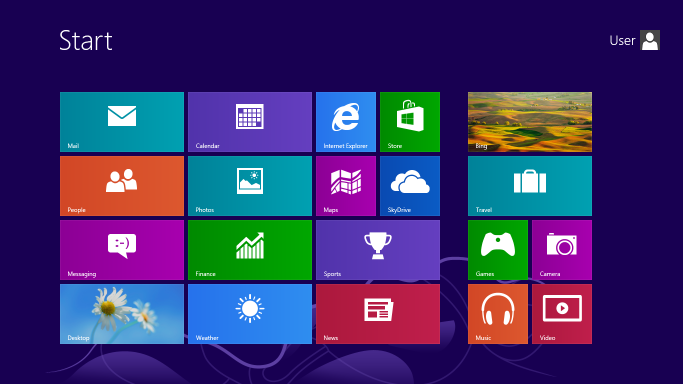
The most visible change in Windows 8 was the replacement of the traditional Start menu with a tile-oriented Start screen. The Start screen presented applications as tiles, some of which were Live Tiles that displayed updating information without opening an app. The design emphasized a simplified, iconographic style suitable for touch, often described as "tile-based" or Modern UI. Key navigation features included the Charms bar, a full-screen app model, and a separation between desktop applications and the new app platform. Microsoft provided access to the new app ecosystem via an on-device store, and a new programming model was introduced to write touch-friendly applications.
Editions, architecture and compatibility
Windows 8 was released in editions aimed at consumers and enterprises, and a distinct variant—Windows RT—targeted ARM-based tablets. Windows RT ran on ARM processors and included a subset of the platform and bundled office apps but could not run many legacy desktop applications compiled for x86/x64 processors. Mainline Windows 8 supported both 32-bit and 64-bit x86 architectures and maintained compatibility with a large set of traditional desktop software, drivers and enterprise tools.
Development, previews and release
Development of Windows 8 followed a public preview cycle. Early builds were made available to developers and testers to gather feedback and encourage app development. Preview releases included a Developer Preview, a Consumer Preview and a Release Preview before the retail release. The new platform, its APIs and the app distribution model encouraged software vendors to prepare or rework applications for the updated user experience and store distribution.
Reception, updates and legacy
Initial reactions to Windows 8 were mixed. Some praised performance improvements and the streamlined, touch-oriented interface, while others criticized the learning curve introduced by removing the familiar Start menu and by the division between two interface paradigms (the classic desktop and the new full-screen apps). In response to feedback, Microsoft issued a substantial update called Windows 8.1 that restored a visible Start button on the taskbar and refined many behaviors. Over time Windows 8 was superseded by Windows 10, which aimed to reconcile desktop and tablet use more smoothly.
Notable facts and context
- Windows 8 attempted to unify tablet and PC experiences with a single release that supported different processor families and form factors.
- The Windows Store and app model introduced a new distribution and security model for applications compared with previous releases.
- Major milestones in the product lifecycle included public previews for developers and consumers, a general availability date in 2012, and subsequent mainstream and extended support phases that concluded years later.
- The platform influenced design and development practices for Microsoft and third-party developers, and many design elements reappeared in later releases.
For further reading on related topics and official resources see: Microsoft, the broader Windows family, the concept of a computer operating system, hardware types such as personal computers and ARM processors, and historical references to earlier interfaces like the Start menu. Information about developer programs and pre-release builds is available through pages on developer previews, while successors and upgrade paths are covered on pages for Windows 10 and older releases such as Windows 7. Technical and consumer resources also discuss the tile-based Start screen and how it differed from previous generations.
Questions and answers
Q: What is Windows 8?
A: Windows 8 is a version of the Windows computer operating system, published by Microsoft.
Q: When was Windows 8 released?
A: Windows 8 was released everywhere on October 26, 2012.
Q: What changes did Microsoft make to the user interface in Windows 8?
A: Microsoft removed the "Start" button and designed a new tile-based user interface to replace the "Start" menu (which first appeared in Windows 95).
Q: When did mainstream support for Windows 8 end?
A: Mainstream support for Windows 8 ended on January 9, 2018.
Q: What versions of Windows were made available to software developers before the final release?
A: Several versions of Windows 8 were made available to software developers well before the final release. The first of these, the Developer Preview, came out in September 2011. On February 29, 2012, Microsoft released a beta version of Windows 8.0 known as the Consumer Preview. Anyone could register online to download this version for free. After the Consumer Preview, a final preview named "Release Preview" was released on May 31, 2012.
Q: What update was released for Window's 8 after it became available to public?
A: An update for Window's 8 called Window's 8.1 was released on October 17th 2013 after it became available to public..
Q: When did Window's 10 come out and how could users upgrade from previous versions?
A; Window's 10 came out on July 29th 2015 and users who owned Window's 7 with Service Pack 1 installed or Window's 81 were able to upgrade to Window's 10 for free until July 29th 2016
Related articles
Author
AlegsaOnline.com Windows 8 — Microsoft operating system introduced in 2012 Leandro Alegsa
URL: https://en.alegsaonline.com/art/108509
Sources
- microsoft.com : Windows 8 news
- zive.cz : Computer Magazine
- technet.cz : Technet.cz
- windows.microsoft.com : Microsoft Windows 8 preview
- windows.microsoft.com : Windows 8 system requirements