
Windows 2000 — Microsoft Windows NT–family operating system
Windows 2000 is a business-oriented 32-bit operating system from Microsoft, released in 2000. It introduced improved stability, security, and management features for desktops and servers.
Windows 2000 is a general-purpose operating system developed by Microsoft and released in February 2000. It belongs to the Windows NT family and was built to deliver greater stability, security, and centralized management than earlier consumer-focused releases. Designed to run on personal computers and servers, Windows 2000 aimed to unify workstation and server code paths to simplify administration across networks and to support more demanding enterprise workloads. It is commonly referenced by shorthand names such as Win2K or W2K.
Image gallery
8 Images


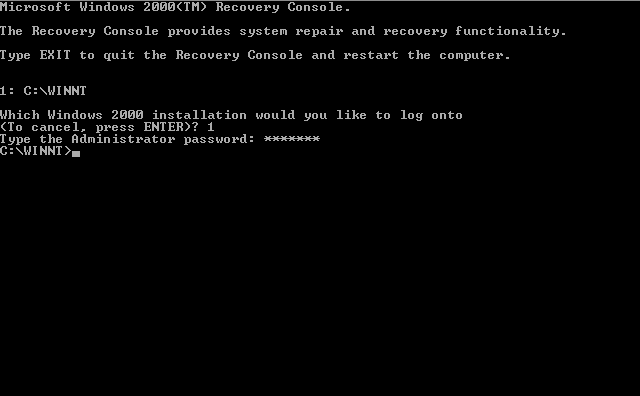


Editions, hardware and platform support
Windows 2000 was offered in several editions to address different uses and hardware configurations. Core retail and OEM editions included Professional for desktop and laptop workstations and Server for small network servers; more capable variants such as Advanced Server and Datacenter Server targeted larger installations and dedicated server hardware. Microsoft also produced Limited Edition builds of Advanced Server and Datacenter Server to run on 64-bit Intel Itanium platforms.
At launch Windows 2000 targeted 32-bit Intel processors and the industry-standard PC architecture. The release supported single-processor and multi-processor machines and added enterprise-oriented support for hardware reliability and hot-pluggable components. References to its platform targets are commonly described as an operating system for PCs and servers, supporting multiple processors via the kernel scheduler and symmetric multiprocessing facilities; hardware-level details and platform compatibility were an important part of product planning and deployment (multiprocessor systems, Intel, x86).
Architecture and major features
Windows 2000 continued the Windows NT design of a microkernel-like, modular architecture with distinct address spaces and protection levels. The system separates execution into user mode for applications and kernel mode for core services and device drivers. This separation improves fault isolation so that many application failures do not crash the entire system. Device drivers and kernel components run with elevated privileges to interact directly with hardware.
Key built-in technologies included:
- File systems: Full support for the NTFS file system family, including enhancements introduced in the NTFS implementation used by this release (NTFS), as well as the Encrypted File System for per-file encryption (EFS).
- Administration: Microsoft Management Console (MMC) and centralized administrative tools to manage users, services and local policies.
- Storage: Basic and dynamic disk layouts, allowing software RAID-like volumes, striped and mirrored sets, and online volume management.
- Networking: Server features such as Active Directory for centralized authentication and resource management, Distributed File System (DFS) for shared storage, and scalable TCP/IP networking.
Deployment, installation and administration
Windows 2000 supported both attended installs and automated, unattended deployments suited for enterprise rollouts. Administrators could configure installations with answer files and provisioning tools, and use utilities such as the System Preparation Tool (Sysprep) or systems-management suites to capture and replicate configured images across multiple machines. These capabilities simplified large-scale migrations and standardised desktop and server configurations.
Beyond installation, the platform emphasized centralized management: Group Policy and MMC snap-ins made it easier to apply security templates, software distribution rules and user restrictions across groups of machines. The server editions, in particular, provided services intended for medium to large networks where centralized identity and permission control were required.
History, significance and legacy
Windows 2000 represented a milestone in Microsoft’s enterprise strategy. Following the NT line, it brought greater reliability to a wider set of hardware and expanded the reach of Windows into corporate datacenters and mission-critical roles. Its improvements in storage management, networking, and security influenced subsequent releases of Windows Server and client Windows operating systems.
Although eventually superseded by later Windows Server and client releases, many concepts and management tools introduced or stabilized in Windows 2000—such as Active Directory, NTFS advances and centralized management frameworks—remained foundational. Administrators and historians of computing often view Windows 2000 as the point where Microsoft’s enterprise product matured into a more robust, administrable platform.
Distinctions and notable facts
Important distinctions include the split between workstation and server editions, the availability of limited 64-bit Itanium builds, and the continued use of the NT kernel model rather than the consumer Windows 9x architecture. Windows 2000 placed a stronger emphasis on security, administrative controls, and diagnostic tools than its immediate predecessors, and its features were intended to meet the needs of both business desktops and enterprise servers.
For additional technical reading, refer to vendor and archival documents and platform guides such as product overviews and deployment manuals linked from official documentation resources (Microsoft, Windows NT family documentation).
Questions and answers
Q: What is Windows 2000?
A: Windows 2000 (also known as Win2K, W2K, Win2000 or Windows 2K) is an operating system for computers that have either single or multiple processors. It was made for 32-bit Intel x86 computers and is part of the Microsoft Windows NT line of operating systems.
Q: When was it released?
A: Windows 2000 was released on February 17, 2000.
Q: What versions are available?
A: There are four versions of Windows 2000 available - Professional, Server, Advanced Server and Datacenter Server. Additionally, Microsoft offers two limited editions - Advanced Server Limited Edition and Datacenter Server Limited Edition - which were released in 2001 and run on 64-bit Intel Itanium processors.
Q: Who can use it?
A: Windows 2000 was designed primarily for businesses but it is also popular with home users.
Q: What modes does it use?
A: Windows 2000 uses two 'modes' - a 'User Mode' and a 'Kernel Mode'. The Kernel Mode is specially for hardware drivers while the User Mode allows computer programs to run without fear of causing harm to the computer.
Q: What features does it have in common?
A: All versions of Windows 2000 have many features in common including system utilities such as the Microsoft Management Console (MMC), standard system management applications such as a disk defragmentation utility, support for different languages and support for people with disabilities. Additionally, all versions support the NTFS 5 file system, Encrypted File System (EFS) and basic/dynamic disk storage.
Q: What extra features does the server version offer? A: The server version has additional features including Active Directory services (a way of organising resources such as printers, users and group), distributed file system (a file system that supports sharing of files) and fault-redundant storage volumes. It can be installed through attended or unattended installations using answer files to fill in installation information or by using Microsoft Systems Management Server (SMS) or System Preparation Tool (Sysprep).
Related articles
Author
AlegsaOnline.com Windows 2000 — Microsoft Windows NT–family operating system Leandro Alegsa
URL: https://en.alegsaonline.com/art/108503
Sources
- microsoft.com : "Enterprise Source Licensing Program"
- infoworld.com : It's official: NT 5.0 becomes Windows 2000
- activewin.com : Windows 2000 history
- novell.com : NDS eDirectory vs. Microsoft Active Directory?