
Wilmot Proviso: 1846 proposal to ban slavery in U.S. territories from Mexico
An 1846 congressional amendment proposed to bar slavery in territory gained from Mexico. It intensified sectional conflict, influenced new political movements, and helped set the stage for the Civil War.
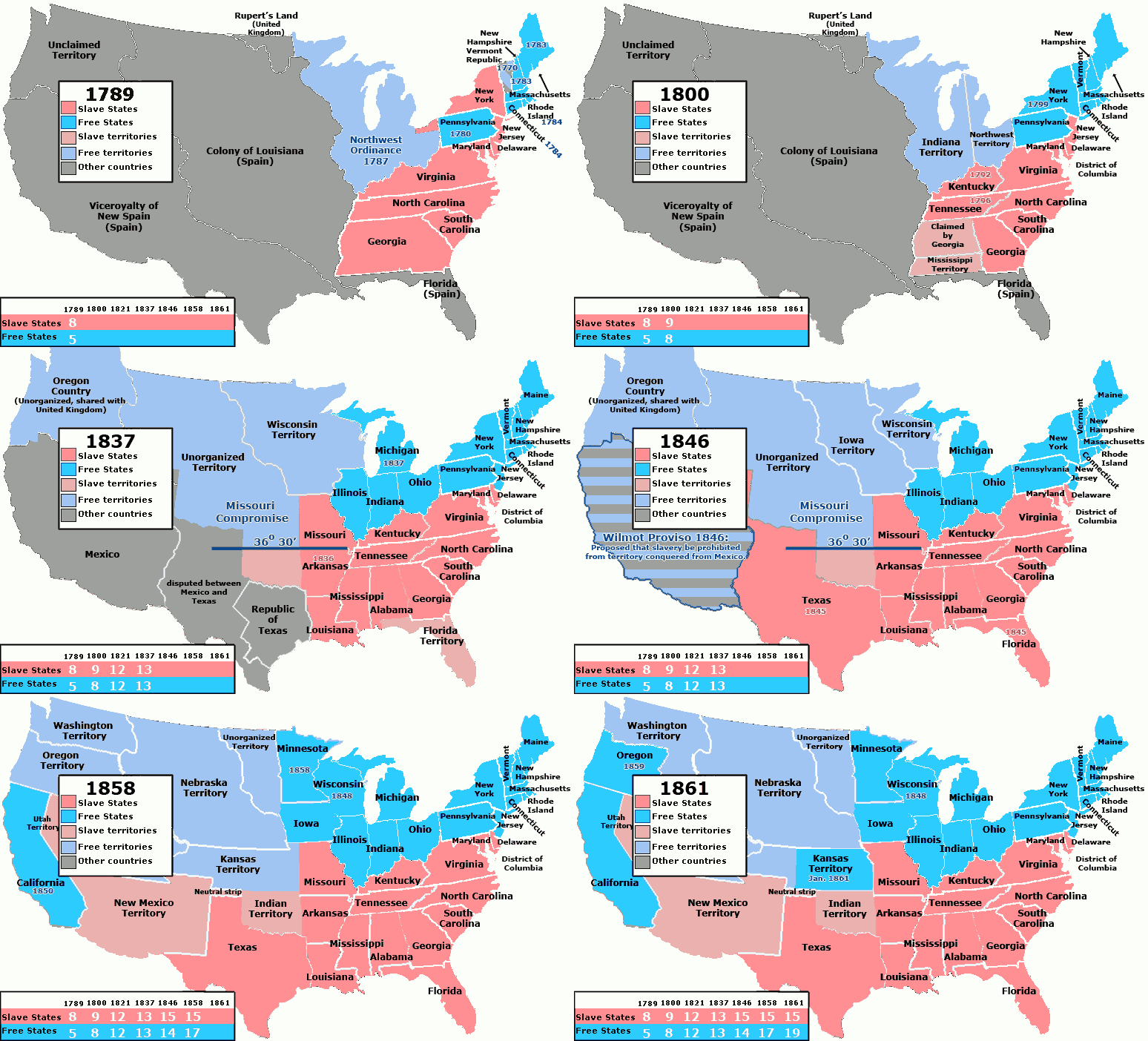
Overview: The Wilmot Proviso was an 1846 congressional proposal to prohibit the expansion of slavery into lands the United States expected to obtain from Mexico during the Mexican–American War. Introduced by Representative David Wilmot of Pennsylvania, the measure reflected Northern concerns about slavery’s growth and its political influence in new territories.
Image gallery
2 Images
Background
At the heart of the dispute were competing visions for the country’s future: whether new western lands would allow slaveholding or remain free. The proposed restriction targeted the territory that would be acquired from Mexico as part of the war and its aftermath. The question of slavery’s expansion touched on economics, sectional balance in Congress, and constitutional authority over federal territories.
Provisions and legislative history
The proviso was drafted as an amendment to a military appropriations bill and sought to bar slavery in any territory gained from Mexico. Though the measure passed the U.S. House of Representatives on multiple occasions, it failed in the Senate and therefore never became law. Its repeated consideration kept the issue of territorial slavery at the center of national politics in the late 1840s.
Consequences and legacy
While not enacted, the Wilmot Proviso had substantial political effects. It deepened sectional tensions between North and South, helped fuel the formation of anti-slavery and Free Soil political movements, and contributed to a pattern of partisan realignment in the decade before the American Civil War. Debates around the proviso foreshadowed later conflicts over territory and sovereignty.
Legal and political arguments
Supporters argued that Congress had authority to regulate slavery in federal territories and that permitting slavery’s spread threatened free labor and political equality in new regions. Opponents maintained that slaveholding interests had constitutional protections and that territory status, states’ rights, or popular sovereignty should determine the issue. These competing legal and political theories would resurface in subsequent compromises and court decisions.
Notable facts and significance
- The proviso never became statutory law but shaped national debate on territorial slavery.
- Its controversy helped spur the Free Soil movement and influenced party alignments before the 1850s.
- Observers view it as one of the important stepping stones that escalated the sectional crisis leading to civil war.
As a focal point of mid-19th-century politics, the Wilmot Proviso illustrates how a legislative proposal—even one that fails to pass—can transform public discussion, mobilize new political groups, and accelerate constitutional and sectional conflicts in a deeply divided nation.
Questions and answers
Q: What is the Wilmot Proviso?
A: The Wilmot Proviso was a proposed law in America that aimed to ban slavery in territories that were acquired from Mexico in the Mexican–American War.
Q: What was the reason for proposing the Wilmot Proviso?
A: The Wilmot Proviso was proposed to address the issue of slavery in new territories that the United States acquired from Mexico in the Mexican-American War.
Q: Did the Wilmot Proviso become a law?
A: No, the Wilmot Proviso did not become a law. It was a suggested law, but it was never actually passed.
Q: What was the significance of the Wilmot Proviso in American history?
A: The Wilmot Proviso was one of the main events that led to the American Civil War. It was a significant moment in American history where the issue of slavery and its expansion became a major political issue.
Q: Who proposed the Wilmot Proviso?
A: The Wilmot Proviso was proposed by David Wilmot, a Democrat from Pennsylvania, on August 8, 1846.
Q: Was the Wilmot Proviso supported by both political parties?
A: No, the Wilmot Proviso was not supported by both political parties. It was mostly supported by Democrats and anti-slavery Whigs, but it was opposed by many Southern Democrats and pro-slavery Whigs.
Q: Did the Wilmot Proviso apply to all territories acquired from Mexico?
A: Yes, the Wilmot Proviso applied to all territories acquired from Mexico, including California, New Mexico, and parts of Arizona, Colorado, Nevada, Utah, and Wyoming.
Related articles
Author
AlegsaOnline.com Wilmot Proviso: 1846 proposal to ban slavery in U.S. territories from Mexico Leandro Alegsa
URL: https://en.alegsaonline.com/art/108393
Sources
- books.google.com : Lone Star: A History Of Texas And The Texans