
Willis Tower: Chicago's iconic 108‑story skyscraper
Willis Tower (formerly Sears Tower) is a 108‑story Chicago skyscraper known for its bundled‑tube engineering, Skydeck observation facilities, long record as the world's tallest building, and major corporate tenants.
Overview
The Willis Tower is a prominent skyscraper in Chicago, Illinois. Rising to approximately 1,450 feet and commonly described as having 108 stories, it dominates the city's skyline and functions as office space, an observation destination and an engineering landmark. Construction was completed in the early 1970s and the building opened soon afterward as the headquarters for a major retailer.
Image gallery
10 Images




Design and structural characteristics
The tower is widely cited as a signature example of the bundled‑tube structural system developed in part by engineer and architect Fazlur Khan. In this approach multiple tubes are arranged and connected to form a stiff, efficient frame that resists wind loads while permitting tall, open office floors. The exterior is clad in dark glass and aluminum, giving the building its distinctive appearance. Dedicated levels house plant and support equipment; owners and technical descriptions often distinguish principal office floors from mechanical floors and penthouses (mechanical, penthouse).
Construction, records and history
When it was completed in the early 1970s, the structure surpassed earlier tall towers in New York such as the World Trade Center in New York City to become the tallest building in the world. It held that distinction for a quarter of a century until superseded by the Petronas Towers in Malaysia. For many years afterward it remained the tallest building in the Western Hemisphere until taller projects, including One World Trade Center in New York, were completed. Different sources and owner statements sometimes count roof and mechanical levels differently, which accounts for minor variations in reported floor counts.
Naming and ownership
Originally known as the Sears Tower because it served as the headquarters of the retail company Sears, the building was renamed in 2009 after a long‑term lease of naming rights to an international brokerage. Both the original and the newer name are used in public discourse and media, and the tower's ownership and management have evolved with successive commercial real estate arrangements.
Observation deck and public access
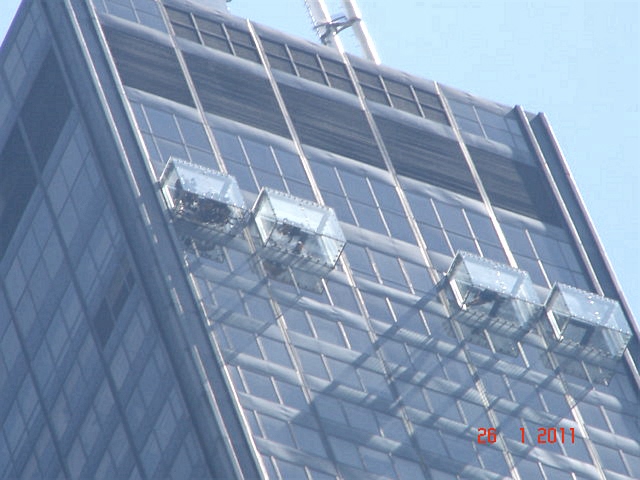
The tower's observation facilities attract large numbers of visitors annually. The Skydeck offers sweeping views across the city and Lake Michigan and includes projecting glass ledges that allow visitors to look straight down from a high vantage point. These public features are a significant part of the building's appeal for tourists and local visitors; for planning details and tickets consult official visitor resources such as the building's published guides and portals (official visitor information).
Tenants, use and major occupants
Although built for a single corporate client, the tower now accommodates a broad mix of commercial tenants. Among the better‑known occupants are national airlines and major financial firms; for example, a leading carrier relocated its corporate offices to the tower in the 2010s (United Airlines). Investment and banking firms with a presence include companies such as Morgan Stanley, and well‑known law firms and professional services companies also lease space in the complex.
Architectural and cultural significance
Architecturally, the building is frequently cited in discussions of late‑20th‑century skyscraper design because its bundled‑tube concept enabled both great height and efficient floor plates. It remains a widely recognized symbol of Chicago's modern skyline and appears often in cultural references, guidebooks and architectural histories. It is also included in tall building listings and U.S. rankings that document comparative height, floor count and other measures (tall building listings, U.S. rankings).
Renovations, sustainability and systems
Over time the building has seen upgrades to elevators, mechanical systems and public areas to meet contemporary code, energy and tenant expectations. Large, older office towers commonly undergo phased renovations to improve energy performance, accessibility and safety while preserving defining architectural elements.
Access, visitor guidance and further reading
Visitors planning a trip to the observation level or to meet tenants should consult current information about hours, tickets and access procedures from official sources linked through the tower's site and local tourism offices. Additional material on the tower's engineering, history and tenancy is available from architectural journals, municipal archives and commercial real estate reports (comparative towers, international context).
Quick facts
- Commonly reported height: about 1,450 feet; commonly reported number of stories: 108.
- Completed in the early 1970s and for decades noted among the tallest buildings worldwide.
- Known both as the Willis Tower and historically as the Sears Tower; both names remain in use.
For authoritative and up‑to‑date details on floor counts, ownership, tenancy and visitor arrangements, consult the building management and primary archival sources, or authoritative tall‑building databases and municipal records (architect profile, technical references, service floor descriptions).
Questions and answers
Q: What is the Willis Tower?
A: The Willis Tower is a 108-story, 1,450-foot (442.1 m) skyscraper in Chicago, Illinois.
Q: When was it completed?
A: The Willis Tower was completed in 1973.
Q: How tall is it?
A: The Willis Tower stands at 1,450 feet (442.1 m).
Q: Who designed the tower?
A: The Willis Tower was designed by architect Fazlur Khan.
Q: What year did it become the tallest building in the world?
A: The Willis Tower became the tallest building in the world when it finished construction in 1973 and held that title for 25 years until Petronas Towers were built in Malaysia.
Q: What year did One World Trade Center surpass it as the tallest building in the Western Hemisphere?
A: One World Trade Center surpassed the Willis Tower as the tallest building in the Western Hemisphere when it opened in 2013.
Q: What are some of its major tenants?
A: Major tenants of the Willis Tower include United Airlines, Schiff Hardin, Seyfarth Shaw and Morgan Stanley.
Related articles
Author
AlegsaOnline.com Willis Tower: Chicago's iconic 108‑story skyscraper Leandro Alegsa
URL: https://en.alegsaonline.com/art/108362
Sources
- nytimes.com : "Blackstone Group Purchases Landmark Willis Tower in Chicago"
- skyscrapercenter.com : "Willis Tower – The Skyscraper Center"
- emporis.com : Emporis.com
- time.com : "Top 10 Worst Corporate Name Changes: It's the Sears Tower"
- time.com : "The Tallest Skyscraper"
- pbs.org : "Databank: Sears Tower"
- minneapolisfed.org : "Consumer Price Index (estimate) 1800–2008"
- skyscraperpage.com : SkyscraperPage – Sears Tower
- chicagotribune.com : "Change of Subject - 'Thillens Stadium' is no more"
- willistower.com : "Willis Tower history and facts"
- cnn.com : "Willis Tower Fast Facts"
- cbsnews.com : "Willis Tower, One World Trade Center compete for bragging rights as America's tallest skyscraper"
- examiner.com : "One World Trade Center taller than Willis Tower"
- theskydeck.com : "Skydeck Chicago - Fun Facts"
- usatoday.com : ""Sears Tower unveils 103rd floor glass balconies""