
William John Coffee: English modeller and sculptor (1774–1846)
Summary of William John Coffee, an English modeller and sculptor known for work in porcelain, plaster and terracotta; began at Derby porcelain works and later practised in North America.
Overview
William John Coffee (1774–1846) was an English modeller and sculptor whose practice encompassed porcelain, plaster and terracotta. Best known for three-dimensional modelling for ceramic manufacture, he also produced preparatory plaster work and occasional oil studies. Coffee's career illustrates the close connection between industrial ceramics and sculptural practice in late 18th- and early 19th-century Britain.
Image gallery
2 Images
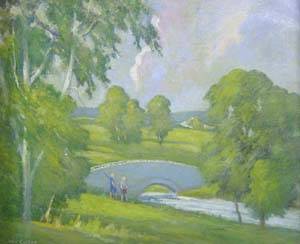
Early life and work at Derby
Coffee began his professional life as a modeller with the Duesbury factory on Nottingham Road in Derby, a principal centre of high-quality English porcelain. In a factory context he translated sculptural concepts into models and patterns suitable for moulding and firing. His output for the porcelain industry included small-scale figures and reliefs intended for decorative services as well as larger terracotta pieces used as architectural ornament.
Materials and techniques
Coffee worked across materials commonly associated with decorative and architectural sculpture of the period. Porcelain modelling required refined, small-scale work and an understanding of shrinkage and the firing process. Plaster was used for preparatory casts and reproductions, while terracotta offered a durable medium for exterior sculpture and ornamental panels. Where oil painting appears in record it was secondary to his three-dimensional production.
Move to North America and later career
In the later part of his life Coffee moved to North America, where he continued to practise as a modeller and sculptor. Documentary detail of his American activities is less abundant than the records of his Derby period, but surviving references indicate he remained active in producing both decorative and architectural work until his death in 1846.
Style, influence and context
Working during the era of neoclassical taste, Coffee's models often reflect the restrained forms and classical subjects popular in Britain and on the Continent. His career exemplifies the role of the modeller who bridged fine-art sculpture and applied design for industry, contributing to the visual culture of the Industrial Revolution while supplying decorative objects for domestic and public use.
Surviving works and collections
Examples of Coffee's work may be found in museum collections and specialist catalogues of Derby porcelain and British terracotta. Surviving pieces typically include small figures, relief panels and architectural fragments. Researchers consult local archives, museum catalogues and specialist studies of porcelain manufacture to trace specific attributions.
Research and further reading
For more detailed biographical notes and catalogued examples, consult biographical entries and institutional records. A useful starting point is a general biographical summary: Biography and overview. To view catalogued porcelain examples and related images consult dedicated collection listings: Porcelain and ceramic collections. For documentary information on the Derby factory where Coffee worked, see historical accounts and factory histories: Derby factory history. Additional archival notes and digitized primary sources can be found via specialist repositories and local archives: Further reading and archives.
Significance
Although Coffee is not a household name among monumental sculptors, his work is important to the history of British decorative arts and industrial ceramics. As a modeller working within a major porcelain manufactory and later practising abroad, he represents the practical and creative skills required to translate sculptural ideas into objects produced for both private and public settings.
Questions and answers
Q: Who was William John Coffee?
A: William John Coffee was an English artist and sculptor who worked in porcelain, plaster, and terra cotta.
Q: What were the mediums in which William John Coffee worked?
A: William John Coffee worked in porcelain, plaster, terra cotta, and oil paint.
Q: What did William John Coffee do in his early career?
A: In his early career, William John Coffee worked as a modeller for Duesbury at the china factory on Nottingham Road in Derby, England.
Q: Where did William John Coffee spend the later part of his life?
A: The later part of William John Coffee's life was spent in America.
Q: Was oil painting the thing for which William John Coffee became famous?
A: No, oil painting was not the thing for which William John Coffee became famous.
Q: In which country did William John Coffee work?
A: William John Coffee worked in England and America.
Q: What were the artistic mediums that William John Coffee worked in?
A: William John Coffee worked in porcelain, plaster, terra cotta, and oil paint.
Related articles
Author
AlegsaOnline.com William John Coffee: English modeller and sculptor (1774–1846) Leandro Alegsa
URL: https://en.alegsaonline.com/art/108251
Sources
- artsderbyshire.org.uk : Derbyshire Heritage Artists