
William Harvey: Pioneer of Blood Circulation and Cardiac Physiology
English physician William Harvey (1578–1657) demonstrated that the heart pumps blood in a closed circulation, transforming physiology and establishing experimental methods still central to medicine.
William Harvey (1 April 1578 – 3 June 1657) was an English physician and doctor whose observations and experiments established that the heart propels blood around a closed circulatory system. Born in Folkestone, Kent, England, Harvey replaced long‑standing assumptions about physiology with evidence‑based explanation of how blood moves through the living body.
Image gallery
8 Images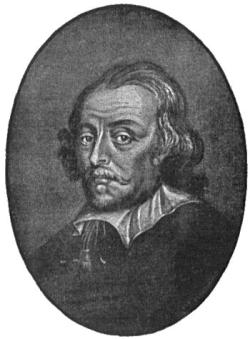

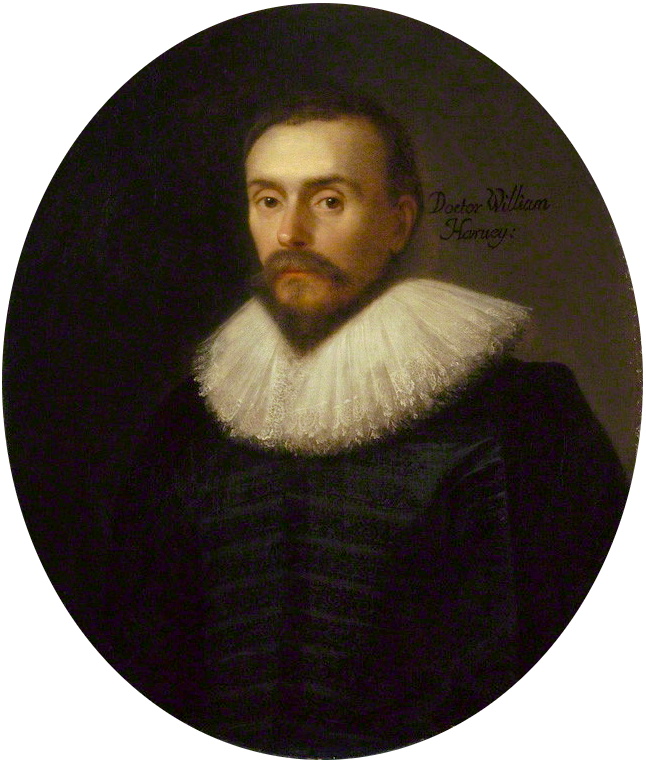


Education and early career
Harvey attended The King’s School, Canterbury and studied at Gonville and Caius College, Cambridge. He completed his medical degree at the University of Padua, an important centre for anatomical study, where he was influenced by teachers who had described venous valves and dissection techniques. On returning to London he married Elizabeth Browne, daughter of a royal physician, and established a clinical practice, later serving at St Bartholomew’s Hospital.
The discovery of circulation
In 1628 Harvey published De Motu Cordis (On the Motion of the Heart and Blood), a concise but revolutionary work that argued the heart functions as a pump and that blood circulates continuously. He supported this claim with dissections, controlled experiments and simple but persuasive measurements—for example, showing that the volume of blood ejected by the heart over time made the older idea that blood was constantly produced and consumed by tissues untenable.
Harvey used ligatures to demonstrate the direction of flow through veins and arteries and relied on observations of one‑way venous valves reported by anatomists in Padua. His approach emphasized repeated observation, experiment, and numerical reasoning rather than appeal to authority.
Impact and legacy
Harvey’s conclusions initially met resistance because they overturned Galenic doctrine, but they gradually became central to anatomy, physiology and medicine. His insistence on experimental proof helped shape the scientific method in medical research. He served as a royal physician during his career and continued clinical and anatomical work until his death in Roehampton in 1657. Institutions and hospitals, including one in Ashford, Kent, commemorate his name and influence.
Notable facts
- Born 1 April 1578 in Folkestone; died 3 June 1657 in Roehampton.
- Educated at The King’s School, Canterbury (link) and Cambridge; received his MD from Padua in 1602.
- Worked for many years at St Bartholomew’s Hospital in London and held royal appointments.
- Major work: De Motu Cordis (1628), which laid the foundations for modern cardiology.
Questions and answers
Q: Who was William Harvey?
A: William Harvey was an English medical doctor who explained how blood was moved through the body by the heart.
Q: When and where was William Harvey born?
A: William Harvey was born on 1 April 1573 in Folkestone, Kent, England.
Q: Where did William Harvey graduate from university?
A: William Harvey graduated from the University of Padua in 1602.
Q: Who did William Harvey marry?
A: William Harvey married Elizabeth Browne, the daughter of Elizabeth I's royal physician.
Q: Where did William Harvey work as a doctor?
A: William Harvey worked as a doctor at St. Bartholomew's Hospital in London from 1609 until 1643.
Q: When did William Harvey die?
A: William Harvey died on 3 June 1657 in Roehampton.
Q: Is there a hospital named after William Harvey?
A: Yes, there is a hospital in Ashford, Kent named after William Harvey.
Related articles
Author
AlegsaOnline.com William Harvey: Pioneer of Blood Circulation and Cardiac Physiology Leandro Alegsa
URL: https://en.alegsaonline.com/art/108237