
William Golding
English novelist, poet and playwright (1911–1993), best known for Lord of the Flies. Nobel Prize winner in 1983 whose work examines human nature, civilization, and moral conflict.
Overview
William Golding (19 September 1911 – 19 June 1993) was an English novelist, poet, playwright and schoolteacher whose fiction is widely studied for its stark depiction of human behaviour under pressure. He rose to international prominence with the novel Lord of the Flies, and was awarded the Nobel Prize in Literature in 1983. For a concise introduction to his life and achievements see biographical resources.
Image gallery
6 Images


Life and career
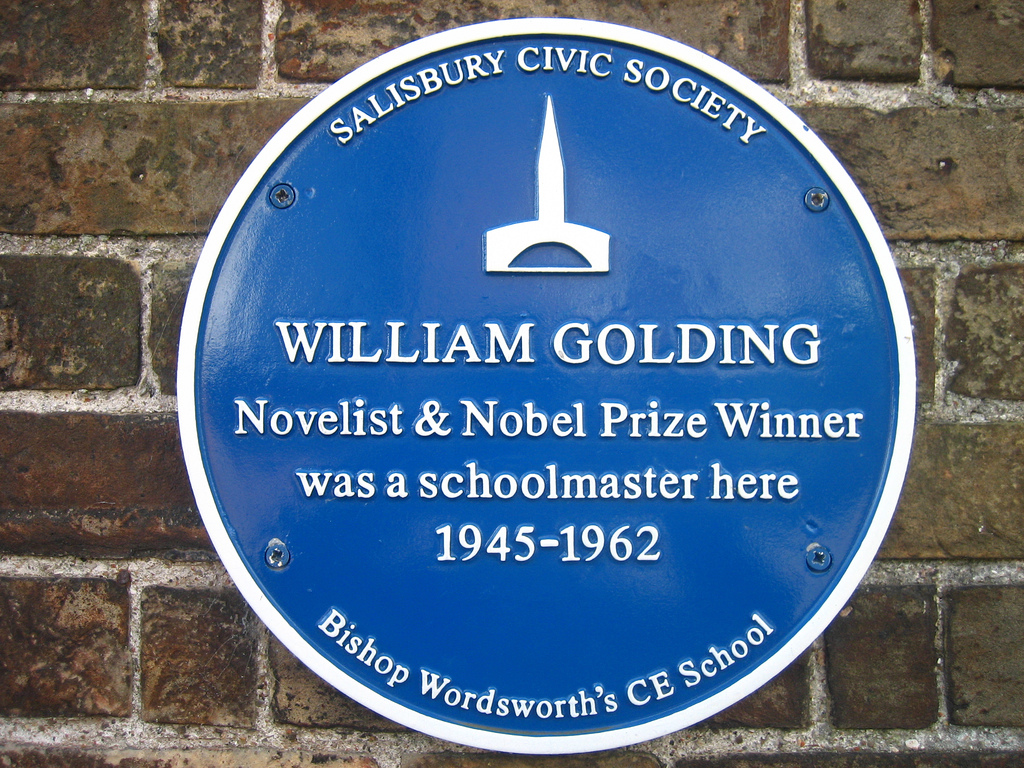
Golding trained at university and worked for a time as a teacher before serving in the Royal Navy during the Second World War; these experiences shaped much of his later fiction, which often considers conflict, leadership and survival. After the war he returned to teaching while writing in his spare time. His development as a writer and the stages of his career are detailed in many study guides and literary summaries available at career summaries and in dedicated critical essays.
Major works
Although Lord of the Flies (published 1954) remains his best known book, Golding produced a steady body of novels, short fiction and drama across several decades. A representative list includes:
- Lord of the Flies — allegorical novel about boys stranded on an island.
- The Inheritors and Pincher Martin — works that experiment with perspective and existential themes.
- Rites of Passage — part of a sea trilogy that won the Booker Prize.
Themes and style
Golding's writing is frequently moral and philosophical, probing the tension between order and chaos, the fragility of social structures, and the darker impulses within individuals. He often uses allegory and symbolic settings to concentrate ethical dilemmas, relying on clear, sometimes austere prose and tightly controlled narrative vantage points. Readers and critics commonly turn to scholarly overviews and annotated editions to unpack these recurring motifs; see critical overviews for further reading.
Reception and legacy
Golding's reputation grew steadily after the initial publication of his most famous novel; by the later twentieth century he was recognized as a leading English writer, honored with the Nobel Prize and other distinctions. His work continues to be assigned widely in schools and universities for its dramatic exploration of ethics, community and human nature. For educational resources and analysis consult introductory guides and academic databases.
Notable facts
Beyond his major novels, Golding wrote poetry and plays and remained active as a public literary figure. His knighthood and placement on lists of significant postwar British writers reflect both popular and critical esteem. For timelines and lists of works see curated bibliographies at bibliographic entries and publisher notes at publisher pages.
Questions and answers
Q: Who was William Golding?
A: William Golding was an English writer who was a novelist, poet, playwright, and teacher.
Q: What is he famous for?
A: He is famous for his novel Lord of the Flies.
Q: When did he receive the Nobel Prize for Literature?
A: He received the Nobel Prize for Literature in 1983.
Q: What ranking did The Times give him in 2008?
A: In 2008, The Times ranked Golding third on its list of "The 50 Greatest British writers since 1945".
Q: What is the full name of William Golding?
A: The full name of William Golding is Sir William Golding.
Q: When was William Golding born and when did he pass away?
A: William Golding was born on 19 September 1911 and passed away on 19 June 1993.
Q: What was William Golding's occupation?
A: William Golding was an English writer who was a novelist, poet, playwright, and teacher.
Related articles
Author
AlegsaOnline.com William Golding Leandro Alegsa
URL: https://en.alegsaonline.com/art/108227